The housing development company that Wandsworth Council controversially bought for £25m nearly two years ago has never had its accounts checked after its auditor – PwC – quit and was not replaced.
That is the surprising revelation hidden within two appendices provided to the council’s Audit Committee last month.
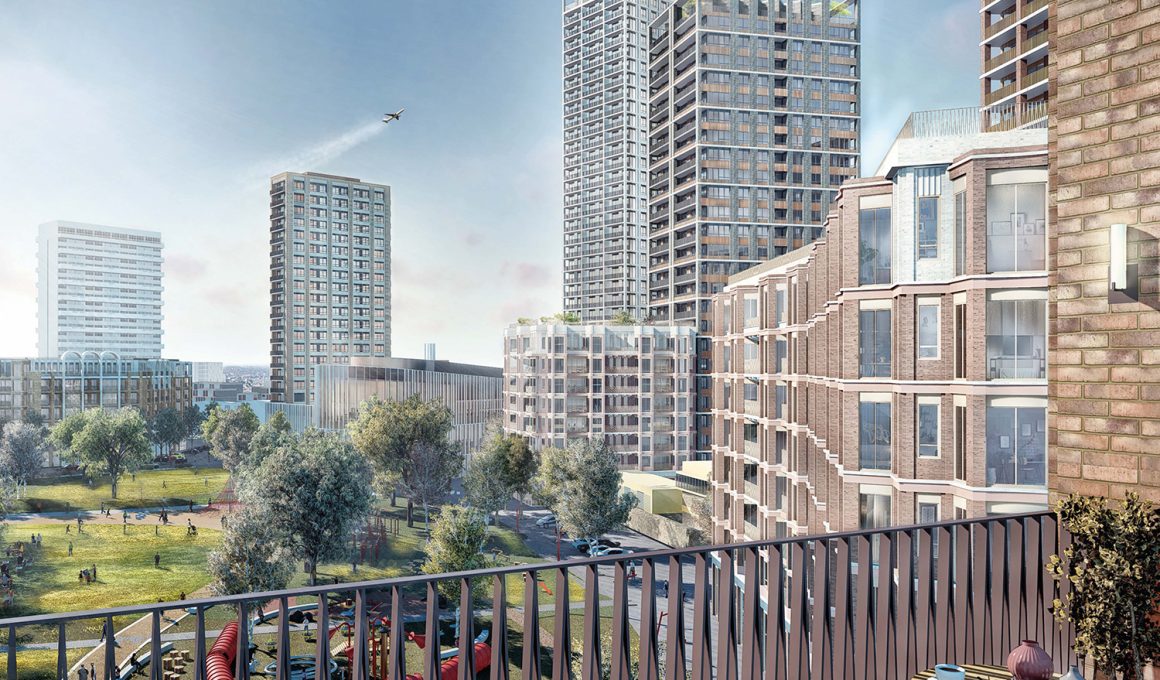
The company is Winstanley and York Road Regeneration LLP. It was set up in 2017 with Taylor Wimpey to rebuild two Battersea estates and promising around 2,500 homes. But in December 2024, the Labour-run council bought its partner out for £24.5m and said it would take over development instead.
Since then the project has stalled with not a single new home that wasn’t already in production built. The £24.5m used to buy out Taylor Wimpley came out of the Housing Revenue Account, a ringfenced pot that pays for every council home in the borough. Tenants and leaseholders in Roehampton, Putney and Southfields pay into it through rent and service charges, and it funds both repairs and fire safety work.
While those tenants were subject to a 4.8 per cent rent rise in February, Wandsworth Council was given a C3 rating by the Regulator of Social Housing for “serious failings” affecting 17,000 tenants, after inspectors found nearly 1,800 fire safety actions more than a year overdue, 40 per cent of homes without electrical safety certificates, and no full property survey since 2012.
On repairs, the Housing Ombudsman issued two special reports in 18 months, finding an 87 per cent maladministration rate on complaint handling, redress typically £100–£400, and officers telling tenants to “open windows” rather than fixing structural faults. The resulting disrepair claims helped push the Housing Revenue Account £38.9m over budget in 2024–25.
The buy-out
The decision to buy out Taylor Wimpey with taxpayers’ money has long been a source of concern with the full rationale and costings behind it hidden in a Cabinet paper the council has refused to release.
Putney.news requested the paper over a year ago. Since then, the council has turned down two information requests, including an internal review, and a complaint now rests with the Information Commissioner. The company’s own accounts do not settle the question either: those covering the period of the buyout were filed at Companies House as exempt from audit.
Which makes the resignation of the company’s auditor, and the admission that the company’s books have been left unchecked since the buyout all the more concerning.
There was no mention of either the PwC resignation or the fact the books have gone unchecked in the Audit Committee’s main paper (26-178), nor in the Annual Governance Report (26-179). Instead, the fact that company has not been audited was item 4 of four in Appendix D, “Prior year recommendations” and the PwC resignation was a footnote under a scoping table in Appendix C.
Neither has been reported before, no one at last month’s Audit Committee noticed or commented on them and until three weeks ago nobody outside the town hall could see them.
Ernst & Young, the council’s external auditor, found there had been “no formal review of journals posted in the subsidiary” between the change of ownership and the year end. Journals are the entries that make up a set of accounts. For the period after Wandsworth took sole charge, nobody checked them, and the auditor said that “increases the risk that errors” occur.
The council’s written answer to its own auditors was that “all transactions for WYR, including journals follow the council’s own processes and controls which are robust.” It offered no evidence to support that assertion.
Deeper in the same pack, in a footnote: “PWC are no longer the appointed auditors having resigned due to the change in structure and control of the entity.” The council has not said when PwC resigned or what reasons the firm gave. Ernst & Young says it is still “in discussions with management” about what checks it can perform on the company this year.
Eight months after that
Ernst & Young signed the report in the last days of the previous administration: on 29 April, eight days before the local elections.
The Audit Committee last met on 12 November 2025. When May’s election returned no overall control, every scrutiny committee in the borough was suspended until the new arrangements were settled at full council on 22 July. The committee did not sit again until 30 July, eight months after its previous meeting. By then Wandsworth had a new administration, a new leader, and a new Audit Committee.
A Cabinet decision on the regeneration programme itself, listed for 29 July, has been put back to 12 October.
Putney.news asked for the restricted report that set out the council’s options in June 2025. The council refused, citing exceptions covering internal communications and confidential proceedings. An internal review upheld the refusal that August.
A second request asked only for a summary of the options and the basis of the £24.5m. The council answered the first half at length and refused the second, citing commercial confidentiality. That refusal was upheld in January.
The Information Commissioner accepted a complaint on 23 September 2025, confirming it was “eligible for investigation” and would go to a case officer “as soon as we can.” Eleven months on, a decision has yet to be issued.
Two accounts of the same collapse
What the council did disclose sits badly beside what was said in public.
Announcing the split in January 2025, Taylor Wimpey’s managing director for London, James Lidgate, said “a change in strategic direction of the project” meant the council was “best-placed to deliver the scheme alone.” The council called it mutual.
Its answer to the information request tells a harder story. The review was driven by “various performance issues with the JV partner,” it said, and “despite numerous attempts to work with the partner to improve performance, no discernible improvement was forthcoming.” Restructuring was not viable because “performance of the JV partner itself was the problem.”
On the partner’s conduct it went further, citing “their apparent willingness to delay development until such time as market conditions improve.” Allowing that would mean letting the partner “basically land-bank one of the most important strategic growth opportunities in the borough,” which was “unconscionable, least of all to local residents who have been promised a transformational regeneration of their area, yet saw little of any substance on site during the previous two years.”
One further detail runs against the public account. The council’s own review, refusing to release the papers, records that the joint venture never ended. It quotes an earlier report: “The Joint Venture will continue to operate without a Private Sector Partner.” A separate paper confirms an alternative joint venture has been set up. We note that because the reason given for PwC walking away was “the change in structure and control of the entity.”
Companies House shows what happened next. On 22 October last year the company’s registered office moved to “Director of Finance, Room 148” at Wandsworth Town Hall, and its accounting year was stretched to match the council’s own.
Bought to go faster
The council’s stated reason for paying to end the partnership was speed.
Its report to members put it plainly: “One of the Council’s motivations for agreeing this was to enable faster progress to be made towards delivering the scheme and its benefits.” The council said it would “accelerate delivery of the scheme and the new homes and other benefits that will arise from it,” starting with Block 6.
Twenty months on, the masterplan is under full review and the Cabinet decision has moved to October. The council’s own masterplan document records 265 homes delivered against the 2,500 promised, all approved prior to the buy-out. By its own measures, the buy-out was a complete failure: £25m in taxpayers’ money spent exiting a developer contract and no new homes to show for it. That decision remains hidden not just from the public but, it turns out, from the council’s own auditors.
Ernst & Young expects to finish this year’s audit by the end of December. The Cabinet decision is listed for 12 October, and the Audit Committee meets again on 5 November.