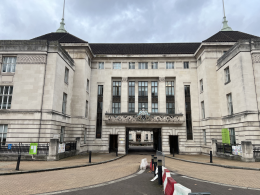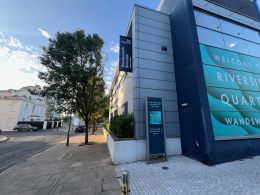
Wandsworth Council secretly arranged to move out of Wandsworth, and scrapping the plan will cost taxpayers £240,000.
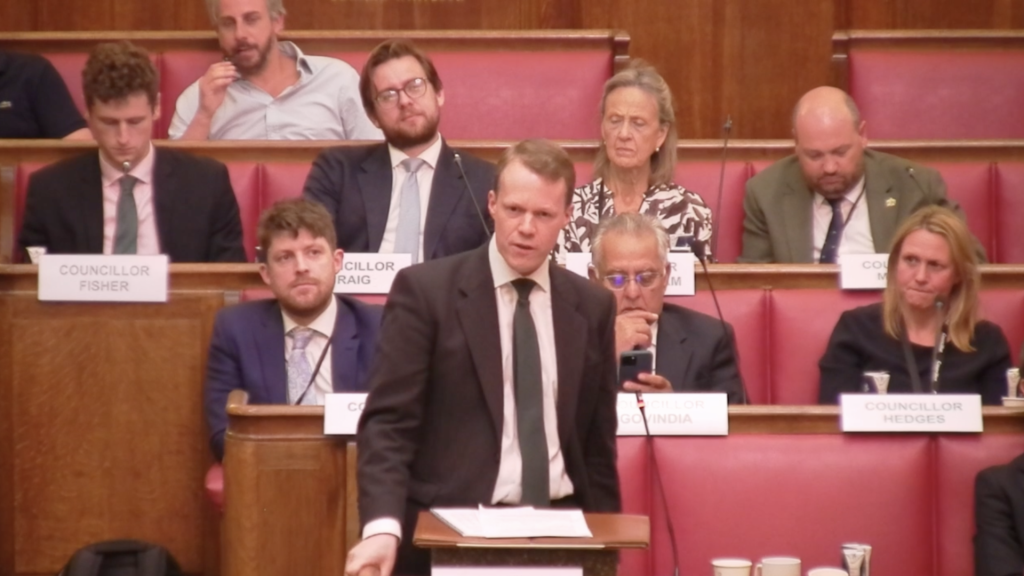
That was the surprising news delivered on Wednesday night by Cllr Peter Graham, Wandsworth’s new deputy leader and cabinet member for finance, to a special meeting of the full council on what he found when he took over the borough’s finances.
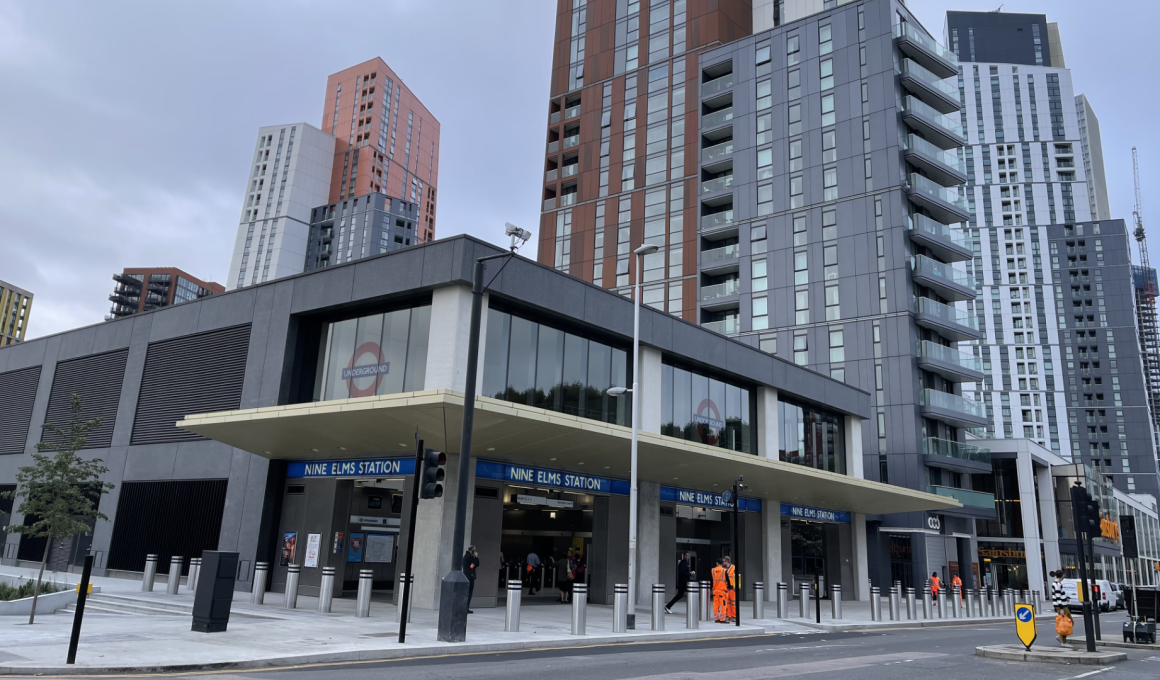
Staff were to be shifted to rented offices in Nine Elms, in the far corner of the borough, while the town hall stood empty. The previous Labour administration had hired a property agent to secure the offices, Graham said, and the £240,000 is what it now costs to tear that contract up. The new Conservative administration has cancelled the move.
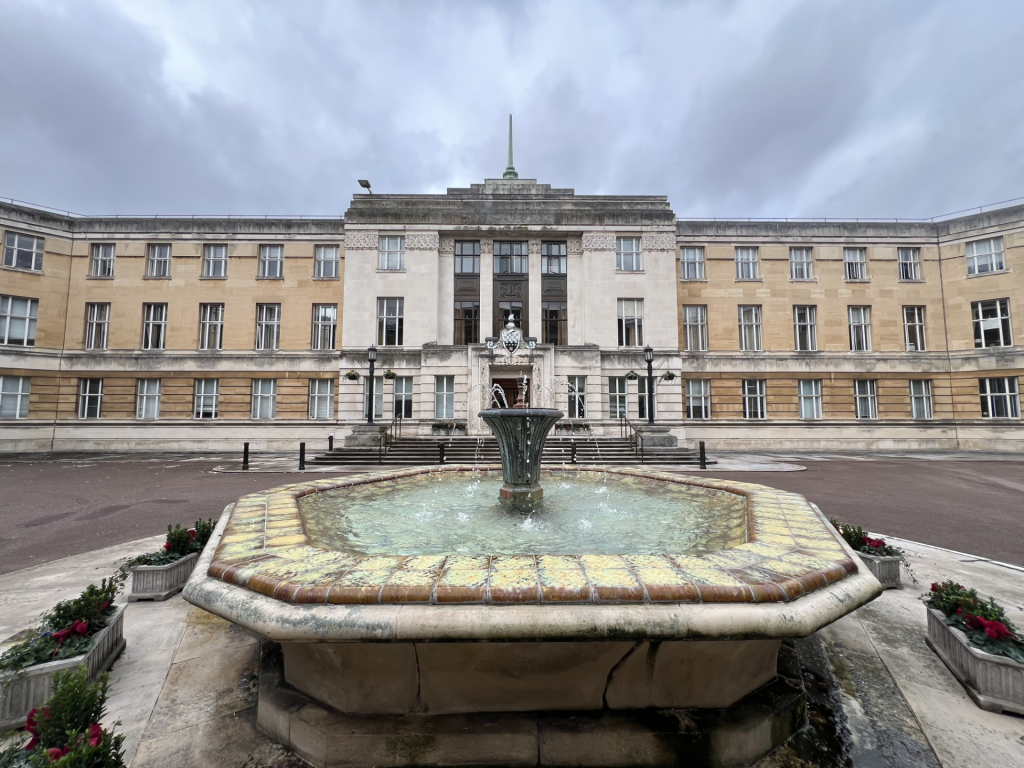
“The option pursued was to pay rent while leaving the town hall, a listed building, as a white elephant,” Cllr Graham said.
He put it to Simon Hogg, Labour’s group leader and the council’s leader until May. “Councillor Hogg talked about transparency,” Graham said. “Did his own side know about that? Did his own side know that he signed up to a deal that was going to cost taxpayers £240,000?”
That £240,000 buys nothing. No offices, no move, no saving. It is the price of undoing a decision residents were never told about, at a council that says it faces a £137m budget gap by 2028/29 and has been handed the power to raise council tax without limit.
A 2022 strategy to consolidate services inside the town hall and sell the offices around it was, in the Spending Review’s words, “paused and replaced by a series of alternative options, which required finding an alternative use for the Town Hall and relocating staff to other sites.”
A page published on the council’s website the same day is blunter about the reversal. Keeping the town hall as the council’s main base, it says, “avoids the cost and risk of relocating elsewhere.”
Asked for the dates, lease terms and documents behind the arrangement, Graham confirmed it was never disclosed. He does not have the date it was agreed and has said he will ask for it.
Cllr Graham highlighted other surprising expenses he has uncovered since gaining access to the council’s books. Alongside the Nine Elms plan came a long list of smaller spending under the previous administration: branded tote bags, water bottles, caps and umbrellas, new signs for buildings that already had signs, and a set of personalised greeting cards for the leader’s office.
Every figure below was read out to councillors on Wednesday night. See how close you can get before you read the rest.
The development they would not visit
In October 2022, five months after taking Wandsworth for the first time in 44 years, Labour councillors boycotted the grand opening of Battersea Power Station, the £9bn centrepiece of Nine Elms. They stayed away over how little social housing it had delivered.
They said so at length. Not a single affordable home had been built on site, the council said in a statement at the time, and developers had been allowed to cut the eventual number from an already low 15 per cent to nine. Nine Elms was “a real missed opportunity to provide the type of homes that local families desperately need.” Eighty-five per cent of the first 800 homes at the Power Station, it noted, went to overseas investors.
The same statement drew a further line: neither ruling group councillors nor senior officers would accept donations or hospitality from property developers. Cllr Aydin Dikerdem, then cabinet member for housing, was among those who stayed away.
Four years on, the council was preparing to move there – and pay the significantly higher rents.
Hogg defended the move. The town hall extension, where the two Conservative leaders now have their offices, was “probably the worst office building in Wandsworth,” he told the meeting, too hot for most of the year, and turning a listed building into a modern, environmentally compliant workplace made little sense, he argued.
Investing in a decent workplace, he said, was “a very sensible extravagance.” He went further, mocking what he called the bizarre idea, in a party full of public affairs people, that lobbyists could not be effective or that good branding did not matter.
Kensington and Chelsea told its residents
Graham also attacked how the previous administration had gone about protecting the borough’s funding, and what it told residents while it was doing it.
When the government rewrote the way councils are funded, six were hit harder than anyone else: Wandsworth, Westminster, Kensington and Chelsea, Hammersmith and Fulham, the City of London, and Windsor and Maidenhead.
What they had in common was low council tax. The government set a test, published it, and applied it to everyone: councils charging less than the national average, and already having most of their income protected, fell into the group. You either met the test or you did not.
Kensington and Chelsea, facing £108m of cuts over four years, told its residents what was coming. It consulted publicly on its draft budget from November to January, set out the scale of the problem and asked what people wanted protected. More than 400 answered the survey, 97 attended a citizens’ panel, and a further 546 responded on council tax support. Of those who took part, 84 per cent said they understood why services would be cut and taxes raised.
Its leader, Cllr Elizabeth Campbell, called the Fair Funding Review “anything but fair” and the result “one of the most challenging budgets we have ever had to set.” The council then raised council tax by 4.99 per cent, brought in a second homes premium and cut council tax support by 10 per cent.
Wandsworth hid the truth
Wandsworth spent those same months telling residents the opposite. In February, weeks before the May election, it announced council tax frozen for a fourth consecutive year.
In March the UK Statistics Authority wrote to Hogg to say the claim had “the potential to mislead”, because bills were rising through the adult social care precept and the Greater London Authority levy even as the council’s share stayed flat. “We find it is likely that people would understand the term ‘frozen’ to relate to an increase in their total council tax bill,” its interim chair Penny Young wrote.
It was the first adverse finding of its kind against an English council leader in 18 years. The complaint came from two Conservatives, Lord Udny-Lister and Sir Paul Beresford. The council said it had been clear that “the main element” was frozen but would reflect on the authority’s observations.
A council cannot consult residents about tax rises while telling them their tax is frozen. Kensington and Chelsea picked the first. Wandsworth picked the second, and paid a lobbying firm £10,000 a month to work the problem privately instead.
The firm was Anacta Strategies, described as the first Starmerite lobbying company and staffed by former Labour officials with direct lines into Downing Street.
Over roughly seven months, Graham told the meeting, it produced no material beyond a generic proposal document and arranged a single meeting with a minister who was moved in a reshuffle shortly afterwards. There was no contract. The arrangement surfaced only through a Freedom of Information request, and the firm was still being paid three months after the funding settlement had already been decided.
Nothing changed. The council tax assumption that did the damage was applied identically to all six affected councils.
Graham also told councillors the leader’s office and its delivery unit had cost £825,000, and that £25,000 went on fitting out a second leader’s office on the fifth floor of the town hall extension. A transformation programme set up in September 2025 to find savings spent £1.5m on consultants and delivered £7m by May, against a target of £45m. The spending review records £14m of savings identified, the difference between money found on paper and money taken out of the budget.
A further £800,000 went on consultants for tower block plans on the Fitzhugh Estate, dropped after a gas main was found on the site, and £219,000 a year on extra mail drops to residents in the run-up to the election.

The rebrand, and everything that came with it
A rebrand replaced the borough’s coat of arms with an angular zigzag W, and the merchandise followed: £6,925 on tote bags, £7,790 on water bottles, £1,760 on caps, £1,575 on umbrellas and £8,339 on t-shirts, some of which Graham said are still boxed in storage.
New signage at the town hall came to £11,324, with £10,569 on refurbishing reception and new staff uniforms. Replacing the Welcome to Wandsworth signs cost £921, on top of signs Graham described as perfectly serviceable. Estate signs ran to £1,535 each, library signs around £900, town centre signs £150. Two focus groups were paid to consider the logo.
He held up a set of personalised greeting cards made for Hogg’s office, more than £600 plus postage, and named the metal sign on the office door at £700.
Between them, the merchandise, the signage and the office extras come to more than £53,000, or roughly what 100 Band D households pay in council tax in a year.
Hogg called it “weird rummaging through our emails” and “really embarrassing stuff.” Graham had the last word: “I’m not sure I can think of anything more vain than producing personalised gift cards at the expense of a taxpayer.”
We put Cllr Graham’s allegations to Cllr Hogg, including whether he personally signed or authorised the Nine Elms arrangement, whether it was disclosed to his own group and whether he accepts the £240,000 figure. He had not responded at the time of publication.
The spending review published this week is an initial report. What the council intends to cut, and how far council tax will rise, comes in the autumn. Scrutiny committees, which have not sat since the May election, return in September. That is the first chance councillors will have to put these figures to the administration in public, and for Labour to give its account of the Nine Elms plan on the record.