

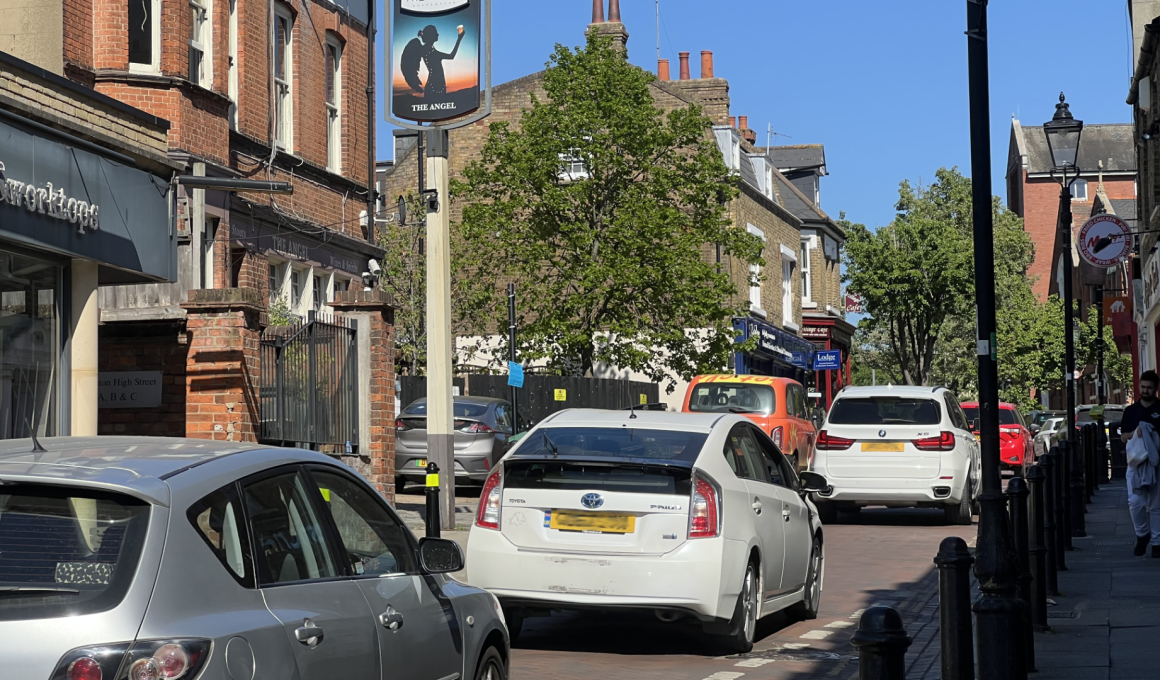
The pub was hosting a baby shower when the police arrived.
Outside, a helicopter was circling. Roads had been blocked. Twenty-nine officers in full tactical gear were moving in. They were wearing ballistic helmets with visors down, body armour marked POLICE, and body-worn cameras already activated.
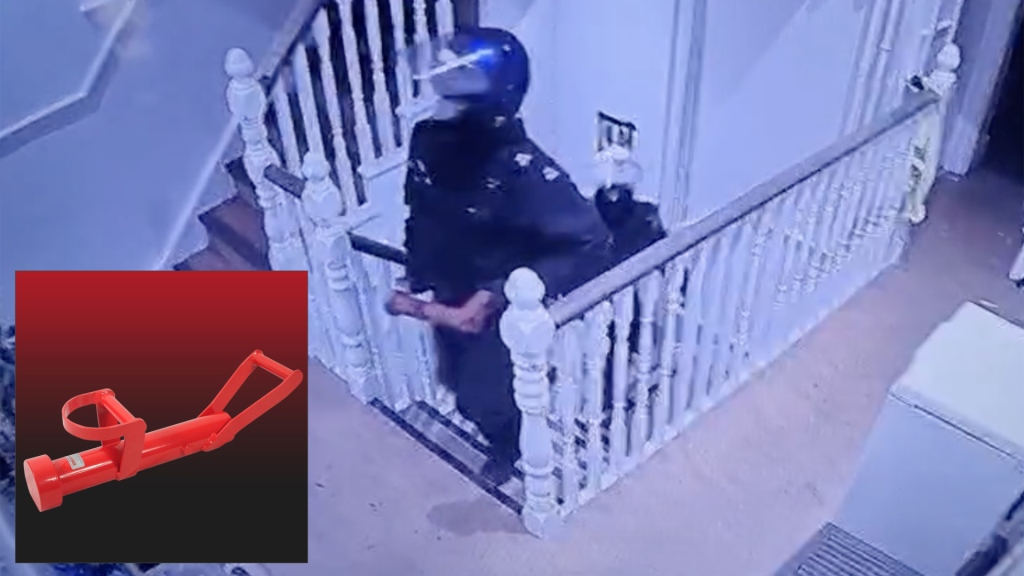
They were carrying an Enforcer: the 16kg steel battering ram known in the Met as “the big red key,” capable of applying more than three tonnes of force to a door lock, deployable only by specially trained, authorised officers. Someone senior had signed off on all of it.
In the garden of The Angel pub on Roehampton High Street, a young woman was celebrating her pregnancy. She had no idea what was about to happen.
What the police expected to find
Three months earlier, in July 2025, a police officer had applied to Croydon Magistrates’ Court for a warrant to search The Angel. The magistrate was satisfied there were reasonable grounds. The warrant was granted.
It was looking for evidence of organised crime and a drug-dealing business: everything from grow equipment for high-strength cannabis to weighed and bagged packets of cocaine and heroin. The police also believed The Angel was the control centre of the operation and came prepared to seize files: lists of clients, revenue and cash flow accounting documents, mobile phones used for orders and communication with a network of dealers. All of it listed in the warrant.
You do not send a helicopter, dogs trained to find concealed drug stashes, 29 officers in riot gear, and a specialist door-breaching team because someone has been smoking weed in a beer garden. This was the scale of operation you mount when you believe you are about to break up a serious organised crime network.
The pub was hosting a baby shower.
What they found
The CCTV footage from inside shows officers moving through the domestic staircase above the pub at speed. Ballistic helmets. Visors down. To the right of the frame: a clothes airer with laundry drying. A houseplant. A chest freezer. The ordinary furniture of someone’s home.
What they found was the daily life of a 64-year-old landlady and the tenants who lived upstairs. In footage of the raid, you can see the police try the handle of one room, find it locked and smash it open seconds later, the officer with the enforcer then moves to the next door. No stone left unturned.
Almost immediately the police realised they had a problem. After an hour, the scale of it became clear. Far from uncovering a major drugs hub they had discovered – in its entirely – several cannabis stalks in a bedroom.
No Class A drugs. No client lists. No phones loaded with dealer messages. No cash flow ledgers.
Two people were arrested. One was a private resident upstairs. Sally Cox, who had run the pub for nearly 12 years, says officers kicked his door in and handcuffed him. When his name was checked, she says, what came up was a missed community service appointment from 2019. The second arrest was made outside, near the King’s Head pub down the road, not inside The Angel.
Cox says officers told her customers she was “the main drug dealer, in with the gangs.” She was not arrested. She was not searched. She was not even asked her name.
Nobody has been charged in connection with the running of the pub. No explanation or apology has been considered or given. Six months later, the strongest evidence the police offered from their extraordinary raid was 57 empty plastic bags.
The warrant that ran out of time
The warrant was valid for three months from the date of issue: 15 July 2025. It was executed on 10 October, five days before it expired. The police had from mid-July to find the right moment. They waited 87 days.
That is not a force confident in its intelligence. That is a force that ran out of time.
After the raid, the head of the local police, Inspector Burke visited Cox at the pub. She asked him to explain why officers had told customers she was a major drug dealer running gang connections. He did not have an answer. She asked to see the body cam footage. He told her he could not access it. She offered him the names of customers who had witnessed events and what was said. He told her he could not take them. Word of mouth, he said. Unusable.
Burke is no longer the inspector responsible for Putney and Roehampton.
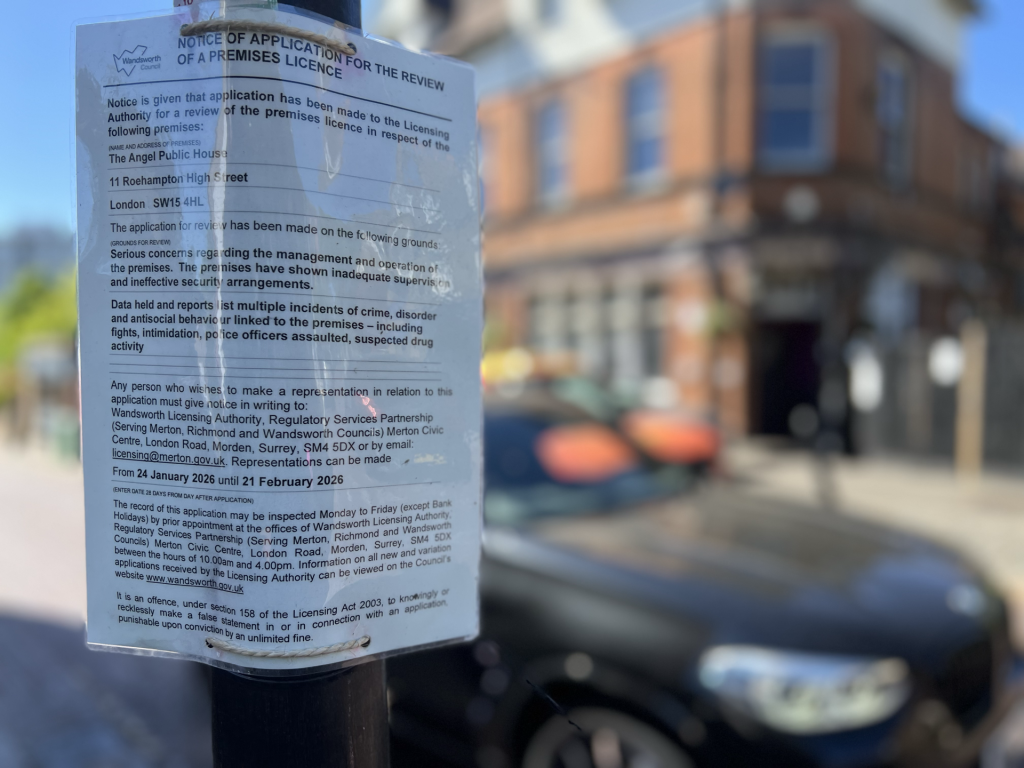
Six weeks after the raid, and still, presumably, trying to make sense of what went wrong, the same police unit filed an application to revoke The Angel’s premises licence. The stated basis: “serious concerns regarding the management and operation of the premises.”
The hearing and the 57 empty bags
The hearing to review The Angel’s license took place on 29 April 2026, six months after the raid and eight days before the local elections. Nobody had been charged or cautioned in connection with the running of the pub.
At the start of the hearing, the Metropolitan Police asked for the press and public to be excluded, on the basis of an “ongoing Police investigation and potential prosecutions.” The sub-committee agreed. Sally Cox was not allowed in. Neither was the press. Neither was the public.
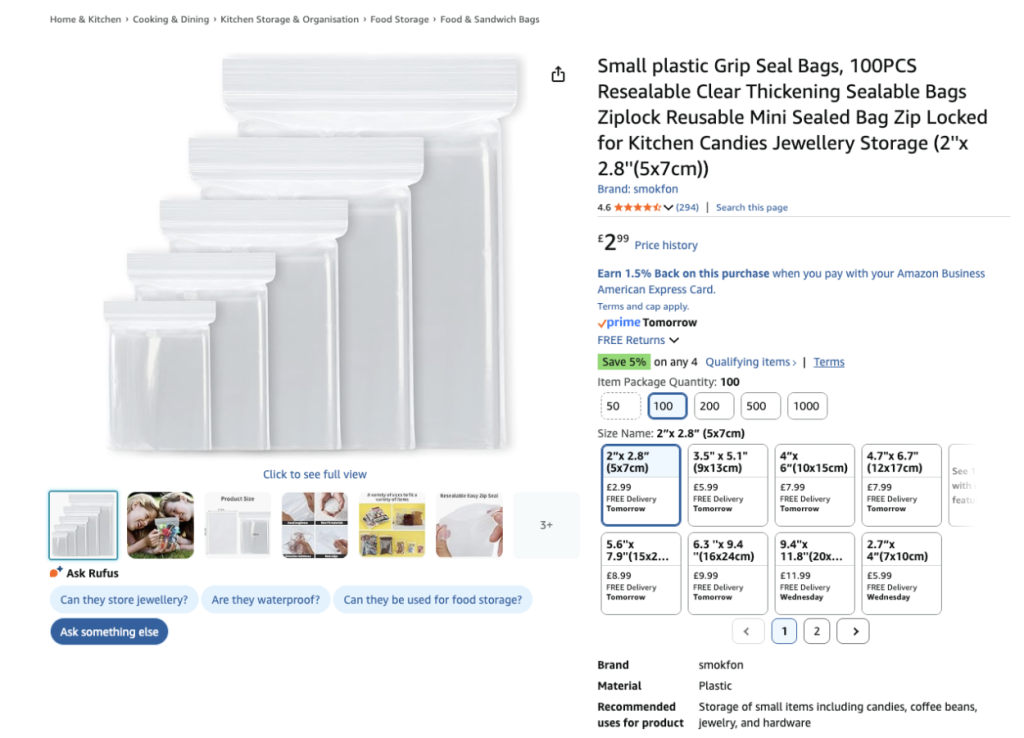
Inside, to support their application, the police barrister told the sub-committee that the raid had found “drugs and associated paraphernalia and 57 snap bags which indicated personal use and dealings of narcotics.”
The bags were empty. A 100-pack of identical resealable grip seal bags costs £2.99 on Amazon.
Punch Partnerships, the pub’s licence holder, had their own lawyer in the room. He told the sub-committee what was obvious to anyone: the snap bags were “irrelevant in the absence of any drugs therein.” He was scathing about the raid.
The committee’s decision notice records he told them that “the Police’s description of the raid had mischaracterised what transpired and had involved an excessive Police presence which resulted in local residents mistakenly thinking a major drugs prevention measure had taken place.”
The sub-committee, having heard everything the police presented in secret, found “insufficient evidence to justify a full Revocation of the Premises Licence.” On the raid specifically, it could not establish “a direct link between the two could be clearly found based upon the information presented in the written and verbal evidence.”
The police’s confidential case, tested without public scrutiny, did not hold up.
The pub was suspended for two months and given new conditions. The licence was not revoked.
The councillors who supported a case they hadn’t heard
All three ward councillors made written representations supporting the police application. Cllrs Henderson and Tiller attended the hearing and gave oral evidence.
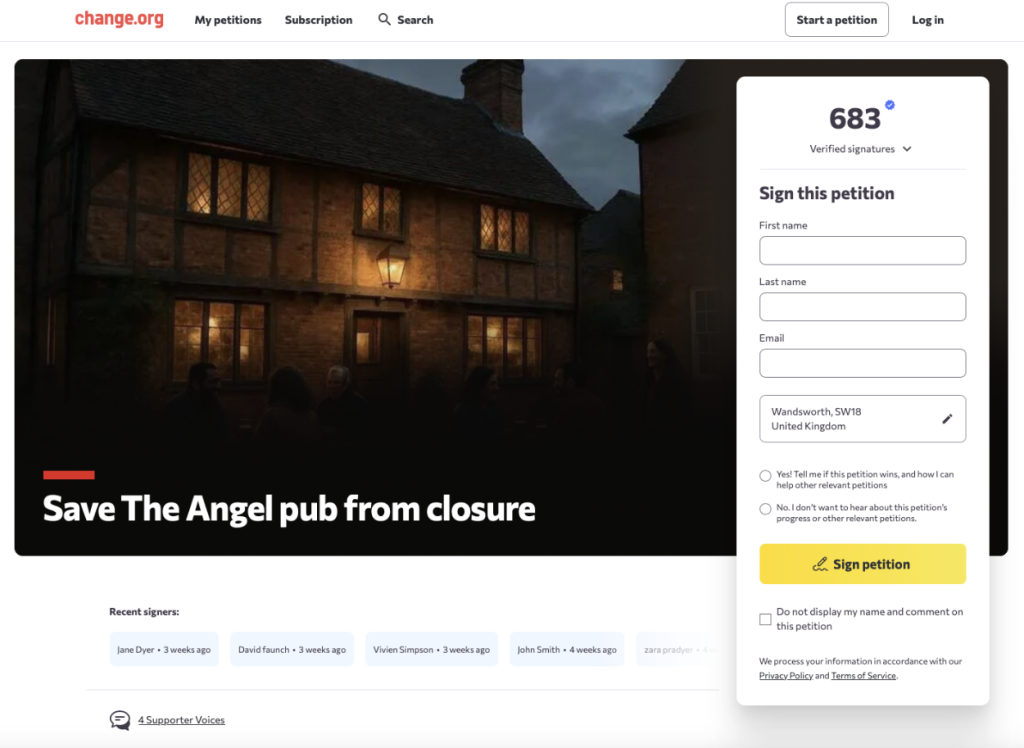
None of the three had spoken to Sally Cox. A petition of nearly 700 people calling for the pub to stay open was ruled inadmissible by council officers on the grounds that no addresses could be verified from signatories. Change.org, the platform used, verifies signatures by email, not address. Henderson, rather than challenging that ruling, endorsed it, telling the committee the petition could not be verified and moving on. Hundreds of local voices were silenced.
After the story was published, Henderson confirmed something more significant in a Facebook thread. He wrote that he and his colleagues “were also excluded from hearing the Police evidence.” The councillors made representations supporting the police case without being allowed to hear what that case actually was. They backed evidence they had never seen.
The decision notice records what they did say. Tiller cited “a broken fence and window” as a reason for doubt about the pub’s direction. The fence had already been fixed. Henderson thanked the Metropolitan Police for submitting the review application.
Tiller questioned the suitability of the new pub manager, David Slaughter, on the basis that he had worked at the pub in 2009, though Punch’s lawyer pointed out that Slaughter had left before the incidents being cited first occurred in 2011.
Their own written letter, submitted before the hearing, had compared The Angel unfavourably to the King’s Head: “which is very close and well-run.”
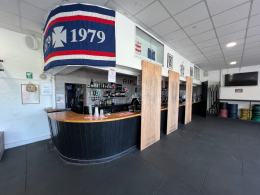
The King’s Head is a Young’s gastropub with a glazed restaurant extension. The Angel has a pool table, darts and fruit machines.
Both Henderson and Tiller are standing for re-election on Thursday. The reason given for the entire hearing being held in secret – a highly unusual step and one that is legally questionable – was that it may impact how people vote.
The pub and the people who use it
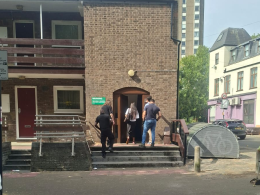
The Angel’s door has the original Victorian leaded stained glass, paint lifting in thick flakes down to bare wood, a cracked sandstone step. Across the road, Morley’s fried chicken was rated two out of five for food hygiene by Wandsworth Council in August 2024.
Roehampton once had six pubs. The police’s proposal would have reduced that to one. The Montague Arms closed in 2006 and is now a Lloyds Local. The Earl Spencer closed in 2004 and is now a Majestic Wine.
The Highwayman, purpose-built in 1959 to serve the 13,000-resident Alton Estate, was demolished in 2014 after Wandsworth Council approved the application and it became seven houses. The Maltese Cat was demolished around 2005.
The Alton Estate was built by the London County Council without a pub in its planned core. Historian John Boughton records that residents who wanted a drink “could walk to traditional pubs.” Seventy years on, there are fewer traditional pubs to walk to. People travel to The Angel from the Lennox Estate. For many of them, it is the only non-gastropub in the area.
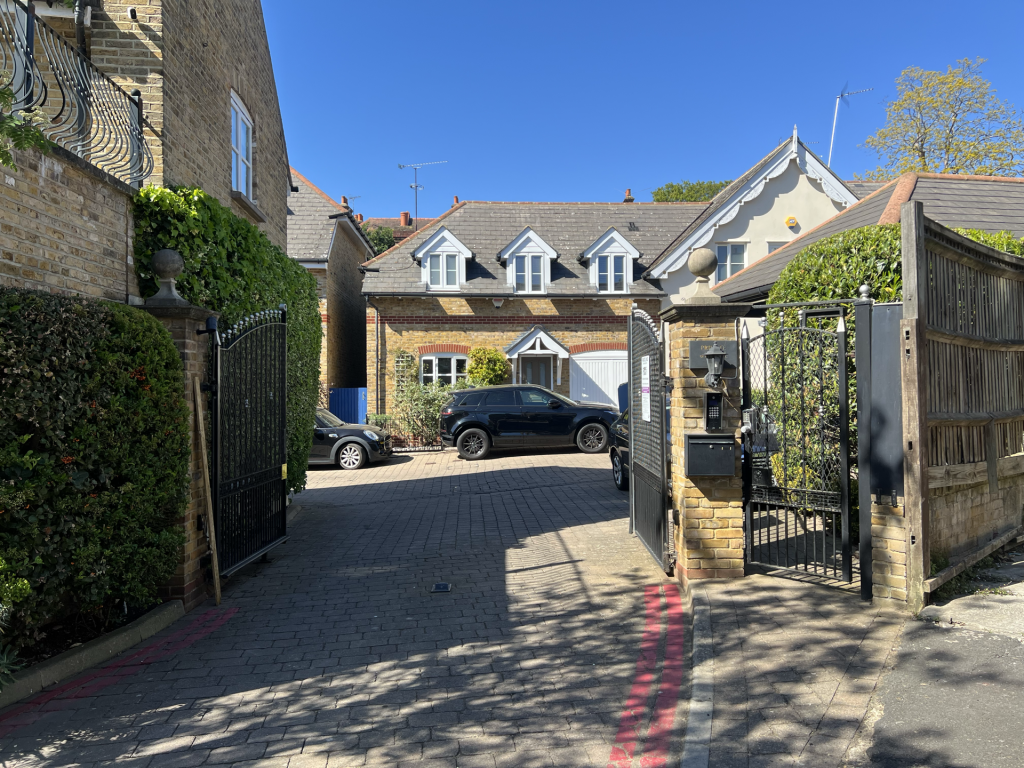
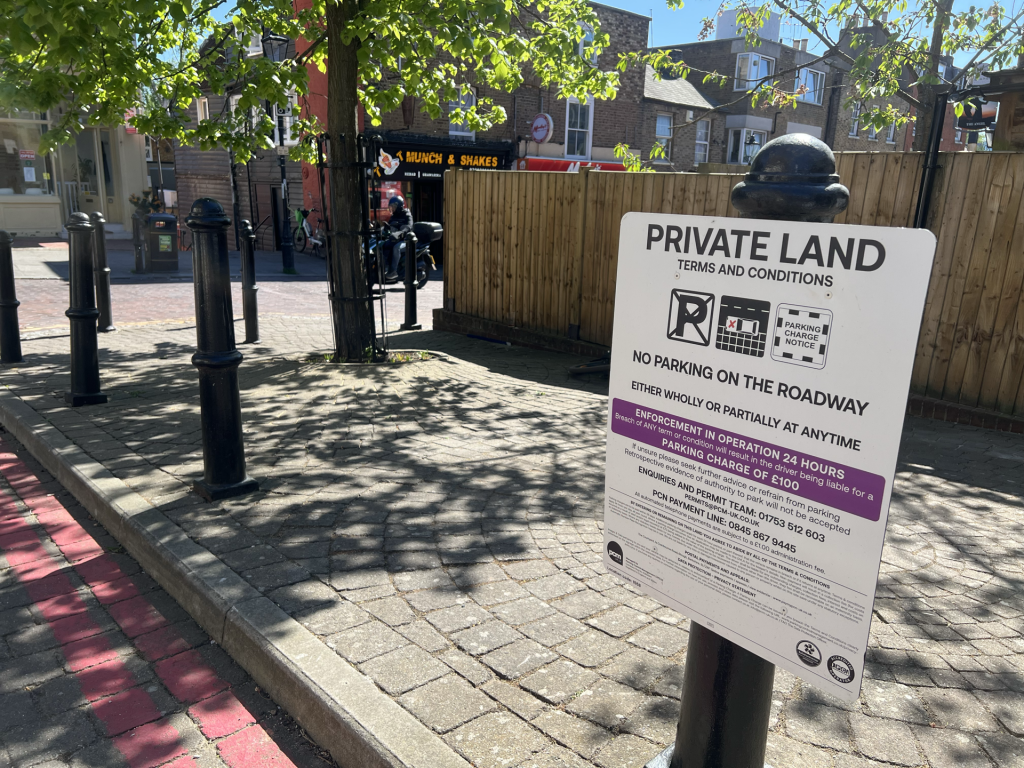
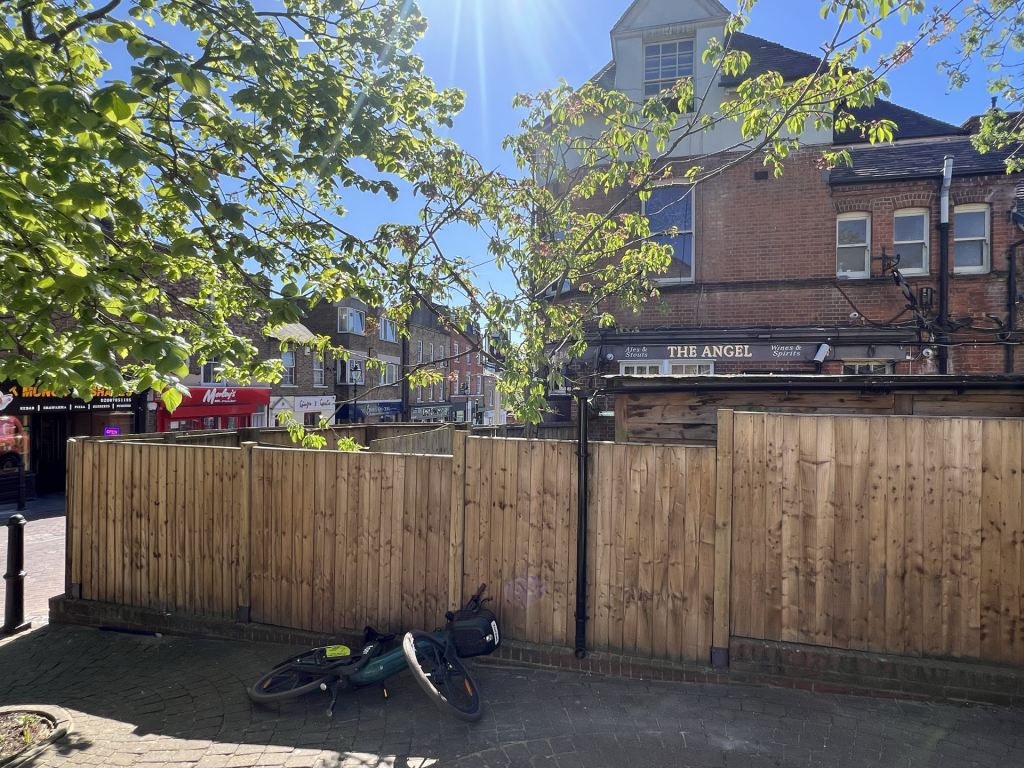
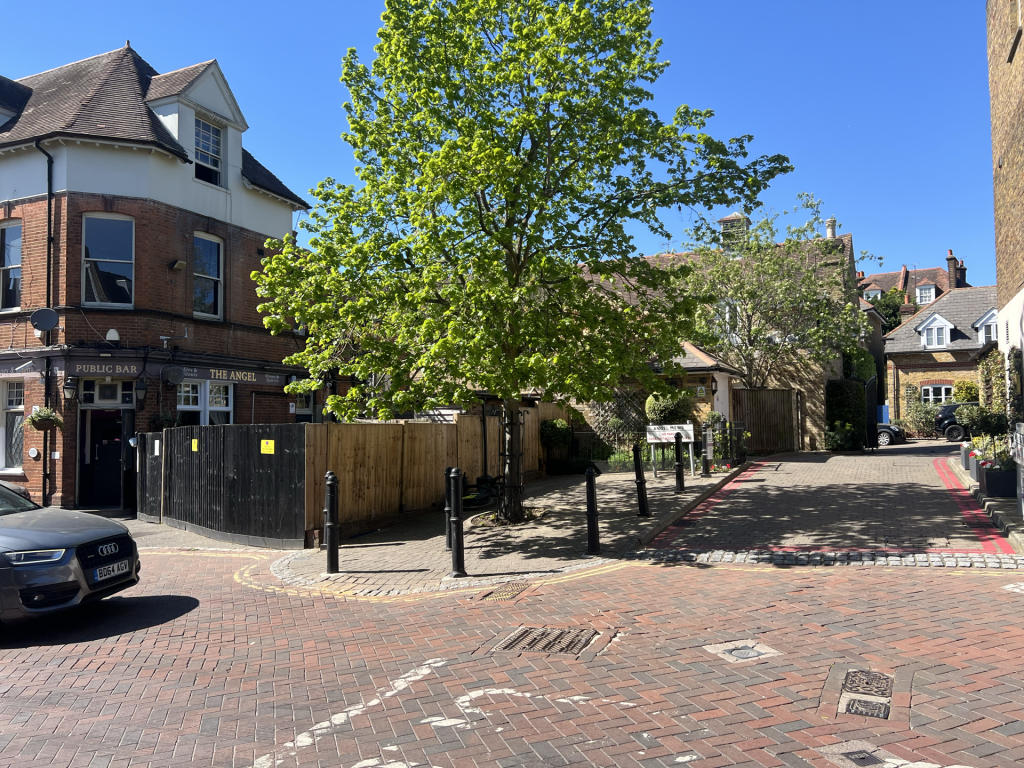
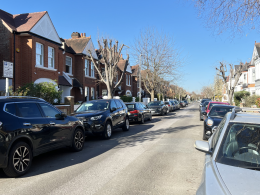
Immediately next to and behind the pub is Angel Mews. Entry to it is through electric gates. The small strip of road leading to it is marked with double-red lines and several signs warning it is a private road and anyone caught parking on it will be fined £100. Extra bollards have been placed on the shared corner with the pub.
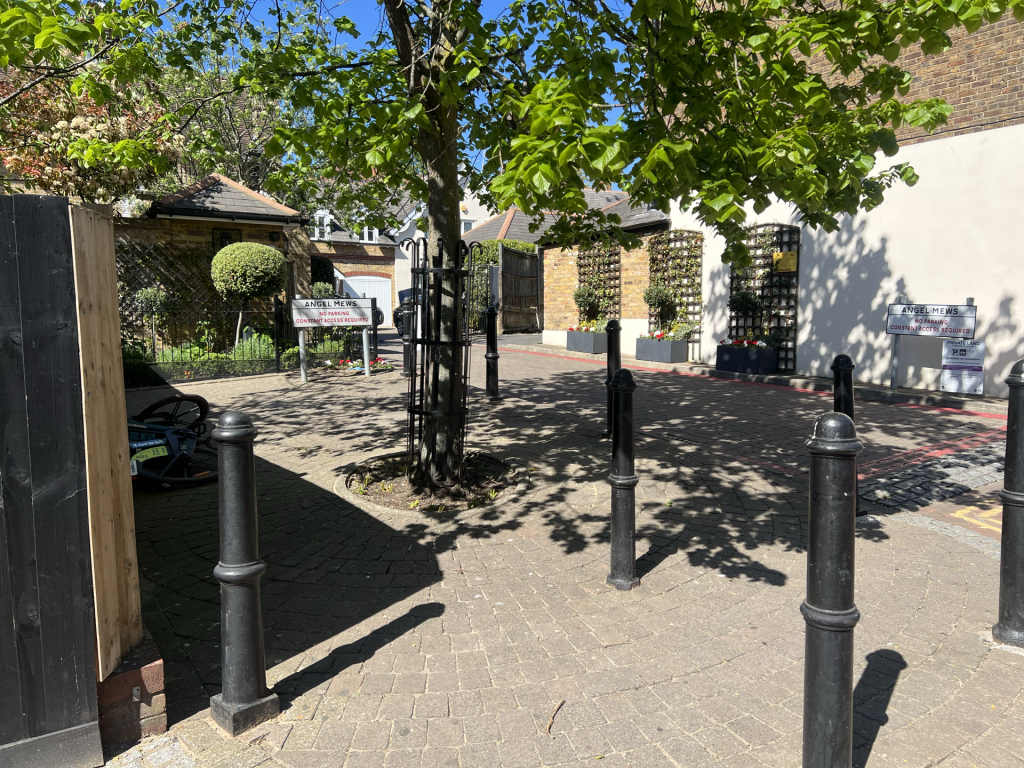
Inside are block-paved driveways, new-build mews houses with white-painted garage doors, a range of luxury vehicles including a Range Rover, a coach lamp on the gatepost, a video intercom on the pillar.
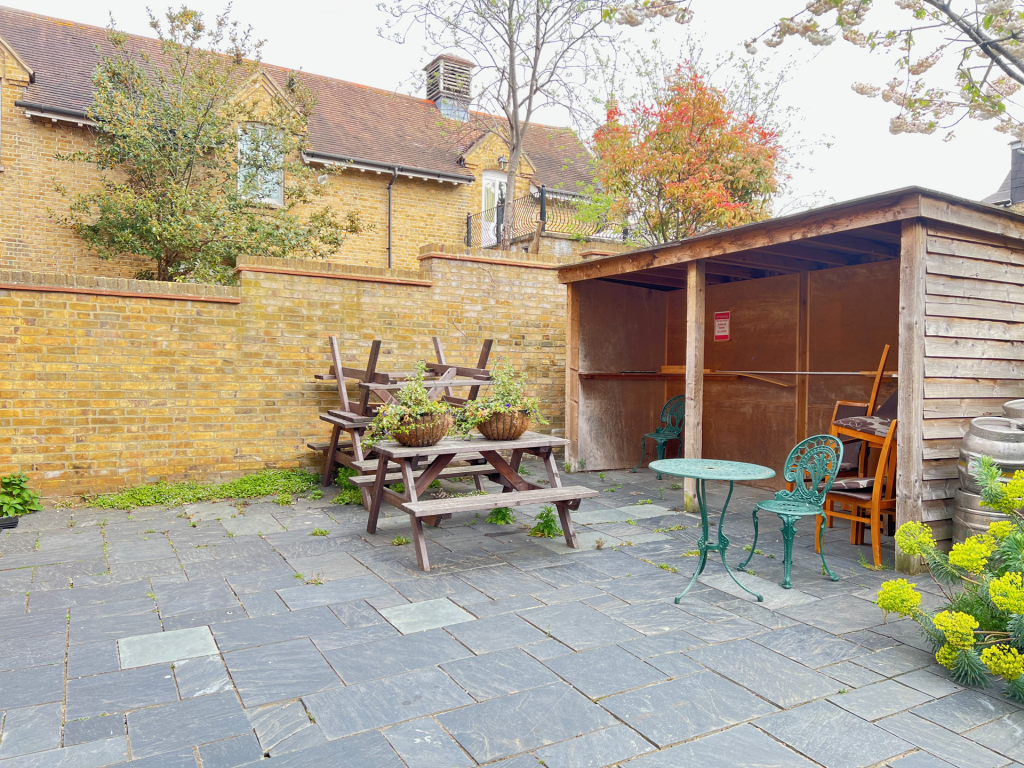
The pub garden’s two-metre brick wall backs onto the Mews. On one side the pub garden: slate paving, a wooden shelter, mismatched garden furniture, beer kegs. On the other: an immaculate courtyard. Six of the ten responses to the licensing committee came from inside the gates, as well as the hearing’s only resident witness.
The problems the Mews residents describe in their representations – noise, disorder, drug use in the surrounding streets – are real, but elicit little sympathy from Angel regulars.
“The people who bought their flats behind a pub and have done nothing but moan about living behind a pub!” posted one Roehampton resident about the saga on Facebook.
There is a history of tension: noisy pub goers sat outside just feet from people’s living rooms. The landlady received regular calls complaining and there have been occasional flare-ups: one evening, a Mews resident turned up and accused a group of drinkers of stealing his bag. An official noise abatement order was sought and won – but a bureaucratic cock-up meant it was never imposed.
Despite the tensions however none of the Mews residents mentioned anything that resembled what the police told a magistrate they expected to find when they were awarded the warrant to raid The Angel.
At the hearing, the testimony of the MP and both ward councillors came almost exclusively from Mews residents. Cllr Tiller said he was “speaking on behalf of residents who had experienced negative impacts from the pub”; Cllr Henderson took it further and told the hearing he was there “on behalf of anonymous constituents who were fearful of reprisals.”
Absent were the voices of the nearly 700 people who signed the petition, and the pub’s longstanding landlady.
“I always asked them: please, just do a walkthrough,” Cox says about her relationship with the Roehampton police. “Stop in, show a presence, walk out. They never ever done it. Never done a walkthrough.”
She was asking for the most basic form of community policing – bobbies on the beat, popping by occasionally to check in. By her account, she didn’t get it for 12 years.
As for the claims that she was running a drug empire from The Angel’s upstairs rooms, she says: “I’m sixty four years old,” she says. “I could just about walk, let alone run anything.”
The King’s Head, the pub the councillors consider well-run, is currently on the market. The Angel is listed by CAMRA as an Asset of Community Value.
Roehampton is one of the two most deprived wards in Wandsworth.
What happened to Sally Cox
Cox ran The Angel for nearly 12 years. She was removed as landlady – not before the review was filed, but because of it. Punch Partnerships’ lawyer told the hearing that the previous tenancy agreement “prevented a change in DPS unless serious thresholds were met, and it was only after the review was submitted that Punch Partnerships Ltd were able to convince Ms Sally Ann Cox to surrender the tenancy.”
She did not go voluntarily. She was pressured out.
She has since moved to a pub in Essex, living day to day, not knowing what comes next. She turns 65 this year.
“I feel like I’m the scapegoat,” she says.
The police told a magistrate The Angel was a major organised crime operation. They sent a helicopter, dogs, 29 officers in riot gear, and a team carrying a battering ram. They found the remnants of personal cannabis use, an empty-handed resident, and a baby shower.
Six months later, their barrister presented 57 empty plastic bags as evidence, and local politicians reflected exclusively the views of residents living in an enclosed residence built 20 years ago behind a building that has stood on Roehampton High Street since 1617 – a coaching inn for its first 255 years, a pub since 1872.
The licensing committee was not persuaded. Adding to the issues, the hearing where all of this was tested was held behind closed doors, with no public access, eight days before the election.
Whether the intelligence was simply wrong, or whether something else explains the enormous gap between what was alleged and what was found, is a question the public has not been allowed to watch anyone answer.


Kieren, thank you for persisting with this issue. There’s something clearly dodgy going on: the collusion between the police and the council to ram through a licensing hearing in secret (almost certainly unlawfully and most certainly on spurious grounds) immediately before the council election makes very little sense in any other context.
It could just be that the police have been nagged and nagged and nagged by Angel Mews concocting fantasies about the pub until they felt compelled to “do something”. But that doesn’t sit right: the police went far beyond just representing complaints built largely on utter nonsense (such as the claim that a family pub offering darts was a natural environment for organised crime to thrive).
Anyone who read the submissions to licensing will appreciate why this campaign failed: all innuendo, no substance. If anti-social behaviour is constant, where’s their documented evidence? Nowhere. When they claim anti-social behaviour is down to the pub, are they sure it’s caused by Angel patrons and not, say, the hordes of younger adults drawn to the area by Morleys takeaway, who loiter on the steps opposite the pub and are quite…lively? The people who urinate in Blackfords Path aren’t Angel patrons, as claimed; they’re street drinkers. Their Polish lager cans and beer bottles clutter the alley as proof.
It is astonishingly rare for a licensing committee not to give huge weight to police submissions. For them to take just half an hour before slinging them out, along with the claims of Angel Mews residents and their councillors – shamefully championing a handful of NIMBYs over working class Roehampton that Labour is supposed to serve – shows how lamentable the war waged against the Angel has been.
If you don’t want to live near a pub, don’t move next to one and then try to shut it down.