


Putney faces another summer of traffic disruption after Wandsworth Council has quietly secured permits for months of lane closures on Wandsworth Bridge, starting next month.
The works, which run from late May to the end of September, will reduce the bridge to single-lane traffic in each direction while multi-way signals control the approaches. Wandsworth Bridge carries over 50,000 vehicles a day. The council has made no public announcement.
The lane closures will overlap with the continued closure of Hammersmith Bridge (shut since 2019) and Albert Bridge (shut since February), and come on top of a Putney Bridge junction that still isn’t working after a botched redesign. For four months this summer, three of south-west London’s four river crossings will be impaired simultaneously.
The bridge works were not announced to the public. They were disclosed in the minutes of a joint meeting between TfL, H&F, Richmond and Wandsworth on 3 March, where the Wandsworth representative noted “there are major works on Wandsworth Bridge starting in May, running through to the beginning of October.”
Those minutes were only released because of FOI requests about a separate issue: the collapse of a pedestrian safety scheme on Wandsworth Bridge Road. The months of disruptive roadworks also do not feature in Wandsworth Council’s roadworks public schedule.
How we got here
Transport for London blocked Hammersmith and Fulham’s proposed crossing improvements on Wandsworth Bridge Road last October on the grounds they would harm bus performance. H&F had designed the scheme without properly consulting TfL, and a petition against it gathered 3,237 signatures. Putney MP Fleur Anderson urged constituents to sign, warning of “knock-on effects” for Putney traffic.
Six FOI requests to TfL, all now published on the authority’s disclosure log, reveal what happened next.
A resident who asked TfL for the evidence behind its objection got a direct answer. “TfL have not assessed if this proposal would have excessive negative impact on buses,” the transport authority wrote in January. There was “potential” for increased congestion, it added, which “may also negatively impact bus performance.”
TfL blocked the scheme on bus grounds. It had not checked whether buses would actually be affected.
H&F’s own traffic data showed the parklets already on the road had “no detrimental effect on general traffic or bus operations.” TfL did not dispute this but continued to object. Speed surveys showed traffic on the 20mph road regularly exceeding 30mph, with speeds above 40mph at night. The proposed raised crossings were designed to address this. TfL suggested speed cameras instead.
TfL’s preferred position, set out in a January 2026 briefing note, went further than redesign. Bus performance, it said, “would likely benefit more from less crossings and no physical constraint during peak time operations.” Fewer pedestrian crossings, not better ones.
It is the same argument TfL applies at Putney Bridge junction, where its insistence on protecting bus times helped create the congestion that pushed traffic onto Wandsworth Bridge Road in the first place.
By February 2026, the scheme was dead. H&F’s lead engineer emailed TfL to confirm the council would “not be progressing with the scheme in its current form.” The original consultants were stood down.
The same email contained a line not reported elsewhere. “Given the political sensitivities around WBR and previous commitments on delivery, the programme will need to be managed carefully.” H&F’s Labour leadership had publicly committed to the improvements. The borough’s Conservative opposition has pledged to remove the existing parklets if elected on 7 May.
What happens next
The 3 March working group agreed a two-phase approach. Phase 1 covers minor improvements only, with a requirement from TfL that changes have no measurable effect on buses. Controlled pedestrian crossings are now Phase 2, with delivery at the earliest in late 2026. The next meeting is on 14 April.
Residents on Wandsworth Bridge Road have been waiting since July 2025 for safe pedestrian crossings. Putney residents, meanwhile, have just learned that the bridge next door is about to lose lanes for four months. Nobody told them.
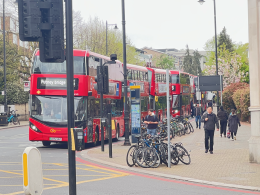
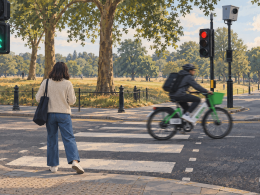
if only there were fewer crossings on Putney High Street then traffic would flow better. Do remember that tfl had a hand in the redesign of the Putney Bridge approach, demanding a larger area for pedestrians so the existing three lanes became two on the Lower Richmond Road lights/ Bridge junction. This pedestrian holding island demand as new news to us all ,made public after years of blame on the council, so suiting the council to announce that the faceless tfl blob is to blame for the redesign failure. Let us find another target for public anger. The Tfl blame announced was made to kill the demands for removal of the island. Remembering that Tfl being part of the Mayor’s doings and Labour, so protects Wandsworth Labour ( they are friends) and the Labour MP from further voter fallout. Cllr Yates involved?