

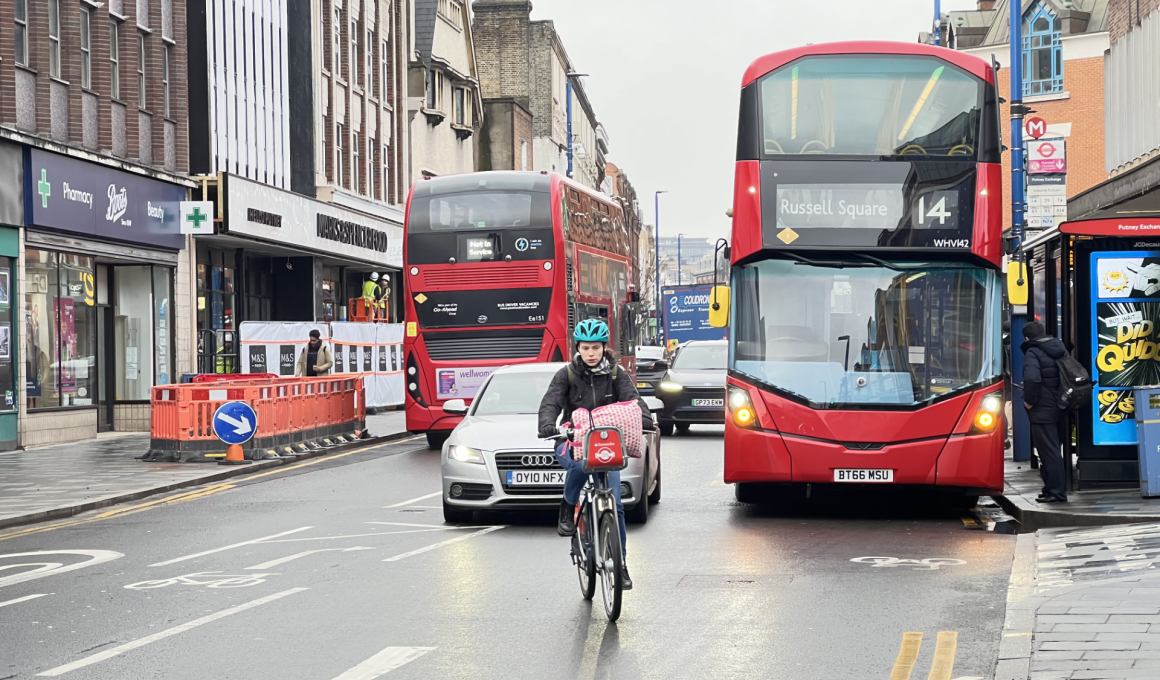
Eight photographs taken on Friday afternoon document the state of Putney Bridge junction in mid-February 2026. Together they tell a story of concentrated change in one small stretch of the High Street, where visible progress sits alongside new and persistent problems.
The road widening at the bottom of Putney High Street has been completed and is now in use. The triangular section of additional carriageway was achieved by narrowing the pavement on the eastern side. Traffic flow has improved, with more vehicles able to pass when buses stop at the M bus stop. But just looking at the road markings shows how little space there is for traffic to flow freely.
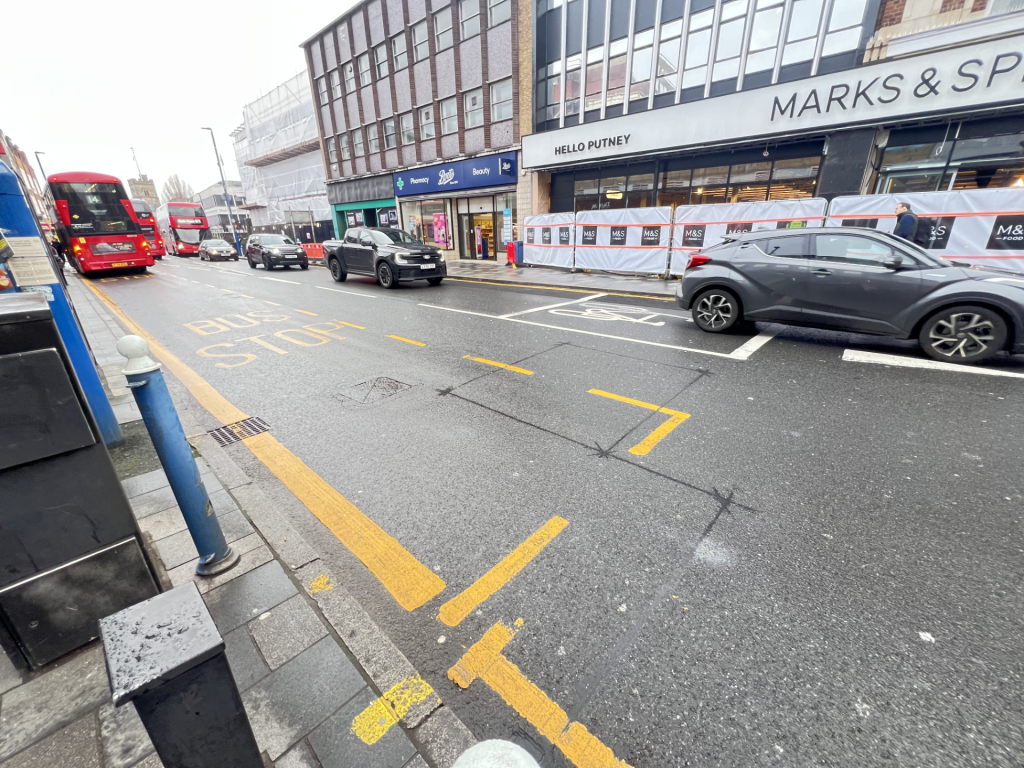
The works still require finishing touches, including the replacement of a tree that died during construction. The more substantial improvement will come when the council completes the promised bus stop inset on the opposite side of the road next to TK Maxx.
Progress and stalled momentum
Marks & Spencer is approaching its planned April 1 opening. The facade has been installed this week, with internal fit-out including tills and shelving now underway. Site activity increased noticeably this week with management personnel present alongside construction crews.
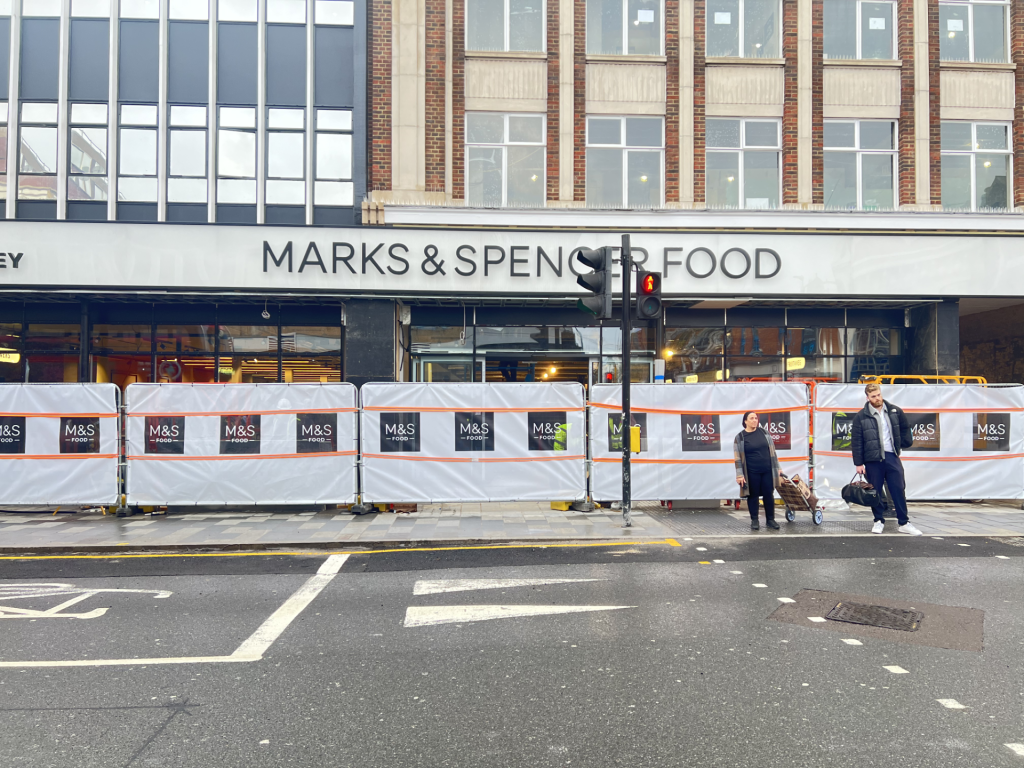
After seven years during which M&S held the lease while refusing to sublet, the transformation of the former department store into a food hall has accelerated in recent weeks. The restored Art Deco facade represents a visible improvement and welcome return to this section of the High Street.
At the corner of Putney Bridge Road, demolition work on the hotel development site appeared to have paused this week. Scaffolding and protective sheeting remain in place but no workers were visible, the temporary office at the bottom is shut up, and there has been a conspicuous lack of drill and angle grinder noise.

The pause could reflect workers being deployed to other projects or delays awaiting planning approval for minor scheme modifications that will go to the Planning Committee next week. The site, which previously housed Ramna restaurant, Gadget Xchange and Preto, is scheduled for construction of a 200-room Hub by Premier Inn hotel with ground-floor retail units beginning in March 2026.
The development timeline extends to 2028, and in December council leaders and TfL officials observed a scaffolding lorry blocking the junction while attempting to access the site, providing a preview of the construction disruption that will affect this junction for the next two years.
Commercial opportunities and heritage concerns
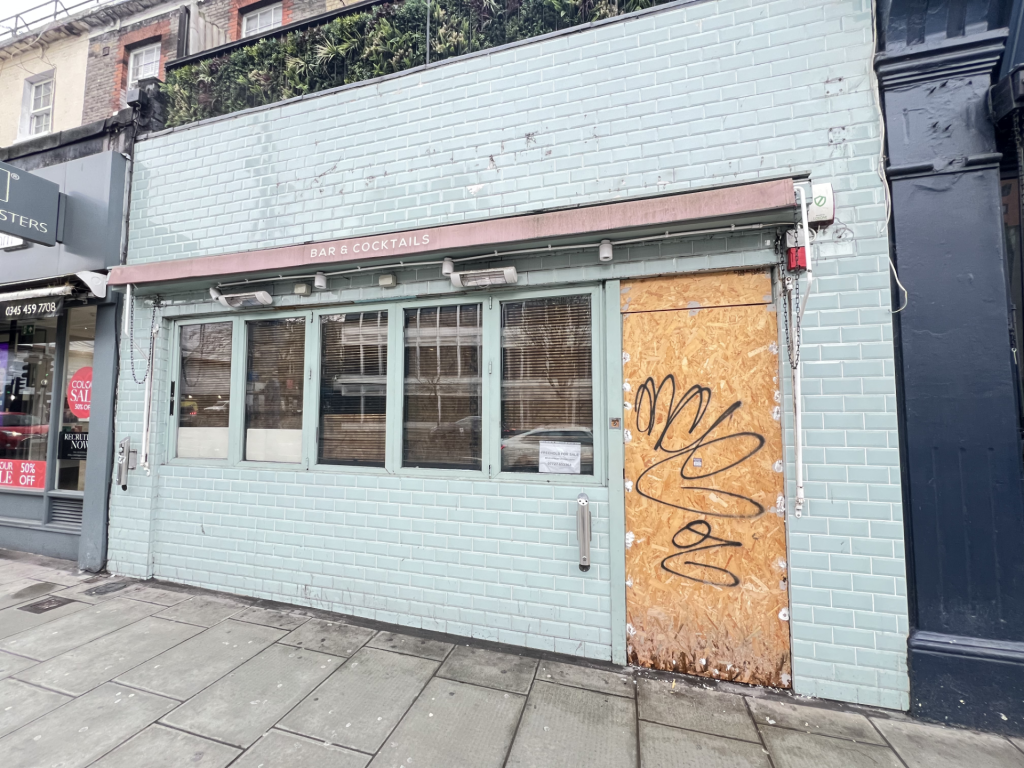
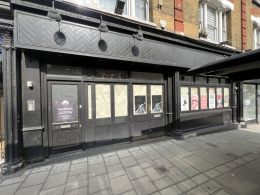
The former Simmons Bar is on sale – and not just the lease but the freehold. The “door” was unscrewed and then reattached this week (complete with telltale white caulk to cover screwholes), with a notice posted in the window advertising the sale.
The cocktail bar closed in August as part of the chain’s restructuring, weeks after neighbouring bar Be At One also ceased trading. The freehold sale represents a potential opportunity for new ownership that might establish more sustainable rent levels than those that have contributed to Putney High Street’s evening economy decline.
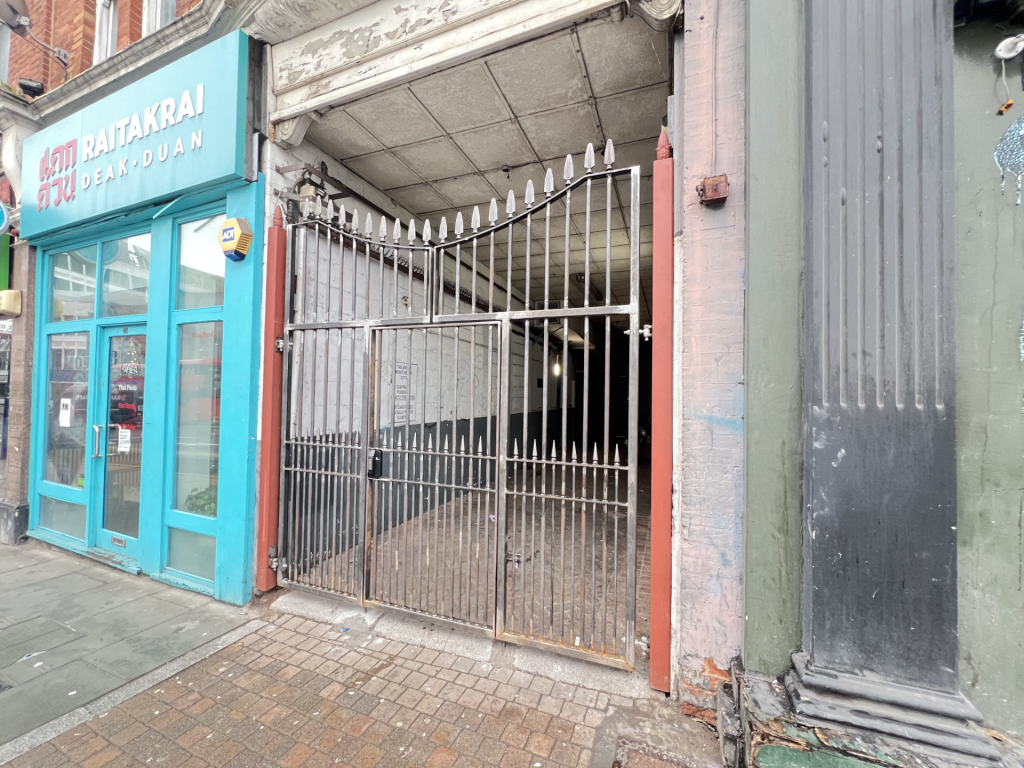
A new steel security gate has been installed at the entrance to the White Lion pub. The metalwork now blocks what has historically been an open archway to the Grade II listed building.
The gate’s purpose remains unclear. It may signal renewed interest in redeveloping the building that sits on the Heritage at Risk register, or it may simply be a defensive measure following the building’s occupation by squatters who stripped fixtures including the entire lead roof. The White Lion has been closed since 2015, with multiple planning permissions granted and lapsed without implementation.
Persistent design problems
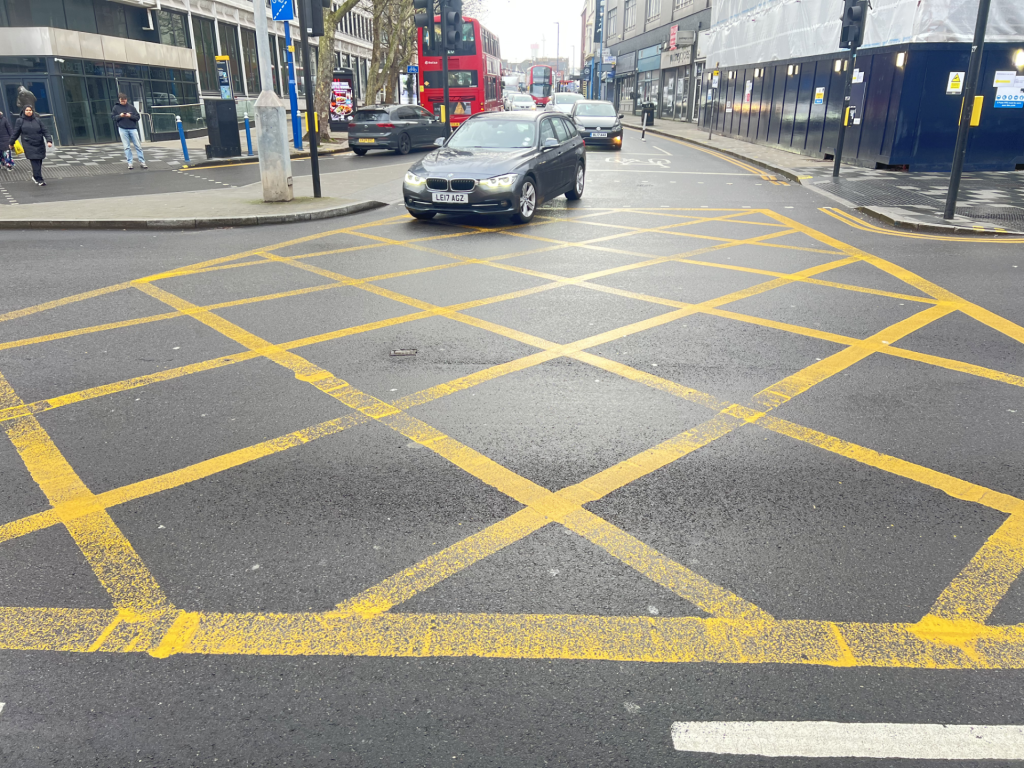
The yellow box junction at the intersection of Putney Bridge Road and Putney High Street continues to generate congestion. The junction marking, designed to prevent gridlock within the junction itself, has the effect of preventing vehicles from entering even when space is available on the High Street.
Henry Cheung, the council’s transport lead, raised the issue at this week’s Transport Committee meeting. Drivers avoiding potential fines for stopping in the yellow box wait on Putney Bridge Road, where queues can extend nearly a mile during peak periods. The design creates wasted capacity when traffic lights show green but vehicles remain stationary.
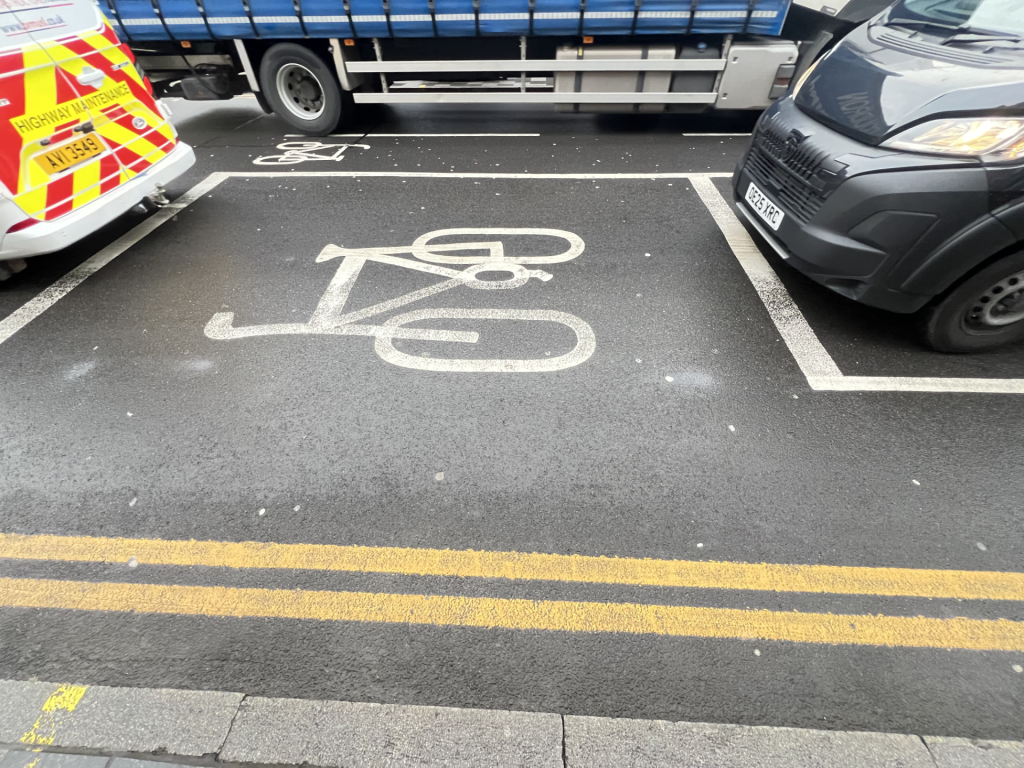
The cycle infrastructure installed as part of the junction redesign sees minimal use. Large cycle boxes at the junction, yellow lane markings, and designated cycle spaces remain largely empty. Cyclists generally prefer parallel routes through side roads rather than the High Street corridor.
The council has already acknowledged this pattern by removing the dedicated cycle left turn from Putney Bridge Road onto the High Street and eliminating the five-second advance cycle phase at traffic signals. Both measures had been installed during the £835,000 junction redesign but saw insufficient usage to justify the traffic capacity they consumed.
A junction between states
These eight photographs document a moment of transition. Marks & Spencer approaches completion after seven years of vacancy. Road widening has been finished and is already in use. The hotel development has paused between demolition and construction. Simmons Bar awaits a new owner. The White Lion has acquired defensive barriers of uncertain permanence. And the junction’s design problems persist despite a million pounds spent on redesign and emergency fixes.
This concentration of change in one small stretch offers a compressed view of Putney’s broader trajectory. Investment is returning to the High Street, but slowly and unevenly. Physical improvements are being made, but not all of them work as designed. Commercial opportunities exist, but so do empty properties and failed ventures. Progress and stagnation occupy the same space.
Urban change rarely follows the timelines shown in planning documents or the logic of computer-modelled traffic flows. It accumulates through small shifts: a facade restored here, a gate installed there, a road widened by a few metres. Some changes prove their worth immediately. Others take years to justify themselves, or never do.
The scaffolding will come down from Marks & Spencer within weeks. The hotel scaffolding will remain for two years. The yellow box will continue causing delays until someone makes a decision about its removal. And residents will continue judging Putney’s recovery not by what has been promised or planned, but by what they can see working in front of them.
This is the junction in mid-February 2026: neither fixed nor broken, neither thriving nor declining, but caught in the slow, uneven process of becoming something different from what it was.
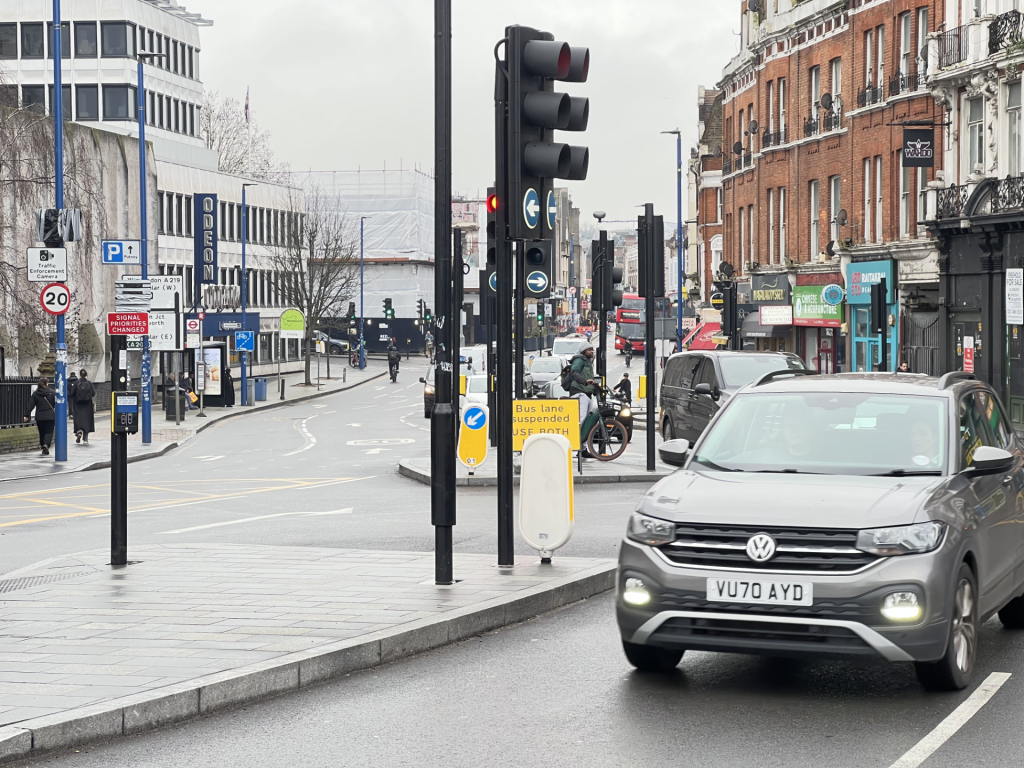


“But just looking at the road markings shows how little space there is for traffic to flow freely.” Always it’s widen the road space – yet the obvious problem, that there are just too many cars for our road network, never seems to be recognised. I wonder why.
Owner of flat in 18 Putney High Street here – the new permanent gate to the White Lion alleyway was installed by us and not by the owner of the pub. The alleyway was used constantly by football fans as a convenience on match days and the access to our flats often stunk as a result. The space was also used (illegally) as a parking spot by many of the nearby restaurants and shops, often blocking our own access to our flats. No mysterious reasoning behind this, except our own privacy and safety.