


Update 27 Jan: TfL has assured bus users that the 93 is “safe and will be maintained.”
Go-Ahead, London’s largest bus operator, has told Transport for London it will stop running eight routes including the 93, which has served Putney since 1924, blaming the government’s national insurance increases for making the services financially unsustainable.
The withdrawal, revealed in a letter from Go-Ahead London managing director Andrew Edwards to TfL, and seen by The Times, marks an unprecedented mid-contract exit. Analysis of TfL’s published tendering schedules confirms none of the eight affected routes are due for renewal until at least 2028, meaning this is not a negotiating tactic ahead of contract discussions but a genuine abandonment of existing commitments.
Route 93 runs from Putney Bridge Station through Putney High Street and across Putney Heath to Wimbledon, Morden and North Cheam. It operates 24 hours a day and is one of five routes serving the length of Putney High Street, providing a key link for residents travelling to Wimbledon town centre, the Northern line at Morden, and areas of south London not served by the District line.
The route first began operating on 19 April 1924, originally running between Wembley Stadium and Wimbledon for the British Empire Exhibition. Over the following century it evolved into its current alignment, becoming a staple of Putney’s public transport network.
Why Go-Ahead is walking away
Edwards’ letter states the routes are “no longer sustainable under current contract terms” due to national insurance increases and inflation that have not been offset by contract price adjustments.
In April 2025, employer national insurance contributions rose from 13.8 per cent to 15 per cent, while the threshold at which employers start paying dropped from £9,100 to £5,000. The Confederation of Passenger Transport estimates these changes cost the bus industry £100 million nationally, roughly £800 per driver per year.
Documents from FirstGroup’s acquisition of RATP’s London bus operations confirm the scale of the problem, referencing £40-50 million in “onerous contract provisions” stemming from labour cost increases on contracts signed before 2022.
Go-Ahead says it will “rebid for these routes on terms that allow us to continue our high standards” and will operate the services until the tendering process concludes. The move is believed to be unprecedented and risks job losses.
What happens next
TfL will put the routes out to tender. However, with all operators facing the same national insurance burden, there is no guarantee bids will come in at prices TfL considers acceptable. If routes are deemed uneconomical, TfL may shorten them or withdraw them entirely.
The other affected routes are the 80, 151, 154, 155, 163, 164 and 470, all operated from Go-Ahead’s Sutton, Merton, Ellis Road and Stockwell garages.
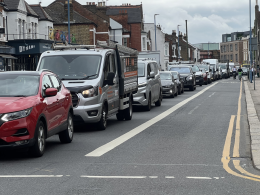
For Putney, the timing adds to existing transport pressures. TfL is already consulting on changes to route 424 that would remove direct service through Putney High Street, citing chronic congestion. The transport authority’s own director of public transport planning, Geoff Hobbs, has singled out Putney as one of London’s most problematic areas for bus reliability, where “any traffic that comes to a halt will soon back up over the bridge.”
Putney residents who rely on the 93 for journeys to Wimbledon, Morden or points south should monitor TfL announcements for updates on the tendering process and any potential service changes.
This is sensationalist scaremongering. Break clauses have been exercised in respect of bus contracts by most London operators in recent years as costs have increased by much more than inflation in the wider economy. All of the affected routes have been maintained with new contracts that reflect the cost of operation.
Thanks for your comment. Let’s address the specific claims:
1. Break clause usage has increased (from 2 contracts in 2022 to 22 in 2023 according to TfL data), but this represents only ~3.4% of London’s 650 routes – hardly ‘most operators.’
2. You’re correct that costs have outpaced inflation – our story specifically cites the £100m national cost of NI changes and references FirstGroup’s documentation of ‘£40-50 million in onerous contract provisions’ on pre-2022 contracts.
3. However, your claim that ‘all affected routes have been maintained with new contracts’ is factually incorrect. These eight routes (80, 93, 151, 154, 155, 163, 164, 470) were only announced for termination on January 23rd. TfL has not yet begun the tendering process. Our analysis of TfL’s published tendering schedules confirms none were due for renewal until at least 2028.
4. This IS unprecedented – as confirmed by both The Times and Evening Standard, this is a mid-contract exit by London’s largest operator. Go-Ahead will ‘rebid’ but there’s no guarantee of success given all operators face the same cost pressures.
Our story accurately reflects the genuine uncertainty. When similar operator Sullivan Buses exited in 2024, they cited a £200,000/month shortfall. Recent route 148/N148 renewal saw a 64% cost increase – suggesting TfL may need to pay significantly more or accept service reductions.
Twenty two routes in 2023 represents about a fifth of those routes that would oridnarily have been due to be retendered as they would have been five-year contracts with a break clause at the three year point. Since 2022 TfL has generally awarded contracts for seven years with a break clause available at year four. The longer contract term means that there is more risk for costs to diverge from those originally anticipated. Pre 2022 the use of break clauses was almost unheard of. Since then all operators except for Uno have invoked them as the level of inflation facing bus operators has exceded that more generally. There are lots of reasons for that and, as you have noted, recent contract awards have been significantly more expensive than the previous ones. The impact of this on financial plannning has been noted by TfL.
Your maintenance that Go-Ahead London’s actions are unprecedented is not true. Just because the Times or Evening Standard claim something it doesn’t make it a fact. This (calendar) year, in addition to the Go-Ahead operated routes noted in your article, break clauses have been invoked for routes 92, 190, 295,339, 632 and W5. Of course the TfL tendering schedule will have shown the 80, 93, 151, 154, 155, 163, 164 and 470 as not being due for renewal as that reflects the case until the break clause was invoked. In the last few weeks Go-Ahead has been reawarded a contract to run route 353 and won theat to provide the 322 from Transport UK – in both cases these had been subject to break clauses. This is very much a business as usual activity now.
The reference to onerous contract provison made by First relates to the loss making contracts that it acquired with the purchase of RATPDev’s London ops last year. At the time it was made clear that it would seek to exit these at the earliest opportunity.
Thus far, all of the routes in respect of which break clauses have been invoked have been re-awarded (in many cases to the incumbent operator) with no significant changes. I say “thus far” as a break clause has been invoked in respect of route 349 the withdrawal of which is currently being consulted on by TfL. The two events are not linked though. Comparing Sullivan Bus to Go-Ahead London is a case of apples and pears. The circumstances leading up to the former’s departure from the London bus market have been documented elsewhere.
I maintain that your story was seeking to give the impresion that large swaythes of south London would be left without buses which is simply not true.
Absolute tragedy of a situation TFL and the Labour car haters have created to bring us to this situation that will affect many in Putney to afar that rely on the 93. Our local Labour MP won’t either stand up to Khan and his cronies so also needs to be kicked out as well asap.
This is a very bad idea as many time due to tube and train cancellation forced people to uses buses and 93 is crucial as there is no other direct way and it is ridiculous as trains reduced their times and now buses are going to get cancelled. How this government planning to bring growth? We will be stuck in our own homes and work from home or never go out and spend money. Is that what they want. It is so ridiculous