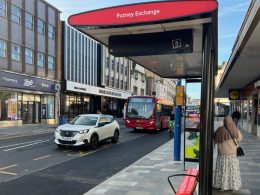
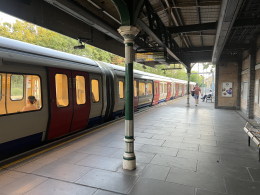
Putney residents may have noticed something unusual on local streets in recent weeks: white Jaguar SUVs with boxy sensor equipment on the roof, driving themselves around SW15.
Google’s self-driving car company Waymo began testing its robotaxis across Wandsworth in December, running 24 hours a day as it maps local roads ahead of a commercial passenger service launching this spring. The vehicles currently have human safety drivers onboard, but the plan is to remove them once testing is complete.
If you spot a Waymo Putney vehicle, let us know. We’re tracking where they’re being seen across SW15.
The technology promises a future where you can hail a taxi with no driver, book it via an app, and be driven around by artificial intelligence. Waymo says its cars have completed over 10 million paid rides in America with crash rates 90% lower than human drivers.
But the American experience also carries warnings. Just before Christmas, a power cut in San Francisco paralysed dozens of Waymo vehicles at junctions across the city, blocking traffic and slowing emergency response to fires. The mayor had to phone Waymo’s chief executive directly to get the cars removed from roads.
What service will Waymo bring to Putney?
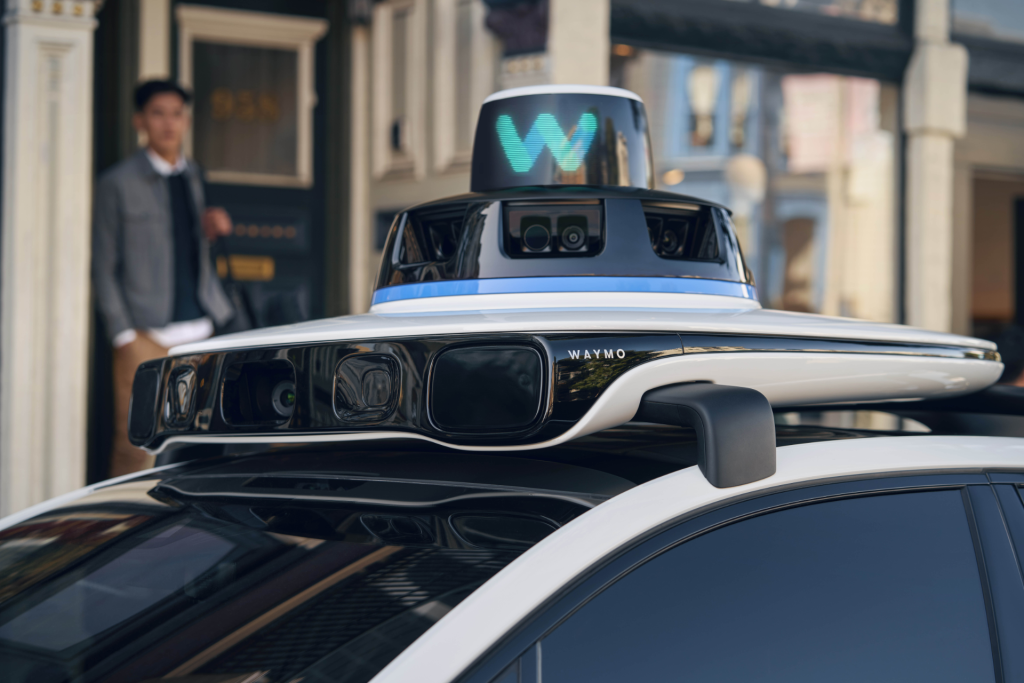
The robotaxis work like Uber, but with no driver. You book via the Waymo app, the car drives itself to your location, you get in, and it takes you to your destination. The vehicles are fully electric Jaguar I-Pace SUVs equipped with cameras, radar and lidar sensors that can detect objects up to 500 metres away.
Wandsworth is one of 20 London boroughs where Waymo is conducting testing, including Westminster, Camden, Greenwich and Hammersmith & Fulham. The exact launch date depends on government approval, but Waymo has said publicly it plans to offer paid rides “in spring 2026.”
The company has been running commercial services in Phoenix since 2020 and now completes around 450,000 paid rides per week across America. Waymo’s arrival puts it in competition with Wayve, a British company partnering with Uber to launch its own driverless service in London this spring.
The San Francisco blackout that stopped Waymo cold
On 20 December, a fire at an electricity substation knocked out power to about a third of San Francisco. Traffic lights went dark, and Waymo’s robotaxis couldn’t cope.
The vehicles are programmed to treat broken traffic lights as four-way stops, but they also request “confirmation checks” from remote operators before proceeding. The scale of the outage created what Waymo called a “concentrated spike” that overwhelmed its support system. Robotaxis lined up behind other stalled robotaxis, compounding the blockages.
The city’s 311 hotline received 20 reports about robotaxis blocking traffic. San Francisco Supervisor Bilal Mahmood said the stalled vehicles slowed fire department response to two separate fires. Mayor Daniel Lurie called Waymo’s chief executive to demand immediate removal of vehicles from roads.
Waymo has since issued fleet-wide software updates to give vehicles “specific power outage context” and expanded its emergency protocols.
Learning from American incidents
Other incidents have made headlines in America, though it’s worth noting that because robotaxis are so new, every mishap gets reported. When did you last read about a regular car hitting a cat? It happens every day but isn’t news.
Still, the incidents are instructive. A Waymo struck and killed a San Francisco cat in October, exposing a technological blind spot: self-driving cars lack “object permanence,” so anything falling under the vehicle cannot be seen. American safety regulators investigated 25 incidents where Waymo vehicles illegally passed stopped school buses with flashing red lights, prompting a voluntary software recall. A cyclist suffered brain and spine injuries in February when a Waymo passenger opened a door into a bike lane.
American parents are already sending children to school in Waymos. The company launched “Waymo Teen” in Phoenix in July for riders aged 14 to 17, with parental controls and 24/7 support. It’s not available in California, where state law prohibits transporting unaccompanied minors under 18, but that hasn’t stopped parents doing it anyway. A San Francisco venture capitalist reported sending his two middle schoolers in Waymo “two to four times a month” since 2023.
The argument in favour: no driver means no risk of assault or harassment. The argument against: what happens if the car crashes with a teenager inside and no adult present? There’s no indication whether this service will come to London, and UK regulations remain unclear.

The safety question: promising but incomplete data
Waymo reports impressive statistics from 127 million autonomous miles through September: 90% fewer crashes causing serious injury compared with human drivers, 92% fewer pedestrian crashes with injuries, and 83% fewer cyclist crashes with injuries. Insurance giant Swiss Re, using Waymo-provided data, found 88% fewer property damage claims and 92% fewer bodily injury claims versus human drivers.
But independent researchers caution these figures come with significant caveats. The comparison is only valid for the restricted urban conditions where Waymo operates – fair weather, well-mapped streets, no rural roads or motorways. An analysis by the RAND Corporation found that proving autonomous vehicles are safer than humans at preventing fatalities would require billions of miles of driving data; Waymo has accumulated roughly 1-2% of that threshold.
More concerning are specific documented weaknesses. A University of Central Florida study found Waymo vehicles showed 5.25 times higher crash rates than human drivers in dawn and dusk lighting conditions, and nearly twice the rate during turning manoeuvres. Virginia researchers found robotaxis are struck from behind 4.8 times more often than human-driven vehicles, likely because their cautious, rule-following behaviour creates conflicts with aggressive human drivers.
The honest assessment: autonomous vehicles appear roughly equivalent to – and in some scenarios safer than – human drivers in the limited conditions where they currently operate, but claims of dramatic overall superiority remain scientifically premature. The question for Putney is whether American urban results translate to London’s narrow Victorian streets, complex traffic patterns and unpredictable weather.
If you see a Waymo testing in Putney, please let us know. More information is available at waymo.com/waymo-in-uk.