


Wandsworth Council’s claim to have “no debt” unravelled within 48 hours this week, as finance papers revealed plans to borrow £1.1 billion – with an estimated lifetime cost of £2.5 billion – just one day after Cabinet dismissed Conservative warnings about “billions of debt” as false.
Analysis of official transcripts shows the council’s Cabinet Member for Finance made contradictory statements about the council’s borrowing position on Monday 1 December, the council issued a press release boasting “lowest levels of debt in London” on Tuesday 2 December, and finance officers confirmed the scale of planned borrowing at Finance Committee on Wednesday 3 December.
The timeline reveals a press release claiming financial prudence issued precisely between Cabinet dismissing opposition debt warnings and Finance Committee confirming those warnings were accurate.
The Cabinet Dismissal: Monday 1 December
At Cabinet on Monday afternoon, Cllr Angela Ireland told colleagues: “The key highlights are that as of today the council has no internal debt. We have no borrowing as of 30th of September 2025.”
Less than a minute later in the same speech, Ireland acknowledged: “The housing revenue account has some internal borrowing.”
Council papers presented to Finance Committee two days later state the council has £129 million in internal borrowing, contradicting Ireland’s “no debt” claim.
This is not the first time Ireland has made disputed claims about the council’s debt position. In April 2025, she claimed “zero debt” status at Cabinet while failing to address mounting financial pressures.
At the same Cabinet meeting, Cllr Graeme Henderson, Cabinet Member for Health, referenced Conservative opposition leaflets “claiming that they are landing residents in billions of pounds of debt.”
Ireland responded: “We have not saddled residents with the billions of pounds of debt which seem to be claimed in these leaflets. That’s true.”

The Press Release: Tuesday 2 December
The following day, the council issued a press release titled “Wandsworth Council leads the way in delivering value for money,” claiming: “Wandsworth has some of the highest financial reserves and lowest levels of debt in London.”
The press release made no mention of the £1.1 billion in planned borrowing detailed in Paper 25-423, which was to be scrutinised by Finance Committee the following evening.
The timing meant residents reading Tuesday’s press release had no indication that 24 hours later, finance officers would confirm plans to borrow more than £1 billion over the next decade.
“I intentionally didn’t put lifetime figures in because I didn’t think they represented what we were trying to communicate well.”
Fenella Merry, Finance Director
The Finance Committee admission: Wednesday 3 December
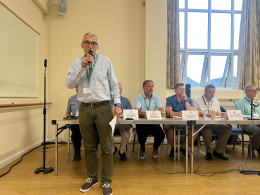
At Finance Committee on Wednesday evening, Conservative councillor Peter Graham asked finance director Fenella Merry: “Am I right in thinking that this administration’s policy is to incur borrowing of over 1.1 billion pounds?”
Merry confirmed: “Yes, investment of 1.1 billion funded by borrowing, yes.”
Graham pressed further: “Borrowing of over 1.1 billion would involve total costs of that debt of well north of 2 billion pounds more like two and a half billion pounds is that correct?”
Merry responded: “I don’t have the figures on me but yeah… if we add up the cost of borrowing on top of the borrowing that we’ve incurred it will always be a significant and scary figure.”
The finance director did not dispute Graham’s £2.5 billion estimate.
Officer admits hiding ‘scary’ figures
During questioning, Conservative councillor Aled Richards-Jones asked what the lifetime cost of the planned £670 million housing borrowing would be.
Merry replied: “I haven’t included those lifetime cost figures in the paper, and that’s intentional actually because I don’t think it accurately reflects the position in that it doesn’t show the other side of the coin, which is the investment income or the value you get from the borrowing.”
Richards-Jones challenged this approach: “Scrutiny is about looking at the working, looking at the assumptions, and challenging those. At the moment, we don’t have the material to do that.”
Merry conceded: “I think that’s a fair challenge actually.”
She added: “Yes I intentionally didn’t put lifetime figures in because I didn’t think they represented what we were trying to communicate well.”
The admission confirms that finance papers presented to the committee omitted key data needed for effective scrutiny – information the finance director described as “scary” when pressed to provide it.
The borrowing breakdown
Paper 25-423 details four main borrowing categories over the next decade:
Estate Regeneration (£670 million): Long-term borrowing to fund council housing regeneration, with repayment terms up to 50 years. The council has faced mounting pressure on its housing finances, with the Housing Revenue Account overspending by £25.9 million in 2024/25.
Stock Maintenance (£200 million): Additional housing investment funded through borrowing from the Public Works Loan Board.
General Fund Investment (£134 million): Borrowing for general council services and infrastructure.
Existing Internal Borrowing (£129 million): The paper states the council “currently has £129 million internal borrowing” as of September 2024 – the borrowing Ireland denied existed in her Cabinet speech.
The total of £1.133 billion represents new borrowing commitments over the next decade, separate from the council’s existing £223.6 million Public Works Loan Board loan which was repaid in March 2025.
The council has been warned repeatedly about mounting debt levels, with critics questioning whether the borrowing strategy leaves the authority exposed to long-term financial risk.
The scrutiny that didn’t happen
The Finance Committee session revealed a striking pattern: every substantive challenge to the borrowing plans came from opposition councillors.
Graham and Richards-Jones pressed repeatedly for clarification on total costs, lifetime implications, and the absence of key data. Labour members of the committee asked technical questions about processes but did not challenge the Cabinet’s position on borrowing or question Monday’s dismissal of debt warnings that proved accurate 48 hours later.
The committee voted to note the paper without requesting the lifetime cost figures Merry had “intentionally” excluded.
The borrowing plans come as the council faces multiple financial pressures.
The council overspent by more than £40 million in 2024/25, forcing it to dip into reserves while housing, adult social care and SEND costs continue rising.
The authority’s £3.2 billion pension fund has faced scrutiny over underperforming investments and mounting deficits, with external auditors launching a forensic review.
Meanwhile, government funding formula changes threaten to reduce central support for councils like Wandsworth that have historically maintained low council tax rates.
“The council has no internal debt. We have no borrowing as of 30th of September 2025.”
Cllr Angela Ireland, Cabinet 1 December
A pattern of transparency failures
The 48-hour timeline between denial and admission echoes broader concerns about the council’s transparency.
Just this week, scrutiny committees failed to implement key recommendations from an independent review of election counting failures that left 6,500 votes uncounted. Fifteen months after the review, internal audit involvement remains in “discussion” phase and systematic accountability measures remain incomplete.
The council’s approach to financial disclosure shows a similar pattern: technically accurate statements that omit critical context, press releases issued at strategic moments, and key data withheld from scrutiny unless directly challenged.
Ireland told Cabinet the council has “no internal debt” and has “not saddled residents with billions of pounds of debt.” Within 48 hours, officers confirmed £129 million in existing internal borrowing and plans to borrow £1.1 billion more, with a lifetime cost Graham estimated at £2.5 billion – a figure Merry called “significant and scary” but did not dispute.
The press release claiming “lowest levels of debt in London” was issued precisely between these two events.
Accountability Statement
We contacted: Cabinet Member for Finance Cllr Angela Ireland, finance director Fenella Merry, and the Wandsworth Council press office.
Request sent: 6 December 2025
Cllr Angela Ireland
Cabinet Member for Finance
Status: No response to questions about contradictory debt statements and press release timing.
Questions asked (click to expand)
How do you reconcile your statement “the council has no internal debt” with council papers stating £129 million in internal borrowing?
How do you reconcile your statement “we have not saddled residents with billions of pounds of debt” with plans to borrow £1.1bn with a lifetime cost potentially reaching £2.5bn?
Did you know about the £1.1bn borrowing plans when you dismissed Conservative debt warnings on Monday?
Why did Tuesday’s press release claim “lowest levels of debt” without mentioning Wednesday’s £1.1bn borrowing confirmation?
Ms Fenella Merry
Finance Director
Status: No response to questions about intentionally excluding “scary” figures from scrutiny papers.
Questions asked (click to expand)
You stated you “intentionally” excluded lifetime cost figures because they were “scary” – is this appropriate for scrutiny papers?
How can scrutiny committees fulfil their role when key financial data is withheld?
What is the lifetime cost of the £1.1bn borrowing programme?
Wandsworth Council
Press Office
Status: No response to questions about press release timing and borrowing disclosure.
Questions asked (click to expand)
Why did Tuesday’s press release claim “lowest levels of debt” without mentioning £1.1bn borrowing plans being scrutinised 24 hours later?
Was the timing of the press release between Cabinet denial and Finance Committee admission intentional?
Does the council consider the sequence of events this week to represent transparent financial communication?
This investigation is based on analysis of official transcripts from Cabinet (Monday 1 December) and Finance Committee (Wednesday 3 December), council Paper 25-423, and the council’s press release of Tuesday 2 December 2025.



I believe Wandsworth Council has a Code of Conduct for its councillors, based on the Local Government Association (LGA) Model Councillor Code, that governs their behaviour, requiring high standards, integrity, and openness, with provisions for complaints about breaches, according to Wandsworth Council’s website and LGA guidance. Perhaps it would be time well spent if all councillors were formally reminded of the content of this Code, with emphasis on the need for candour.