Despite 30 police callouts, video evidence, and a formal review, Wandsworth Council closed an antisocial behaviour case with actions incomplete. The system only moved when Putney.news started asking questions – just months after the council promised to learn lessons from a case that made national headlines.
Every time Imran leaves his flat in Fownes Street, Battersea, he checks his security cameras first. Not once. Not twice. Obsessively.
“When I come home, I swear I’ve checked 110 times,” he says. “Let me see if there’s anyone there. Even my wife, my kids, if I go to work as well, I’ll keep checking my camera. Every single day.”
Imran is not his real name: he asked us to protect his identity because his wife and young children have spent months living in fear of the men above them. There have been violent outbursts at all hours. Banging on doors. Screaming matches. Objects thrown from windows. On one occasion, his wife was physically assaulted. The police have been called more than 30 times since January.
“They keep promising us,” Imran says of the authorities. “‘We will take action, we will take action.’ But they never have taken anything.”
The failure to act is all the more surprising given that Wandsworth Council had been forced to publicly apologise earlier this year for its handling of another antisocial behaviour case that made national headlines. Drina Gray, a council tenant in Tooting, terrorised her neighbours for over two years – with up to 220 documented incidents – before finally being jailed in June 2025.
The council admitted it “could have acted more swiftly.” Councillor Aydin Dikerdem, the cabinet member responsible for community safety, promised that “changes are being made to our anti-social behaviour case management system to ensure actions are taken more promptly.”
The families at Fownes Street say those promised changes never materialised.
The building
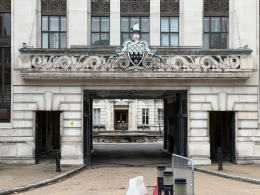
Fownes Street is a quiet residential road running between Battersea Park Road and Falcon Road, a few minutes’ walk from Clapham Junction. The council is spending £5m giving the Falcon Road underpass a makeover.
At a cabinet meeting in September, Cllr Dikerdem praised the makeover project noting that it will “improve the lives of our residents.” Less than 30 seconds walk away, however, in a block owned by Wandsworth Council, the lives of its residents were not improving but getting significantly worse.
The problems centre on a flat on the top floor of a six-flat block with a council tenant who has lived there for years. Residents say the tenant himself caused issues before – flooding his flat on one occasion – but the situation escalated dramatically in January this year when he began associating with another man with a history of violence and mental health issues.
“You can’t talk to this guy,” says another tenant, Patrick, who has lived in the building since the late 1980s.
The other affected households include Michele and his wife Elisa, who own their flat, and a mother with her 10-year-old son. All of them have spent months living in fear.

The incidents
The documentation is extensive. Michele has compiled a list of over 30 Metropolitan Police reference numbers for incidents since January 2025. But even he acknowledges this is incomplete – there have been many more police visits that he didn’t personally report or record.
The pattern is consistent: shouting, screaming, banging at all hours. Objects thrown from the upstairs windows – including, on one occasion, an armchair. The men climb the building’s exterior drainpipe to enter and exit. The windows of the flat in question are now boarded up with wooden panels after being smashed from the inside.
“The building looks like it’s been bombed,” Michele says.
But it is the violent incidents that have left residents traumatised.
On 3 April, one of the men went through the building violently banging on residents’ doors. Police were called. Multiple households were affected.
In July, Imran’s wife was physically assaulted.
On 28 July, the mother woke in the middle of the night to the sound of her window being smashed. She and her 10-year-old son were sleeping just feet away. CCTV footage from a camera on her door showed one of the men passing moments before the window shattered. Police arrested a suspect. He was released within 24 hours.
“Although there was video evidence of the event, the man was released within 24 hours because there was not enough evidence, apparently,” Michele says. “The camera didn’t actually capture the instant.”
The family now lives within metres of the man who allegedly smashed their window while they slept.
“Imagine what she is going through,” Patrick says. “She’s alone and she has a kid who is ten years old. And that happened at night.”
The evidence paradox
Residents have done everything authorities asked of them. They have called police. They have reported incidents to the council. They have kept records, gathered video footage, provided witness statements.
Yet repeatedly, they have been told it is not enough.
“The council was asking, ‘Can you give me a detailed description of the events?'” Michele recalls. “And I was like, well, I was never told to keep evidence of the events. I was told to collect reference numbers of the police, but I was assuming the police would have some sort of recording.”
The council’s solicitor, pursuing an injunction against the tenant’s associate, told residents she needed more evidence. The police, called out more than thirty times, told residents to stop calling.
“They said it’s nothing to do with us,” Imran says. “Just call the council. The council said, ‘It’s nothing to do with us. Just call the police.’ Even the police officer told me, ‘Please don’t call us.’ I swear, from that day I gave up on the police.”
Michele’s wife Elisa puts it simply: “What they tell us is keep collecting evidence. So this is what we do.”
But the question remains: what would constitute enough? The two homeowners in the Drina Gray case spent years saving recordings from their video doorbell of their threatening neighbour’s behaviour, all while waiting for the council to finally act.
“The court needs more evidence,” Imran says, his voice rising in frustration. “I don’t know what kind of evidence they want: a dead body?”
The system response
Michele first reported the antisocial behaviour to Wandsworth Council in January 2025. He followed up on 31 January, 1 February, and 3 March. He contacted the council’s Joint Control Centre on several occasions. The responses, he says, were “generic acknowledgements with no clear evidence of effective or timely action.”
Frustrated by the lack of progress, Michele requested an ASB Case Review on 4 March 2025 – a formal process established under the Anti-Social Behaviour, Crime and Policing Act 2014 that allows residents to demand a multi-agency review of their case.
The review panel finally convened on 17 June – more than three months later.
The panel agreed 17 actions for various agencies. These included arranging a joint visit with the police Safer Neighbourhood Team to make contact with the tenant. Deploying a CCTV camera. Distributing information leaflets to residents. Holding regular professionals’ meetings for updates and action planning.
On 24 September 2025, Michele received a letter informing him the case had been closed.
“Several agreed actions remain incomplete,” Michele wrote in a formal complaint to the council. The joint visit with police was still “pending.” No camera had been deployed. No regular meetings had occurred.
The case was closed anyway.
The camera
The story of the CCTV camera encapsulates everything wrong with how this case was handled.
Action #8 from the June review stated: “Complete an application for a deployable camera to be installed.” By the time the case was closed in September, this action was marked as “Completed.”
But no camera had been deployed. The council said it needed the camera to provide evidence.
On 22 October, Michele filed a formal Stage 1 complaint against the council. In it, he explicitly stated: “As of 22 October 2025, no camera has been deployed.”
Six days later, on 28 October, a Community Safety Officer at the council emailed residents: “In case you were not aware, the re-deployable CCTV camera that was applied for was installed on Fownes Street last week.”
Last week. Late October. A month after the council marked the action “completed” and closed the case.
Following another incident, Michele contacted the council asking if they had the footage. Two days later, an officer replied: “The control room has got back to me, and unfortunately the camera was obscured by leaves over the weekend, so there’s no usable footage.”
The camera approved four months early had finally been installed but nobody checked whether a tree was blocking it.
The council did not respond to questions about who approved the camera location or whether a site visit was conducted before installation.
The political response
The families at Fownes Street did not suffer in silence. They escalated their concerns to their elected representatives at every level.
Councillor Simon Hogg is not only one of the ward councillors for the area but also the Leader of Wandsworth Council – ultimately responsible for whether promised reforms are implemented throughout the borough. Surely he would do something about the increasingly dangerous situation? Michele first contacted him on 30 July 2025. He received no reply. He followed up on 12 October.
On 14 October, Hogg’s office responded, promising he would be “in touch in the next couple of days.”
He wasn’t. As of late November, Michele had received no further communication from the Council Leader. Instead, his email was forwarded to the same council team the residents had been trying to get to act for months.
Councillor Aydin Dikerdem, the cabinet member who had promised reforms following the Drina Gray case, did not respond to this publication’s inquiries about what specific changes had been implemented and why those changes had not prevented the same patterns recurring at Fownes Street.
The families’ MP, Marsha de Cordova, initially seemed engaged. She responded to Michele on 31 July 2025, expressing concern and requesting documentation. Michele provided the ASB Case Review materials and a list of police reference numbers.
Then silence. Michele followed up on 31 August and 8 September. No reply. He followed up again on 12 October. No reply.

The shadow of Drina Gray
The parallels with the Drina Gray case are difficult to ignore.
In June 2025, Gray was sentenced to 21 months in prison for a campaign of harassment against her neighbours in Tooting that lasted over two years. Despite 220 documented incidents, authorities failed to act, and faced strong criticism from the judge as a result.
Gray was a council tenant. The council owned the property. It had powers to pursue eviction. Yet it took years of documented abuse before those powers were used.
At the time of the sentencing, Councillor Dikerdem acknowledged the failures. “We accept that we could have acted more swiftly,” he said. “Following this case, changes are being made to our anti-social behaviour case management system to ensure actions are taken more promptly and that complainants are kept updated.”
That was on 25 June 2025. Three months later, on 24 September 2025, the Fownes Street case was closed with actions incomplete. Two days later, Cllr Dikerdem was praising the underpass’ new brightly coloured cladding and how it made residents’ lives better.
Despite claiming that the council would “ensure actions are taken more promptly and that complainants are kept updated”, the Fownes residents were left waiting for months with no news and had to repeatedly contact the council to find out what, if anything, was happening.
The belated response
On 7 November, this publication sent detailed press inquiries to Wandsworth Council, the Metropolitan Police, local councillors, and the MP. Within weeks, things began to move.
On 26 November, an estate manager for the council wrote to residents with an update. “The tenant’s legal team submitted an injunction application to the courts last week,” he wrote. “I will keep you informed of any progress regarding this matter.”
Footage had “strengthened the case… and has provided the Council with sufficient evidence to pursue further action.”
The MP’s office, after months of silence, also re-engaged. In correspondence with Michele, de Cordova relayed that injunctions were being pursued, and a door entry system was being costed, and – crucially – the council was “looking into further tenancy enforcement action beyond the ex-partner.”
This last point is significant. It suggests the council is finally considering action against the tenant himself – the approach residents have been requesting for months.
“I want the tenant to be evicted because that’s the root cause of the problem,” Michele says. “Even if they raise an injunction against his friend, he doesn’t care. Even if he gets arrested, then he’s home again the next day. An injunction is not gonna do anything.”
What residents want
The families at Fownes Street are not asking for anything extraordinary. They want to feel safe in their homes. They want their children to be able to sleep without fear.
“For two nights my kids haven’t eaten,” Imran says. “Especially the little one, two years old, hasn’t been drinking milk.”
He is describing nights when incidents upstairs made it impossible to function normally. Nights when police came with dogs and guns. Nights when his young children were too frightened to eat.
“If anything happens with me, with my kids, who will take responsibility?” he asked the council.
Elisa summarises the situation: “The only way is that he gets evicted. That’s the solution to the problem.”
Whether that will happen remains unclear. The injunction application is now with the courts. The council says it is considering tenancy enforcement.
The only reason even that is going forward is because of Michele’s relentless efforts to document everything, chase every lead, and refuse to let the case be forgotten.
“You’re a local hero, son,” Patrick told Michele during our interview, acknowledging his neighbour’s persistence.
Michele’s response was modest: “I’m trying my best.”
In a functioning system, he wouldn’t have had to try at all.

Official responses
Wandsworth Council did not respond to this publication’s detailed questions about the Fownes Street case, the camera deployment failure, or the implementation of reforms promised after the Drina Gray case.
Councillors Simon Hogg and Aydin Dikerdem did not respond to press inquiries.
A spokesperson for the Metropolitan Police said: “Tackling anti-social behaviour remains a key priority for us across Wandsworth. We understand the disruption local communities sometimes face, and are committed to ensuring the borough stays a safe and peaceful place for everyone. We work closely with our Safer Neighbourhood Teams and Wandsworth Council to step up weekend patrols and carry out targeted operations, particularly in areas where residents have raised concerns. We will continue listening to residents and collaborating with our partners to reduce anti-social behaviour across the borough.”
The statement did not address any of the specific questions put to the force, including why a suspect arrested with video evidence was released within 24 hours, or why residents were told to stop calling police.
MP Marsha de Cordova’s office did not respond to questions about why three follow-up emails from her constituent went unanswered between August and October.
On Tuesday, five hours after we approached all parties a third time for comment, Michele received an email from his MP stating that his case had been escalated to “a formal Stage 2 complaint.”
If you have information about antisocial behaviour cases in Wandsworth where residents feel failed by authorities, contact news@putney.news
Accountability Statement
We contacted: Wandsworth Council Press Office, Falconbrook ward Councillor Simon Hogg, also Leader of Wandsworth Council, Councillor Aydin Dikerdem Cabinet Member for Housing, Marsha de Cordova MP Member of Parliament for Battersea, Metropolitan Police Press Bureau.
First request sent: 7 November 2025
Follow-up request sent: 12 November 2025
Final request sent: 2 December 2025
Cllr Simon Hogg
Ward councillor, Leader of Wandsworth Council
Status: No response received.
Questions asked (click to expand)
7 Nov: As Leader of the Council, you promised XXXXX [name redacted] on October 14, 2025 that you would be “in touch in the next couple of days” regarding the Fownes Street case. What happened, and are you able to provide an update on the case now?
The Fownes Street case shows patterns remarkably similar to the Drina Gray case – months of documented incidents, residents living in fear, case closed with incomplete actions, poor communication. Just months after the Gray case prompted public commitments to reform, how do you explain this failure, and what does it tell you about whether the promised changes have been implemented effectively?
As Leader, what immediate steps will you take to:
Ensure the Fownes Street case is reopened and properly resolved?
Verify that the post-Gray reforms are actually being implemented?
Restore residents’ confidence that reporting ASB will result in effective action?
2 Dec: Why did you not respond to your constituent’s concerns?
Are you satisfied with how this case was handled?
Cllr Aydin Dikerdem
Cabinet Member for Housing
Status: No response received.
Questions asked (click to expand)
7 Nov: In June 2025, you stated publicly: “Changes are being made to our anti-social behaviour case management system to ensure actions are taken more promptly.” Please provide specific details:
* What exact policy changes were made?
* What new protocols were implemented for ASB Case Reviews?
* What training was provided to ASB officers?
* On what specific dates were these changes implemented?
* How were these changes communicated to ASB team members?
The Fownes Street ASB Case Review was held on June 17, 2025 – the same month you made your public commitment to reforms. Yet the case was closed on September 24, 2025 with Action #2 (joint SNT visit) marked “pending,” Action #8 (deployable camera) marked “completed” but camera was non-functional when needed, and Action #12 (regular professional meetings) marked “ongoing” but never happened. Which of your promised reforms should have prevented this case from being closed improperly? Why did those reforms fail?
Regarding the camera (Action #8), can you explain:
* When was the camera actually installed?
* Why was it marked “completed” in September if it wasn’t deployed until late October?
* What is the protocol for monitoring deployed cameras to ensure they remain functional?
* How can the council mark an action “completed” when the camera fails at the first critical incident?
The Drina Gray case involved a council property where you were criticized for not acting decisively. Fownes Street is also a council property. Residents report that instead of taking action against the tenant who continues to allow his partner access to the building, the council is pursuing an injunction against the non-resident partner. Given that injunctions require court time and enforcement, and given this individual’s demonstrated disregard for the law, why is this the council’s chosen approach? Why not use the council’s powers as landlord to take action against the tenant himself?
The council’s Stage 1 complaint response states the council has “taken reasonable measures” and that an injunction application represents appropriate action. However, residents question whether an injunction against a non-resident who is repeatedly arrested and released constitutes a “reasonable measure” before taking tenancy action against the person who controls access to the property. What is your response to residents who feel the council is choosing the slowest, least effective option?
2 Dec: What specific changes were made to the ASB case management system?
Why did these changes not prevent the same patterns recurring at Fownes Street?
Marsha de Cordova MP
Member of Parliament for Battersea
Status: No response received.
Questions asked (click to expand)
7 Nov: Can you confirm whether you wrote to Wandsworth Council and/or the Metropolitan Police regarding the Fownes Street case as you indicated in your July 31, 2025 response? If so:
* When were these letters sent?
* To whom specifically were they addressed?
* What responses, if any, did you receive?
* Were these responses communicated to XXXX [name redacted]?
XXXX [name redacted] sent three follow-up emails to your office (August 31, September 8, and October 12, 2025) asking for updates on the case. Why did these emails not receive responses?
In your initial response, you acknowledged this case reflects “wider systemic failure” in how individuals with serious mental health needs are supported. Given that this case involves 30+ police callouts, multiple arrests with no charges, documented violence including a smashed window while a mother and child slept, two flooding incidents leaving families without utilities, and children unable to sleep or eat properly due to fear – why was this case not treated as a priority requiring urgent intervention with both the council and police?
The Drina Gray case in Tooting, which concluded in June 2025, exposed failures by both Wandsworth Council and the Metropolitan Police in protecting residents from persistent ASB despite extensive documentation. Following that case, Cllr Aydin Dikerdem stated publicly that “changes are being made to our anti-social behaviour case management system.” The Fownes Street case shows remarkably similar patterns – yet it unfolded largely after those promised reforms. As the MP for Battersea, what steps have you taken to hold Wandsworth Council accountable for implementing meaningful reforms following the Gray case?
2 Dec: Why did three follow-up emails from your constituent go unanswered for two months?
Do you consider this an acceptable level of constituent service on a serious safety matter?
Wandsworth Council
Press Office
Status: No response received.
Questions asked (click to expand)
7 Nov: ASB Case Review Process:
1. Why was the ASB Case Review case (FS692947726) closed on September 24, 2025 when Action #2 (joint visit with SNT) was marked “pending” and Action #12 (regular professional meetings) was marked “ongoing”?
2. Action #8 states “Complete an application for a deployable camera to be installed” and is marked “completed” in the September 24, 2025 final letter. However, email correspondence shows the camera was installed in late October 2025 (approximately October 21-27), four months after the ASB Case Review. On October 30, 2025, XXXX [council employee] stated the camera “was obscured by leaves over the weekend” and couldn’t capture footage. Could you clarify:
* Does “complete an application” mean the application was submitted, or that a camera was actually deployed?
* If the camera was installed in late October 2025, why was Action #8 marked “completed” in the September 24 final letter – a month before deployment?
* Why were residents told “in case you were not aware” on October 28 – was there a protocol to inform residents about camera deployment that wasn’t followed?
* When did the council become aware the camera was obscured by foliage and non-functional?
* What is the protocol for monitoring deployed cameras to ensure they remain operational?
3. The ASB Case Review was requested March 4, 2025 but not convened until June 17, 2025 (over three months). Given the council’s post-Gray commitment to act “more promptly,” what caused this delay?
4. What risk assessment was conducted for neighbours significantly affected by the ASB, particularly families with young children, given documented violent incidents including broken windows and flooding that cut utilities?
Legal Strategy & Timeline:
5. Residents report 30+ police incident reference numbers, video evidence, and witness statements, yet were repeatedly told they needed “more evidence.” What evidence threshold is required for eviction proceedings versus injunction proceedings?
6. Why is the council pursuing an injunction against the tenant’s partner (who doesn’t hold the tenancy) rather than eviction proceedings against the tenant who controls access to the building?
7. What protection is being offered to residents who have been asked to provide witness statements, given documented fear of retaliation?
8. What is the current status of the injunction proceedings initiated in September 2025, and what is the expected timeline for resolution?
Formal Complaint & Accountability:
9. XXXX’s [name redacted] Stage 1 complaint (Ref: 109343) was declined on grounds that “ongoing action and regular contact” had been provided. How does the council define “regular contact” in ASB cases where the case was closed with actions still “pending” or “ongoing”?
10. XXXX’s [council employee] Stage 1 response stated eviction is “always a last resort” and the council must first try “all other reasonable measures, such as an injunction.” Given the injunction targets a non-tenant, how does the council assess when this approach has been exhausted and eviction becomes appropriate?
11. Following the Drina Gray case, Cllr Aydin Dikerdem stated: “Changes are being made to our anti-social behaviour case management system to ensure actions are taken more promptly and that complainants are kept updated.” What specific changes were implemented, and why did the Fownes Street case (opened March 2025, closed September 2025 with incomplete actions) occur after these promised reforms?
Current Situation & Support:
12. What immediate action is the council taking to protect residents – including families with young children – while legal proceedings are pending, particularly given the documented escalation from noise to property damage and flooding?
13. Residents report ongoing incidents including noise, harassment, property damage (two floods causing loss of utilities), and an aggressive dog, yet Estate Manager XXXX [council employee] has been difficult to reach. What support is available when the designated manager is unresponsive to urgent safety concerns?
2 Dec: Why was the case closed on 24 September with actions still incomplete?
What specific reforms were implemented after the Drina Gray case, and why did they not prevent the same patterns recurring?
Who approved the camera location on Fownes Street and whether a site visit was conducted before installation?
Metropolitan Police
Press Bureau
Status: Generic statement.
Questions asked (click to expand)
7 Nov:
1. Residents report 30+ police callouts to 5 Fownes Street since January 2025, including incidents of violence, property damage, harassment, and threats. Can you confirm:
* The total number of police responses to this address in 2025?
* How many arrests have been made in connection with incidents at this address?
* What is the current status of any ongoing investigations?
2. On July 28, 2025, a resident’s window was smashed in the middle of the night. Video evidence captured an individual at the scene. Police attended, viewed the footage, and arrested the suspect. However, residents report the individual was released within 24 hours with officers stating there was “not enough evidence.” Can you explain:
* What evidence threshold is required for charges to proceed in such cases where there is video evidence and property damage?
* Why was this individual released, and what was the outcome of this investigation?
3. Residents report being told by attending officers to “stop calling” due to the frequency of incidents. Can you comment on:
* What guidance exists for officers responding to repeat ASB callouts at the same address?
* How does the Met balance protecting vulnerable residents with resource constraints?
4. A June 2025 ASB Case Review (attended by Inspector XXXX and PC XXXX) included Action #2: “Arrange a joint visit with the SNT to the property and make contact with the tenant as soon as possible.” As of late October 2025, residents report this visit had not occurred. Can you confirm:
* Has this joint visit taken place? If not, why not?
* What is the current engagement strategy between Falconbrook SNT and this address?
5. Residents report incidents including physical assault, individual climbing building gutters attempting to enter through windows, threats made through doorbell cameras, an aggressive dog kept at the property, and two incidents of flooding cutting utilities to families with young children. Given this pattern, what risk assessment has been conducted for the safety of other residents?
6. The tenant’s partner (who does not reside at the property) has been the primary perpetrator of violent incidents. Wandsworth Council is pursuing an injunction against this individual rather than eviction of the tenant. How does the Met coordinate with housing providers when:
* The perpetrator is not the tenant?
* An injunction is being pursued rather than criminal proceedings?
7. Residents have been asked to provide witness statements for court proceedings but report fear of retaliation. What protection or support does the Met offer to witnesses in ongoing ASB cases where perpetrators continue to have access to the area?
8. This case has clear parallels with the recent Drina Gray prosecution in Wandsworth, where a resident terrorized neighbors for nearly two years before intervention. Following that case, both the council and police acknowledged delays. What steps has the Met taken to improve response to serious ASB cases with vulnerable victims, particularly where there are young children involved?
2 Dec:
Why was the suspect released despite video evidence of him committing a crime?
Why were residents told to stop calling the police?