Every teacher in Putney’s schools, every social worker helping vulnerable families, every librarian, refuse collector and council employee is paying into a pension fund that’s about to bet their retirement security on assumptions the numbers say don’t add up.
Wandsworth Council is asking local employers to approve projections that the £3.2 billion pension fund will achieve 5.1% annual investment returns over the next three years. But last year the fund returned just 3.1%, falling more than two percentage points below even its own benchmark. The council is projecting nearly double the returns it actually achieved.
The stakes could hardly be higher. A shift of just half a percentage point in these assumptions would change employer contributions by hundreds of millions of pounds, potentially affecting school budgets across Putney and Wandsworth for years to come. Yet the 42,000 council workers and former employees whose retirement money is at risk have been explicitly excluded from any say in whether these projections are realistic. The consultation is with employers only.
The Local Pension Board, which includes worker representatives, will review the assumptions on Monday morning. But they’re being asked to scrutinise a 58-page technical document [pdf] in just seven working days before the consultation begins, with no power to stop it even if they spot problems.
When the numbers tell a different story
The draft Funding Strategy Statement, published [pdf] on 21 October, shows a council becoming more optimistic as its performance has declined. Three years ago the fund assumed it would achieve 4.4% annual returns. Despite falling short of that target in every year since, the new assumption is 5.1%, higher than before.
Last year tells the starkest story. The fund returned 3.08% while its benchmark was 5.28%, meaning it underperformed by 2.2 percentage points. Over the past three years the pattern has been consistent: the fund achieved 4.4% returns while its benchmark was 6.1%, an underperformance of 1.7 percentage points every year.
Now the council is asking employers including dozens of Putney schools and academies to bet their budgets on the assumption that this underperforming fund will suddenly achieve 5.1% annually for the next three years.
Why this matters for Putney
When pension assumptions prove too optimistic, someone has to make up the shortfall. That someone is usually local schools, academies and the councils themselves through increased contribution rates. Richmond and Wandsworth councils together provided 72% of all regular employer contributions last year. As the administering authority, Wandsworth is the ultimate backstop if things go wrong.
The draft strategy statement spells out the consequences plainly. A change of 0.5% in the assumed investment return would alter employer contributions by between 2.5% and 3.5% of payroll and shift the fund’s liabilities by up to 10%. With the fund worth £3.2 billion, that amounts to potential swings of hundreds of millions of pounds.
For a primary school in Putney with a dozen teachers and support staff paying into the scheme, an unexpected jump in pension contribution rates could mean choosing between hiring a teaching assistant or keeping music lessons. Multiply that across every school and academy in the borough and the potential impact becomes clearer.
The prudence that isn’t
The council might argue the 5.1% figure includes a safety margin. The documents reveal that the fund expects to achieve 6.6% annual returns but applies a 1.5 percentage point “prudence adjustment” to arrive at 5.1%. This is meant to protect against being too optimistic.
But expecting 6.6% returns when the fund has just achieved 3.08% and has underperformed every target for three years stretches the meaning of prudence. Adding a safety buffer to an unrealistic starting point doesn’t create a sound assumption.
The external auditor has noticed. Ernst & Young’s report specifically flags the discount rate as requiring “key judgements and estimates” and notes they brought in specialist actuaries to review it. The audit report warns that the Joint Pensions Committee “has an essential role in ensuring that it has assurance over both the quality of the financial statements prepared by management and the Fund’s wider arrangements to support the delivery of a timely and robust audit.”
That’s audit-speak for we’re concerned about whether these numbers stack up.
Who gets a say and who doesn’t
The six-week consultation opens on 10 November, one week after Monday’s board meeting. Employers including councils, schools and academies will receive the draft strategy and be asked whether they agree with the assumptions. They’ll have until 19 December to respond.
The fund’s 42,000 scheme members get no such opportunity. The draft strategy states explicitly: “For the avoidance of doubt, Scheme members will not be consulted on the revisions to the FSS.” This means every current council employee paying into the fund, every former employee with deferred benefits, and every pensioner currently receiving payments has no formal role in approving the assumptions that determine whether their retirement money will be there when they need it.
The fund currently has roughly 24,000 active members still working and paying in, 15,000 pensioners already drawing benefits, and 18,000 deferred members who’ve left council employment but haven’t yet claimed their pensions. None of them will be consulted.
Trade unions may submit responses on behalf of their members, but this is voluntary and comes with no guarantee of being acted upon. UNISON Wandsworth Branch has previously raised concerns about pension fund transparency and member consultation, but these concerns haven’t translated into any formal consultation role for workers.
Monday’s seven-day scrutiny
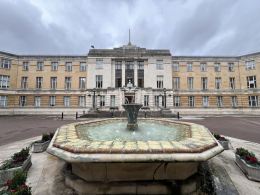
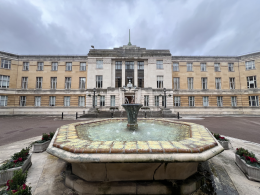
The Local Pension Board meets at 11:30 on Monday morning at Wandsworth Town Hall. The meeting is open to the public, though few members of the public typically know these meetings are happening or what’s at stake.
The Board includes six members: three representing employers including chair Richard Perry, and three representing scheme members including UNISON’s Peter Quirk. Their role is to provide oversight and flag governance concerns, but they have no power to block decisions or change what goes to consultation. They can raise concerns and make recommendations. The Joint Pensions Committee, which actually makes the decisions, doesn’t have to listen.
The timeline is compressed. The draft strategy was published on 21 October. The Board reviews it on 3 November. The consultation opens on 10 November. That’s seven working days for Board members to read, understand and scrutinise 58 pages of technical financial projections, identify any concerns, and raise them before the consultation begins.
The Board won’t see the document again until 9 February 2026, after the consultation has closed but before the Committee’s final approval on 10 March. By then the consultation responses will have been collected and analysed. The opportunity for meaningful oversight will have passed.
Questions the Council hasn’t answered
Putney.news has identified several questions that go to the heart of whether these assumptions are sound. The council has yet to provide public answers to any of them.
- What evidence supports assuming 5.1% annual returns when the fund achieved 3.08% last year?
- Why is the council projecting higher returns after three years of underperformance rather than lower returns?
- What alternative scenarios were modelled before settling on 5.1%, and what would different assumptions mean for employer contributions?
- Why are 42,000 scheme members who will bear the consequences if assumptions prove wrong being excluded from any consultation about whether those assumptions are realistic?
- How can seven working days possibly provide meaningful scrutiny of a 58-page technical document with potential impacts in the hundreds of millions of pounds?
- What happens if the Board identifies serious concerns after consultation has already begun?
- How will the government-mandated transfer of all investments to London CIV by 31 March 2026, just three months after these new rates take effect, affect the projected returns?
The pattern over time
This is not the first time pension fund governance and transparency have raised questions. Previous Putney.news coverage has documented a pattern of closed-door decision-making on investment strategy, with key discussions happening in private sessions where the press and public are excluded.
In June, the Joint Pensions Committee held a closed session to discuss potentially moving toward passive investment management and received a presentation from London CIV. The minutes record simply that “the Committee received a presentation from LCIV.” Nothing about what was discussed, what concerns were raised, or what decisions were made has been made public.
The committee regularly uses legal exemptions to exclude people from discussions about investment strategy, citing commercial sensitivity. But worker representatives and pension experts have questioned whether genuine commercial sensitivity justifies the level of secrecy, particularly when the decisions being made behind closed doors affect tens of thousands of workers and billions of pounds in public money.
What Monday’s meeting should address
When the Local Pension Board gathers on Monday morning, several key questions deserve answers. Board members should ask what specific evidence supports the 5.1% projection given actual returns of 3.08%. They should ask why the assumption is rising rather than falling after years of underperformance. They should ask whether seven working days is adequate time to scrutinise such a significant document.
They should ask why scheme members are being excluded from consultation about assumptions affecting their retirement security. They should ask what alternative scenarios were modelled and what the consequences would be if the 5.1% assumption proves as optimistic as the pattern suggests it might be. And they should ask what happens if they identify serious concerns but the consultation has already begun and they lack the power to stop it.
Whether they’ll get satisfactory answers remains to be seen. The Board’s track record shows they can raise concerns and make recommendations, but the Committee that actually makes decisions isn’t obliged to act on them.
What happens next
After Monday’s Board meeting, the employer consultation opens on Wednesday. It will run for six weeks until 19 December. Schools, academies, and other employers will receive the draft strategy and be asked for their views on whether the assumptions are appropriate.
The Board will review the final draft again on 9 February after the consultation closes. The Joint Pensions Committee will formally approve the final strategy on 10 March 2026. New employer contribution rates based on these assumptions will take effect on 1 April 2026.
Three months after that, on 31 March 2026, the government-mandated deadline arrives for all local government pension scheme investments to be transferred to regional investment pools. Wandsworth’s fund must transfer all its investments to London CIV, the regional pool, by that date as part of the government’s “Fit for the Future” reforms.
How this sudden restructuring will affect investment returns is unclear. What is clear is that schools and academies across Putney will be living with the contribution rates set by these assumptions for three years, starting just as the entire investment structure undergoes its biggest change in a generation.
The bottom line
Wandsworth Council is asking employers and ultimately local taxpayers to bet hundreds of millions of pounds on a pension fund that returned 3.08% last year achieving 5.1% annually for the next three years. The 42,000 workers whose retirement security depends on this bet are being told they don’t get a say in whether it’s sound.
The oversight board gets seven working days to scrutinise the assumptions before consultation begins, with no power to change them if they spot problems. And all this happens just months before the entire investment structure must be transferred to a regional pool under government reforms, adding another layer of uncertainty to already questionable projections.
Monday’s Local Pension Board meeting at Wandsworth Town Hall is open to the public. It starts at 11:30. Whether Board members will ask the hard questions about these assumptions, and whether they’ll get straight answers, remains to be seen.
What is a discount rate? The assumed rate of investment return used to calculate how much money the pension fund needs today to pay future benefits. A higher rate makes future liabilities look smaller and reduces how much employers must contribute now, but creates serious risk if the returns aren’t actually achieved.
Meeting details: Local Pension Board, Monday 3 November 2025, 11:30 a.m., Wandsworth Town Hall. Open to public. Papers available here.