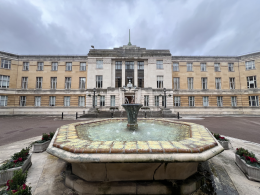
Wandsworth Council faces a £17.4 million budget crisis this year, but you wouldn’t know it from listening to councillors enthusiastically approve a £424 million capital spending programme at this week’s Cabinet meeting.
While Executive Director of Finance Fenella Merry’s reports paint a picture of mounting financial pressures [pdf] – with homelessness costs spiralling, social care demand growing, and Housing Revenue Account repairs £12.4 million over budget – councillors spoke passionately about their “decade of renewal” and warned against “sitting on reserves.”
Most striking was Cabinet Member for Housing Aydin Dikerdem’s argument that it “doesn’t make sense to sit on reserves without improving the foundational infrastructure.” This came from the councillor whose own department is responsible for the council’s worst financial performance: a £600,000 General Fund overspend in housing services and a staggering £15.7 million overspend in the Housing Revenue Account.
Dikerdem’s housing department accounts for over 90% of the council’s total budget crisis, yet he was among the most vocal advocates for continued high spending.
The numbers don’t lie
The Q1 financial monitoring report reveals the scale of housing’s financial crisis. Homelessness presentations jumped from 1,414 to 1,692 compared to last year, while first-time admissions into temporary accommodation rose from 424 to 478. The Housing Revenue Account overspend is primarily driven by repair costs that have soared due to inflation, new building safety regulations, and what the report calls “increased levels of regulation.”
Meanwhile, the council’s ambitious capital programme proposes £133.9 million in new borrowing [pdf] over five years – debt that will create additional pressure on future revenue budgets already struggling to balance.
What councillors are telling themselves
At Tuesday’s Cabinet meeting, councillors competed to praise the spending plans. One called the programme evidence of “a council that is active and forward thinking” that “steps in before things go wrong.” Another argued that previous years of insufficient investment had created today’s problems.
Yet the financial documents tell a different story. The council isn’t sitting on reserves – it’s avoiding using them to address immediate service overspends while simultaneously planning massive borrowing for capital projects.
The missing plan
Most concerning is what the council isn’t doing. Rather than presenting concrete savings measures or acknowledging the scale of the revenue crisis, the administration is placing all hopes on an undefined “Transformation Programme” that remains largely unspecified and unfunded.
The flexible capital receipts strategy document [pdf] reveals plans to redirect up to £9.3 million in anticipated capital receipts toward this transformation programme, but provides no details on what savings it will actually deliver or when. This money would normally be used to reduce borrowing costs for capital projects, meaning the decision adds further financial pressure to future budgets.
What responsible governance would look like
Financial experts suggest responsible governance in this situation would require:
- Immediate accountability: Department heads with the worst overspends should lead cost reduction efforts rather than advocating for continued high spending
- Transparent savings plans: Publishing specific, measurable cost reduction strategies rather than relying on vague transformation promises
- Integrated planning: Ensuring capital borrowing decisions consider their impact on already-strained revenue budgets
- Priority review: Distinguishing between essential and desirable capital projects, potentially deferring non-critical spending until revenue pressures ease
- Honest leadership: Acknowledging the severity of budget pressures, particularly from those responsible for the largest overspends
Dikerdem’s position illustrates a broader governance challenge. Should the cabinet member overseeing the council’s worst financial performance be advocating for continued high spending? The housing overspends aren’t entirely within the council’s control. Homelessness pressures affect councils across London, and building safety regulations are mandatory. But the response to these pressures is a matter of political choice and management competence.
The disconnect between the council’s financial reality and its public messaging creates several risks. If the undefined transformation programme fails to deliver promised savings, the council may face larger budget gaps in future years, compounded by additional borrowing costs from today’s capital programme.
Services already under pressure, particularly housing and social care, may face deeper cuts if overspends continue without concrete action.
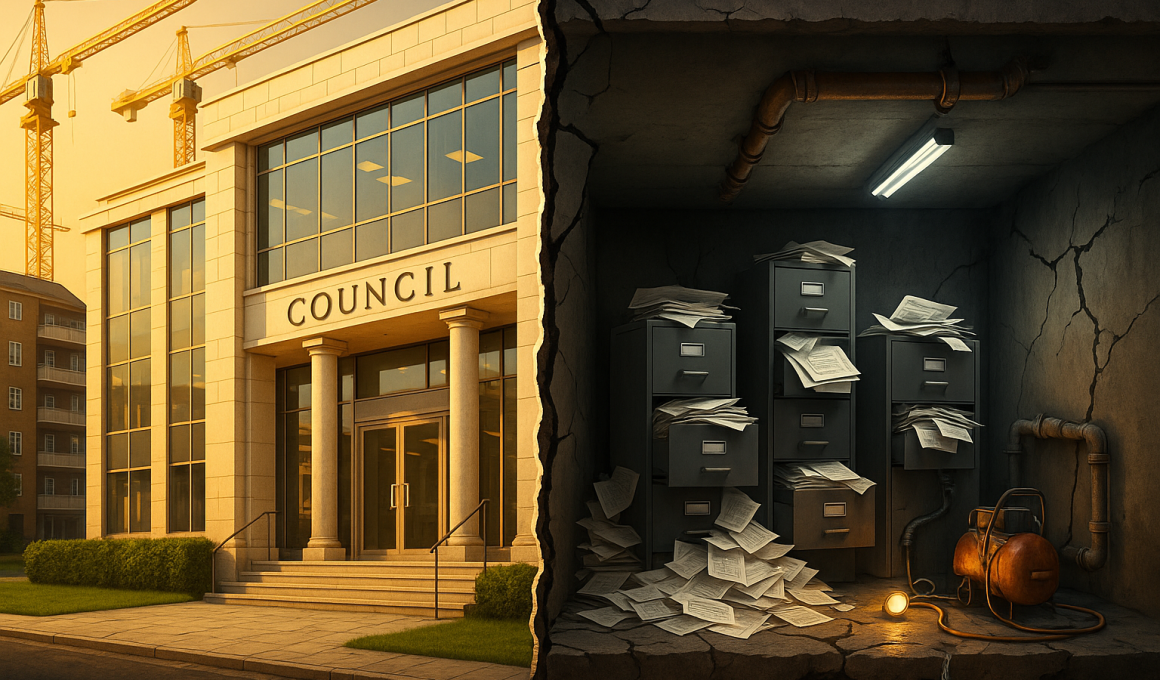
A tale of two budgets
Wandsworth’s situation illustrates a common local government challenge: the political appeal of visible capital investments versus the unglamorous necessity of balancing day-to-day operations. While new infrastructure makes for good photo opportunities, sustainable finances require difficult decisions about service levels and spending priorities.
The council’s financial documents, filled with technical language about “demand pressures” and “transformation programmes,” mask a simple reality: Wandsworth is spending more than it can afford while planning to spend even more.
Whether the councillors’ confidence in their unnamed transformation programme proves justified will determine whether their “decade of renewal” becomes a decade of financial sustainability, or something far less appealing.