Putney needs urgent action on its traffic problems; not more assessments. Previously, we explained how Task & Finish Groups have been used by Wandsworth Council to provide that action-oriented approach.
The crucial question remains whether these groups actually work in practice when it comes to transport issues, which are notoriously complex, involving competing interests, technical challenges, and political sensitivities.
The answer lies in examining how other councils have used Task & Finish Groups to tackle similar transport controversies – and the results offer both compelling successes and cautionary tales.
For Putney, the most instructive case study sits right next door, where Kingston upon Thames used a Task & Finish Group to resolve precisely the kind of stakeholder conflicts that complex junction redesigns generate. We have also reviewed other examples across the country to build a comprehensive picture.
The Kingston model: When stakeholder engagement works
In 2016, Kingston faced the kind of transport controversy that might sound familiar to Putney residents: community uproar over cycling infrastructure that seemed to favour one group over another.
The trigger: Kingston Centre for Independent Living (KCIL) organised a community “call-in” signed by 100 people who lived, worked or studied in the borough. Their concern was that new shared cycling and pedestrian spaces created safety risks for “those with visual impairments and those with mobility issues” as part of the £32.7 million Go Cycle Programme funded by the Mayor of London.
Rather than dismiss the concerns or push ahead regardless, Kingston Council established a cross-party Task & Finish Group specifically to address the accessibility issues.
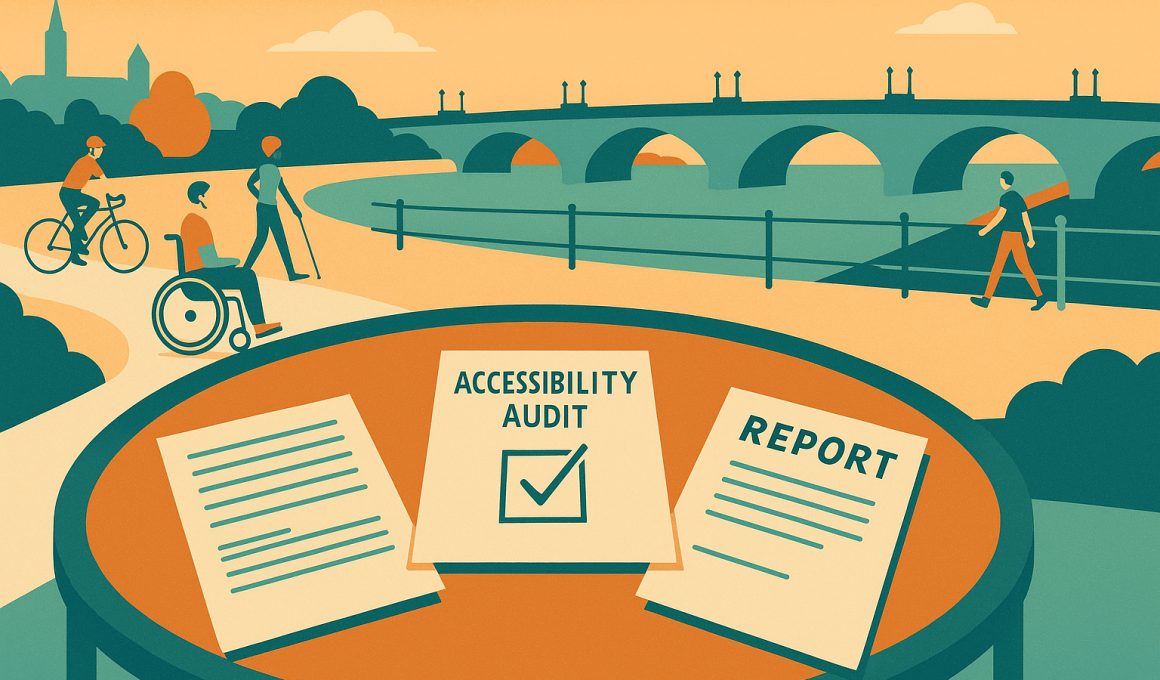
The process: The group brought together councillors with Kingston Centre for Independent Living, Transport for London, Centre for Accessible Environments, and Kingston Cycling Campaign. Crucially, they invited the Centre for Accessible Environments – “a leading authority on inclusive design” – to independently facilitate discussions and provide technical advice.
Two formal sessions were held in December 2016, with additional workshops taking place between meetings. The process was genuinely collaborative: discussions and workshops took place outside of the meetings between officers, consultants, KCIL, Kingston Cycling Campaign (KCC) and others to consider the issues raised.
The outcome: By February 2017, the Residents Committee approved specific design recommendations including “contrasting surfacing for cycleways, delineation between footways and shared use spaces, and appropriate signage.” But more importantly, the solutions were applied systematically: “as a matter of course these recommendations would also be incorporated into other Go Cycle Programme schemes” across the entire borough.
Why it worked: The group succeeded because it brought together people with real stakes in the outcome, used independent facilitation to prevent any single group dominating, and had genuine commitment to implementation across all borough schemes.
Other councils’ experiences: The broader pattern
Warwickshire: When strategy works and politics fail
Warwickshire County Council offers both a success story and a cautionary tale, depending on which Task & Finish Group you examine.
The success – cycling infrastructure (2018): A member-led Task and Finish Group examined cycling infrastructure across the county and identified the A429 Coventry Road in Warwick as “a high priority” for investment. When cyclists subsequently started getting injured on this route, the council’s Traffic and Road Safety Group allocated Casualty Reduction funding to implement the recommended 1.15km cycle route, which is now under construction.
The controversy – 20mph speed limits (2022): The same council’s 20mph Speed Limits Task and Finish Group became mired in controversy. The group concluded that “a blanket approach would have little, if any, benefit” and recommended that councillors use their own delegated highways budgets to fund targeted schemes instead.
But the process was heavily criticized. Local campaigner Dave Passingham called the report “riddled with holes and inaccuracies,” while Councillor Jonathan Chilvers described it as “probably the poorest task and finish group report I’ve seen.” Critics alleged that “some of the members on the group decided before the report started that they wanted to kill the idea off and weren’t interested in why some communities wanted a 20mph limit.”
Lessons learned: When Task & Finish Groups approach issues with genuine open minds and evidence-based analysis (as with cycling infrastructure), they can deliver lasting policy changes. When they’re used to legitimise predetermined positions (as critics alleged with 20mph limits), they generate controversy and damage public trust.
Birmingham: When scrutiny exposes systematic problems
Birmingham City Council’s Overview and Scrutiny Committee established an Active Travel Task and Finish Group in 2023 following sustained criticism about the slow pace of transport improvements. Rather than deliver quick solutions, the group’s inquiry exposed uncomfortable truths about systematic problems.
Push Bikes, the local cycling campaign, told the inquiry that despite Birmingham having an “ambitious” Transport Plan “in line with best urban practice world-wide,” delivery consistently disappointed. They highlighted “frequent delay in delivery, a lack of attention to detail and some disappointing outcomes, and a lack of quality control and remedial action.”
Better Streets for Birmingham was equally direct, telling the group that consultation processes were “poorly explained” and led to “confusion, rejection” from residents. They found that “schemes are usually poorly explained, which leads to confusion, rejection and sessions for questions being taken up by basic questions that could have been part of the accompanying information.”
Lessons learned: Sometimes the scrutiny process itself is as valuable as final recommendations. While Birmingham’s Task and Finish Group hasn’t yet reported recommendations, the process has forced the council to confront systematic delivery problems that might otherwise have been ignored.
Government level: When report conclusions get rejected
The Government’s Taxi and Private Hire Vehicle Task and Finish Group shows that even well-researched recommendations can face political rejection. This national group, chaired by Professor Mohamed Abdel-Haq, made over 30 recommendations for reforming taxi and private hire licensing in 2019, including giving local authorities power to cap the number of private hire vehicles.
The government rejected this key recommendation, arguing that “limiting numbers could impact passenger choice and reduce availability.” However, six years later, concerns about “road congestion, environmental impact and driver welfare” have pushed the issue back onto the policy agenda, with some suggesting the government’s position may be shifting.
Lessons learned: Even rejected recommendations can plant seeds for future policy change. The taxi licensing debate continues, with Scottish councils now using cap powers that English authorities still lack.
Bristol: A council testing new approaches
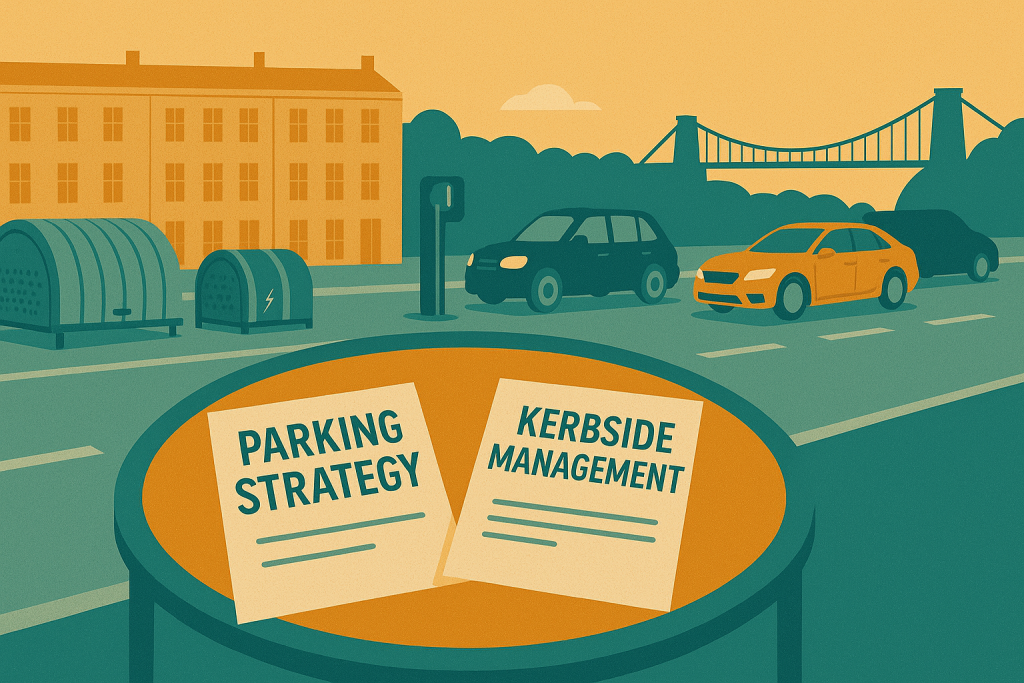
Bristol City Council is currently experimenting with a more collaborative approach. In September 2024, their Green-led Transport and Connectivity Policy Committee established two Task and Finish Groups: one examining “a modern and holistic kerbside and parking strategy” and another looking at “supported bus services.”
Councillor Rob Bryher, chairing the parking strategy group, acknowledged that “the issues of the way the kerbside is used and parking more generally were completely ignored by the previous administration.” The groups are designed to address this policy gap through detailed evidence-gathering.
Early lessons: Bristol’s approach emphasizes the importance of acknowledging past failures and using Task & Finish Groups to fill genuine policy gaps rather than revisiting well-covered ground.
What the record shows: Success factors and failure patterns
Across these examples, clear patterns emerge about when Task & Finish Groups work and when they don’t:
They work best when:
- Groups include diverse stakeholders with real stakes in outcomes (Kingston’s disability advocates, cycling campaigners, and TfL engineers)
- There’s independent expertise to prevent domination by any single group (Kingston’s Centre for Accessible Environments)
- Political commitment exists to implement findings systematically (Kingston applying recommendations borough-wide)
- Scope is focused and specific (Warwickshire’s cycling infrastructure rather than broad transport policy)
They struggle when:
- Political outcomes are predetermined (critics’ allegations about Warwickshire’s 20mph group)
- Membership lacks relevant expertise or genuine stakeholder representation
- Parent committees have no real intention of implementing recommendations
- Scope is too broad or vague to produce actionable findings
Back to Kingston: The Putney connection
For reconsidering the Putney Bridge junction, Kingston offers more than just another case study – it provides a direct template tested in nearly identical circumstances.
The proximity matters: Kingston and Putney are connected by National Cycle Network Route 4, both operate within TfL’s London transport network, and both face similar urban cycling challenges. Kingston’s Task & Finish Group dealt with the same kind of stakeholder conflicts that complex junction redesigns generate – balancing cycling access with pedestrian safety, addressing disability concerns, and managing community opposition.
Kingston proved the approach can work for London transport challenges. Their systematic application of accessibility recommendations across all borough cycling schemes shows how local solutions can scale. The involvement of TfL, disability groups, and cycling campaigns demonstrates how to balance competing interests through expert mediation.
The lesson isn’t just that Task & Finish Groups can work for transport problems. It’s that when they’re done properly – with genuine stakeholder engagement, independent expertise, and implementation commitment – they can resolve exactly the kind of complex, contentious infrastructure challenges that Putney Bridge junction represents.