For families facing a leukaemia diagnosis, the news is often devastating, especially when it’s the aggressive type that resists treatment. But researchers right here at the University of Roehampton may have found a way to make chemotherapy work better while causing less harm to patients.
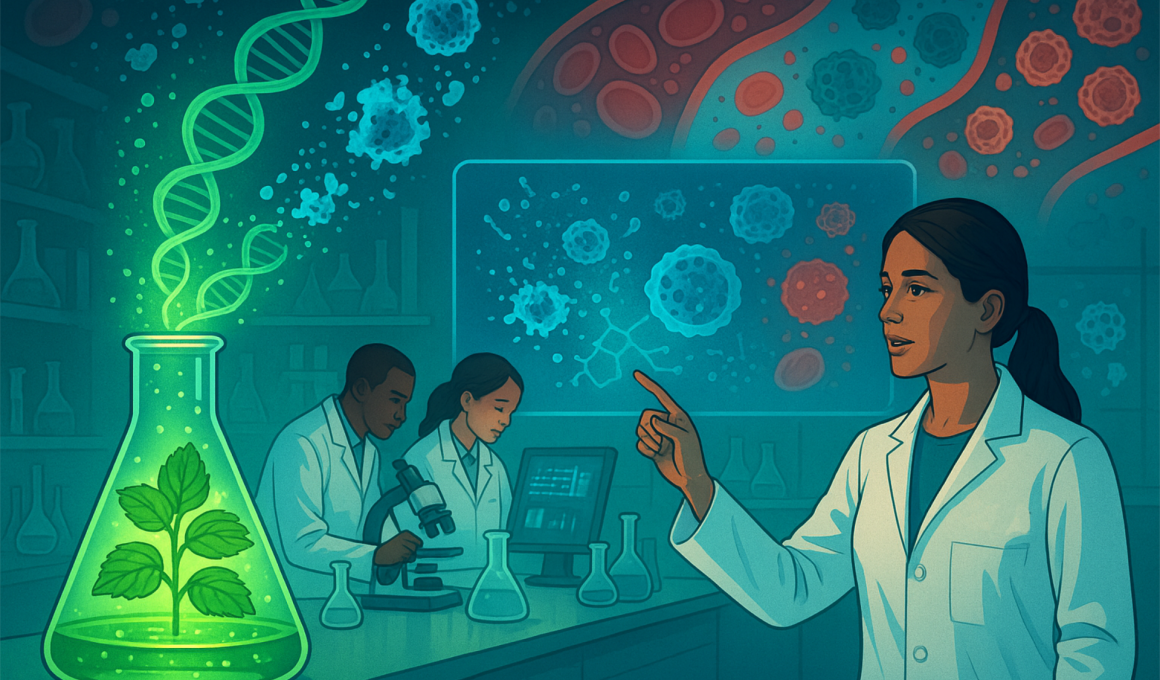
A groundbreaking study has found that forskolin, a natural compound from the Indian coleus plant, can slow the growth of aggressive leukaemia cells and make chemotherapy drugs work better. The research, published this month in the British Journal of Pharmacology, could lead to gentler, more effective treatment for patients with a rare and hard-to-treat form of blood cancer.
At the heart of this breakthrough is a team at the University of Roehampton, whose scientists helped design and test the lab systems used to study how the cancer responds to treatment, putting our local university firmly on the map in global cancer research.
What the study found
Forskolin was found to fight cancer in two powerful ways:
- It switches on the body’s own cancer-fighting system activating a natural tumour-blocking enzyme called PP2A, which helps switch off cancer-driving genes.
- It stops cancer cells from spitting out chemotherapy drugs by blocking a protein that cancer cells use like a pump to eject treatment. When this pump is blocked, more of the chemotherapy stays inside the cancer cells, making it far more effective.
The combination means forskolin could allow doctors to use lower doses of chemotherapy, reducing side effects while still killing the cancer.
The type of leukaemia it targets
The research focused on a rare but aggressive form of leukaemia called KMT2A-rearranged Acute Myeloid Leukaemia (AML). It’s fast-growing, hard to treat, and mostly affects children and older adults.
Each year in the UK, around 3,000 people are diagnosed with AML. That’s roughly 8-10 people every day across the country, including some right here in South West London. The current treatments are intense and don’t work well for everyone, so new approaches like this are urgently needed.
Roehampton’s role: Local expertise making a global difference
The University of Roehampton played a vital part in this scientific breakthrough – far more than just providing funding.
Dr Yolanda Calle, a senior lecturer in the School of Life and Health Sciences, and her team specialise in the “microenvironment” of cancers: how cancer cells interact with their surroundings in the body, especially in the bone marrow where blood cancers like leukaemia live and hide.
Her lab created advanced laboratory models that mimic the bone marrow environment, allowing researchers to test how real-world cancer behaves when treated with drugs like forskolin. These models were crucial because cancer cells often behave very differently when they’re protected by their natural environment.
Dr Calle also co-supervised doctoral researcher Antonella Di Mambro, who has studied the exact biological pathway that forskolin affects, offering deeper insights into why it works so well.
Together, the Roehampton team provided the essential tools and knowledge to test forskolin in realistic settings, helping the wider research team confirm its remarkable effects.
What this could mean for local families:
- Less severe side effects from chemotherapy
- Better survival chances for aggressive leukaemia
- Faster recovery times between treatments
- Potential treatment available closer to home in future
A team effort putting London at the forefront
The study was led by Dr Maria Teresa Esposito at the University of Surrey, in partnership with Roehampton and experts from UCL, Queen Mary University of London, and a top cancer research institute in Barcelona.
Funding came from Leukaemia UK, the Institute of Biomedical Science, and both lead universities – including significant investment from Roehampton itself, showing the university’s commitment to world-class research.
The University of Roehampton’s research into leukaemia and drug resistance has been quietly growing in recent years, with a focus on making treatments more targeted and less harmful. The university is expected to play a continuing role as forskolin moves into the next phases of testing, including potential clinical trials.
This puts Roehampton, and by extension, South West London, at the centre of potentially life-saving research that could help families across the UK and beyond.
“Understanding how cancer cells hide from treatment is key,” said Dr Calle in a recent research summary. “By recreating that environment in the lab, we can figure out how to break through it – and this study is an exciting step forward.”