

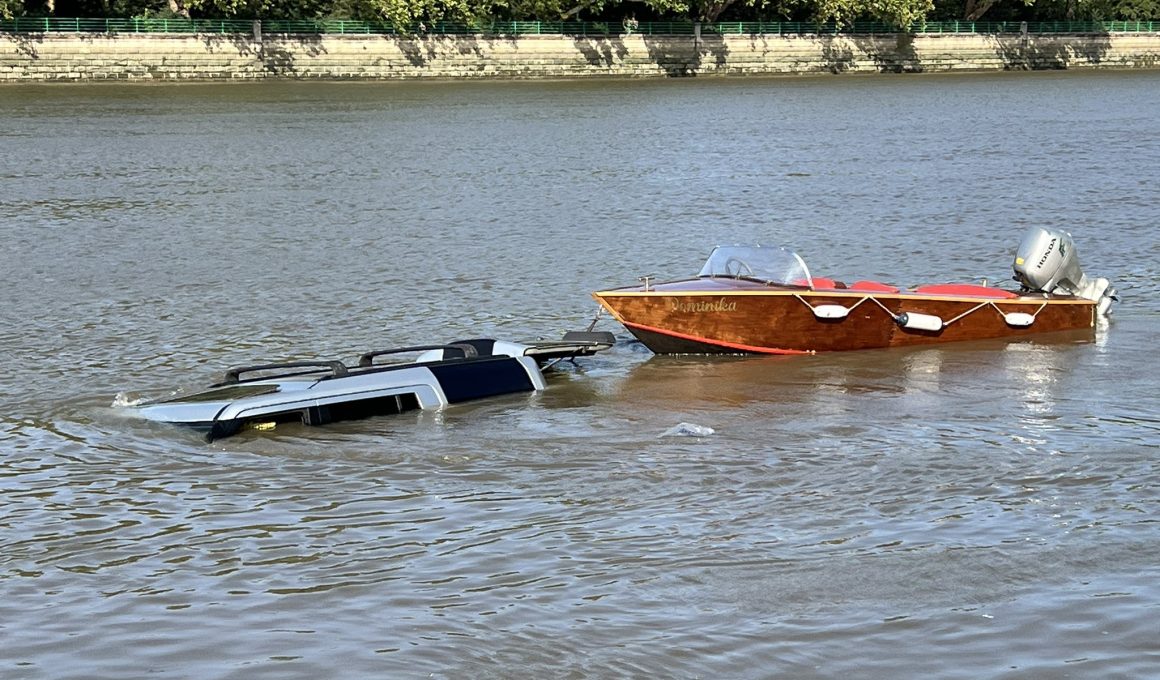
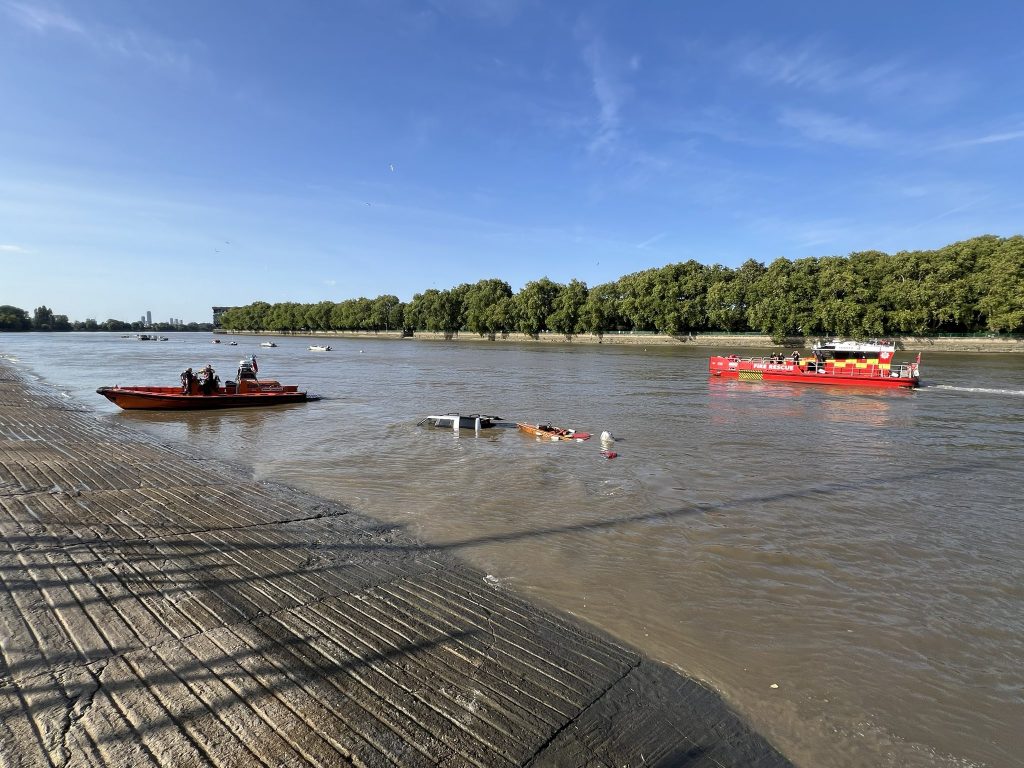
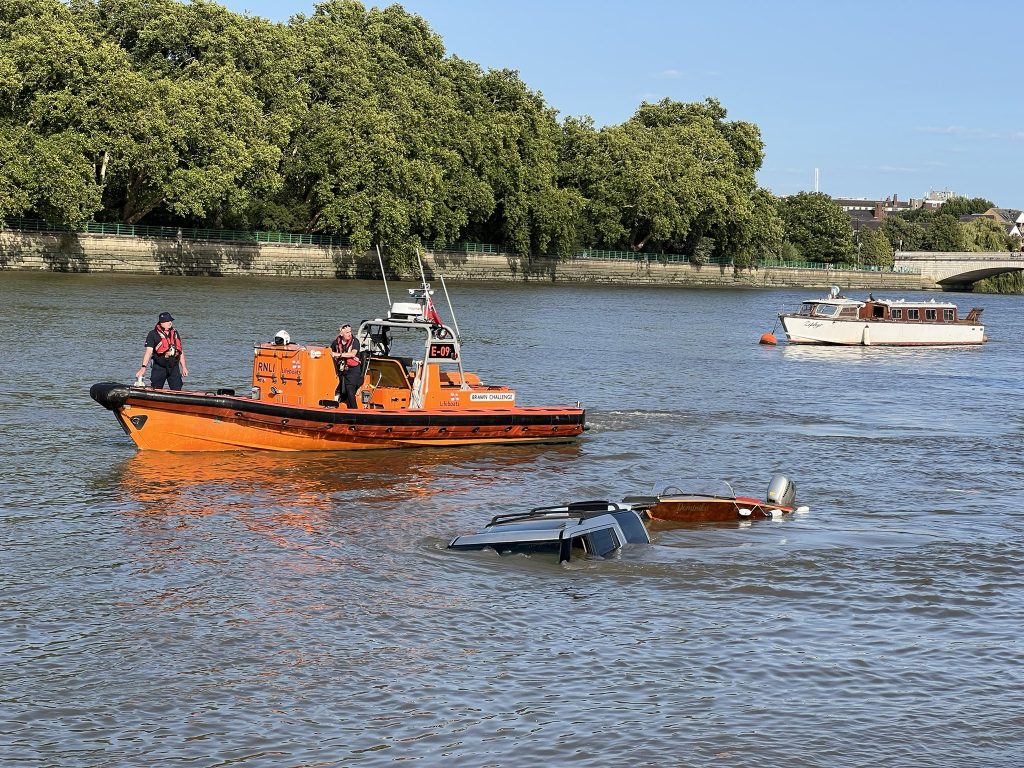
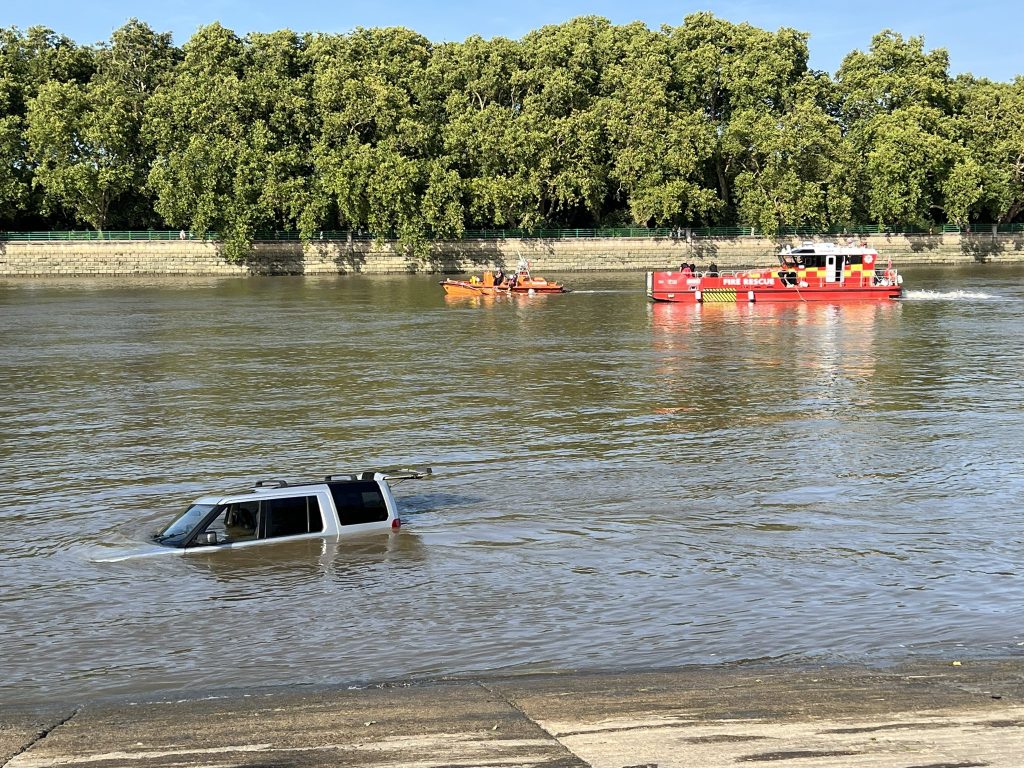
One unfortunate SUV owner learned too late this week how quickly the River Thames can rise. Their silver 4×4 sat on the slipway near Putney’s rowing clubs only to be consumed by the incoming tide, with just the roof visible before rescue boats arrived.
This isn’t an isolated incident. Vehicles are frequently caught and often written off after the seductive but treacherous tide creeps in at the waterfront by Putney’s rowing clubs. Usually, rescue teams intervene before the bonnet is submerged but occasionally, a very high spring tide will completely swamp a vehicle, as it did this week.
Why This Happens
Putney is on the tidal Thames, where the river rises and falls twice daily by several metres. The tidal range at Putney Bridge can reach 6–7 m during spring tides: high tides at new and full moon phases when the sun and moon’s gravitational pull align. Spring tides occur twice a month year-round, but the late summer and early autumn often bring especially high and risky tides.
Neap tides that come at the moon’s first and last quarter phases are milder, around 4–4.5 m, but combined with rain or river flow, can still overtop embankments.
Most Dangerous Times to Park
- Late summer (August–September) hosts numerous spring tides exceeding 7 m, as seen this week.
- Equinox tides in March and September often produce the highest levels of the year.
- Overnight high tides in summer are particularly risky when cars parked at low tide can be submerged by dawn.
- Autumn and winter bring high river flows and heavy rains, compounding even modest tidal ranges.
When a car hits the Thames’ brackish, silt-laden water, wreckage usually follows. Saltwater damages electronics and mechanics beyond repair making write-offs almost inevitable.
The best advice: Don’t park on the slipway or embankment at Putney unless you’ve consulted tide tables, and even then, think twice.
Upcoming High Spring Tides at London Bridge (Approximate for Putney)
| Date | High Tide Times & Heights | Risk Level |
| Today (13 Aug) | ~5:05 AM – 7.03 m | Very High |
| 14 Aug | ~5:48 AM – 6.94 m, ~6:02 PM – 7.13 m | Very High |
| 25-27 Aug | Peaks near 6.96-7.05 m | Very High / Peak Risk |
| Early Sep | Springs continue before tapering (~6.9 m+) | High / Caution Needed |



Too bad if the fools don’t read the prominent warning signs. BTW, your get extra points fir spotting an SUV afloat…