Wandsworth is on the brink of becoming a borough without a single public police counter, as the Metropolitan Police prepares to shut the front desk at Lavender Hill station — the last location where residents can still walk in and speak to an officer on duty.
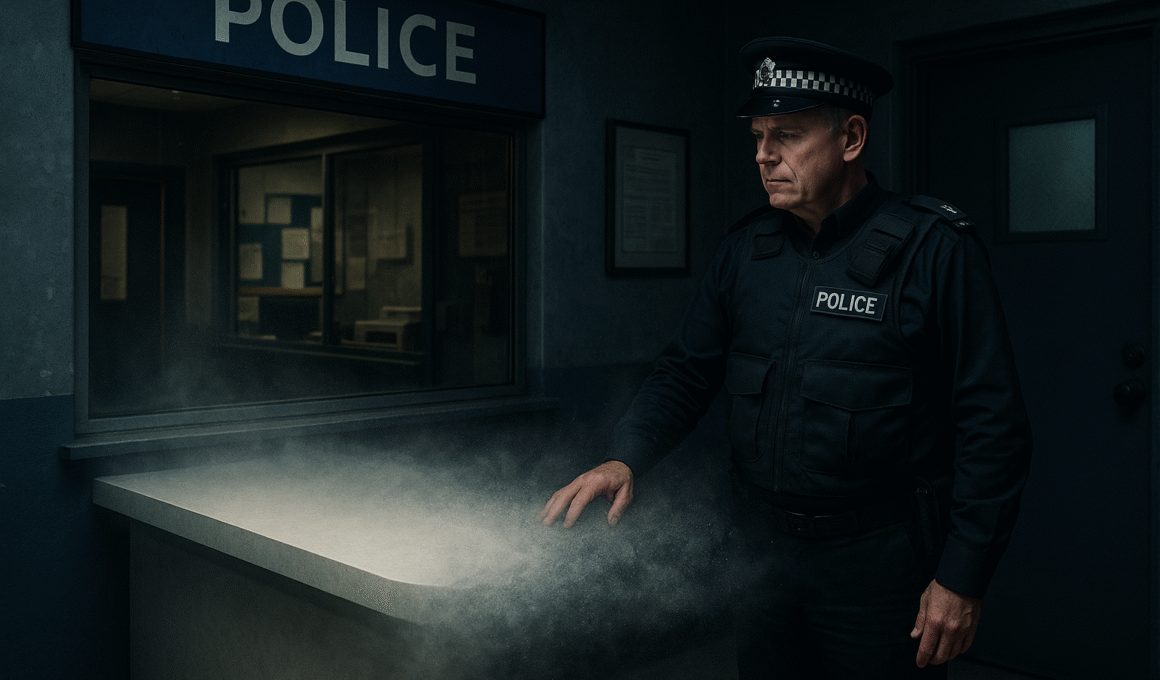
The Lavender Hill desk, just up the road from Clapham Junction, has operated with reduced functionality for years. Members of the public are already kept behind a reinforced glass barrier in the waiting room, with officers fully separated behind secure doors. But its closure would mark the end of even this limited form of unmediated access to the police — a significant shift in how the public engages with local policing.
The move follows earlier closures at Putney, Battersea, and Tooting, where stations have either been decommissioned or repurposed as internal-use facilities.
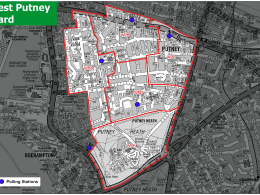
Putney police station, on the corner of Putney High Street and Putney Bridge Road, now operates as a high-security site with no public entry. Further along the same road, Wandsworth police station has transformed its former reception into what resembles a hardened watchpoint, with visible security features and no civilian access.
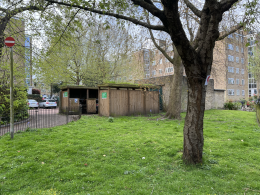
Roehampton’s recently established station, meanwhile, is little more than a rest stop and touchdown base — a place for officers to pause between duties. It has no public desk and no formal signage welcoming visitors. A planned micro-station in Tooting appears to have been quietly shelved.
In practice, this means there will soon be nowhere in Wandsworth where a resident can speak to an officer without an appointment.
End of a decade-long compromise
Lavender Hill station was deliberately retained in 2013 as part of a compromise following widespread community concern about front counter closures.
At the time, then Borough Commander David Chinchen confirmed the station would be upgraded to 24-hour access, offering a borough-wide fallback after Tooting, Putney and Battersea desks were shuttered.
That decision was made under a cost-saving drive to close over 200 under-used police buildings across London. The Met argued that the majority of crime reports were already being made online or by phone, and committed to establishing community contact points in libraries, shops and post offices as a substitute.
But more than a decade later, those alternatives have not materialised in any consistent or visible way — and Wandsworth is now poised to lose the last remaining thread of walk-in access to policing.
A quiet shift in public engagement
Senior officers have acknowledged that while footfall at police counters has dropped, the sites still play a vital role in offering safe, walk-up support — particularly for victims of violence, vulnerable people, or those reluctant to report crime by phone or online.
The withdrawal from physical counters has not been matched with the promised network of accessible alternatives. In Wandsworth, no permanent contact points have been publicly listed or signposted. Members of the public have no clear way of approaching the police without relying on digital channels, phone queues, or pre-arranged visits.
This change reflects a wider pattern in the capital: according to Met figures, fewer than 50 crimes a night are now reported across all of London’s remaining front counters. The Met maintains that every victim who wants a face-to-face visit will receive one.
Council urges Met to explain
Wandsworth Council said it has not yet received formal notice of the Lavender Hill withdrawal but understands that the closure is imminent.
In a public statement issued on Friday, Council Leader Simon Hogg said the borough was facing “the first time in living memory that there’s no full-time police station open to the public.”
He described the move as “deeply worrying” and called on the Metropolitan Police to clarify how “trust, visibility and community reassurance will be maintained.”
Despite these efforts, the borough will soon have no space where a resident can simply walk in, explain a problem, and speak to someone in uniform. What remains are secure buildings, opaque access routes, and mobile officers operating largely on the Met’s own terms.