


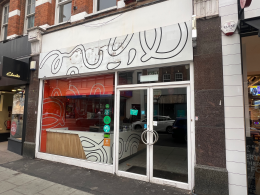
The Japanese fast food chain Wasabi has closed its branch on Putney High Street, adding to the growing list of retail casualties in the area.
Though the shopfront remains branded and the interior still contains stacked chairs and packaging, the lights are off and the location no longer appears on Wasabi’s website. A sign stuck on the window says simply “This restaurant is now closed.”
What makes this departure especially concerning is that Wasabi continues to operate branches in nearby areas such as Richmond, Clapham Junction, Fulham Broadway and Wimbledon. The decision to close Putney while maintaining stores just a few miles away speaks to a deeper problem: Putney High Street is losing its commercial appeal even to successful brands.
This isn’t an isolated case. In recent months, EE vacated its High Street shop and relocated to the Southside Shopping Centre in Wandsworth – a location that retailers note is being actively managed and promoted by owners Landsec, while the Putney Exchange, owned by BlackRock, is still struggling, in some part thanks to restrictions placed on it by the Council.
In March, long-standing retailer Huttons also closed its doors after two decades, attributing the move to high rents and a marked drop in customer numbers. The shop remains active in Battersea.
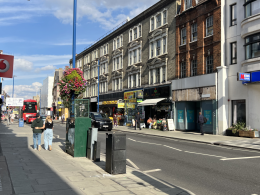
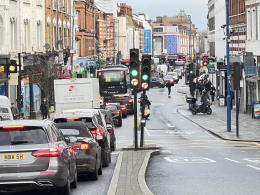
There are now over 20 empty shopfronts along the High Street, a figure that continues to climb despite occasional announcements of high-profile arrivals.

Wasabi’s wider business strategy
Wasabi’s retreat from Putney aligns with recent shifts in the company’s business model. After a challenging pandemic period, the chain underwent a major restructuring, backed by investors Capdesia and Sushiro Global Holdings. The focus turned toward suburban expansion and lower-risk franchising models.
By 2023, Wasabi had returned to profit, and its turnover rose by 16% last year. However, the shift toward franchising has raised performance expectations, particularly for stores in high-rent areas with underwhelming sales. In this context, Putney appears to have fallen short.
Despite the brand’s broader health and expansion ambitions, the decision to close this store signals that Putney is no longer considered commercially viable, even under a leaner franchise model.
A High Street with too much food, not enough diversity
Wasabi joins a succession of food outlets that have exited Putney, including Subway and Papa John’s. Local favourite Kashmir also shut down recently following a dispute with its landlord. The street is increasingly dominated by fast food, a trend accelerated by national planning changes that reclassified shops, cafes, takeaways, and restaurants into a single “E” use class. That shift meant councils no longer had the automatic power to control the retail mix or restrict new food and drink establishments from replacing traditional shops.
However, several boroughs in London have already taken steps to address this. Hackney, Waltham Forest and Tower Hamlets councils have introduced Article 4 Directions, which remove permitted development rights and require full planning permission before retail units can be converted into food or beverage outlets. These moves have allowed those boroughs to safeguard High Street diversity and manage over-concentration.
Some, like Manchester and Liverpool, have gone further by publishing Supplementary Planning Documents (SPDs) that set out clear criteria to assess clustering, community impact, and the saturation of food premises.
Wandsworth Council has done neither. It has not issued an Article 4 Direction nor introduced an SPD, leaving Putney vulnerable to market drift and retail monoculture. Without such measures in place, there is little to prevent more of the same: fast food chains crowding out variety, independents shutting down, and vacant units piling up.
The timing raises questions
The timing of Wasabi’s closure is awkward. Just weeks ago, councillors were welcoming the return of Marks & Spencer to Putney in 2026, and this week local MP Fleur Anderson posted a celebratory video outside the closed-up store claiming it would bring “new life” to the High Street.
But campaigners backing the SaveTheHighStreet initiative (supported by Putney.news), have urged caution. While footfall may be rising, spending is down, and shop closures continue — including those with loyal local followings. The disappearance of Wasabi, like that of Huttons and others before it, reveals a gap between the political optimism and the economic reality on the ground.
A cautionary tale, not just another shuttered unit
The Wasabi closure serves as a timely reminder that a single flagship opening will not reverse years of structural decline. Without coordinated local action — from business rate reform and zoning strategy to meaningful planning controls — Putney High Street risks drifting further from the vibrant, diverse hub residents want it to be.
Policy tools already exist, and other boroughs have used them. Wandsworth’s failure to act is a choice — and one with visible consequences.



Meanwhile there are numerous successful independent restaurants, bars and shops lining the Upper and Lower Richmond roads. Home, Ghost Whale, Cilantro, Tomoe, Roxie, Monies, The Bakehouse, Cho Asia, Hudson’s, Parsons Nose to name a handful. The demand and opportunity are there.
If these locations were concentrated on the high street there would be no doubt of a prosperous town.
The depletion of the high street can only be due to cantankerous landlords and poor planning. A choice, as the article was says.