Four people died at 30 Seymour Road in Southfields on 9 September 1940. Three of them lived there: Ellen Joyce Bedford, 78, Caroline Alberta Worman, 75, and Isabelle Ellen Worman, 42. The fourth, Annie May Dixon, 52, lived at number 36.
Seymour Road runs behind St Michael’s school, between Wimbledon Park Road and Viewfield Road. The house is one of 56 in Putney, Roehampton and Southfields where people were killed or fatally injured in their own homes during the Second World War: 107 people in all. Altogether, the Commonwealth War Graves Commission, which keeps the record of the war dead, lists 182 civilians from these neighbourhoods killed in that war.
One of those houses may be on your street. A new map, below, puts these houses and their people back on today’s streets, alongside the First World War dead whose homes have been traced.
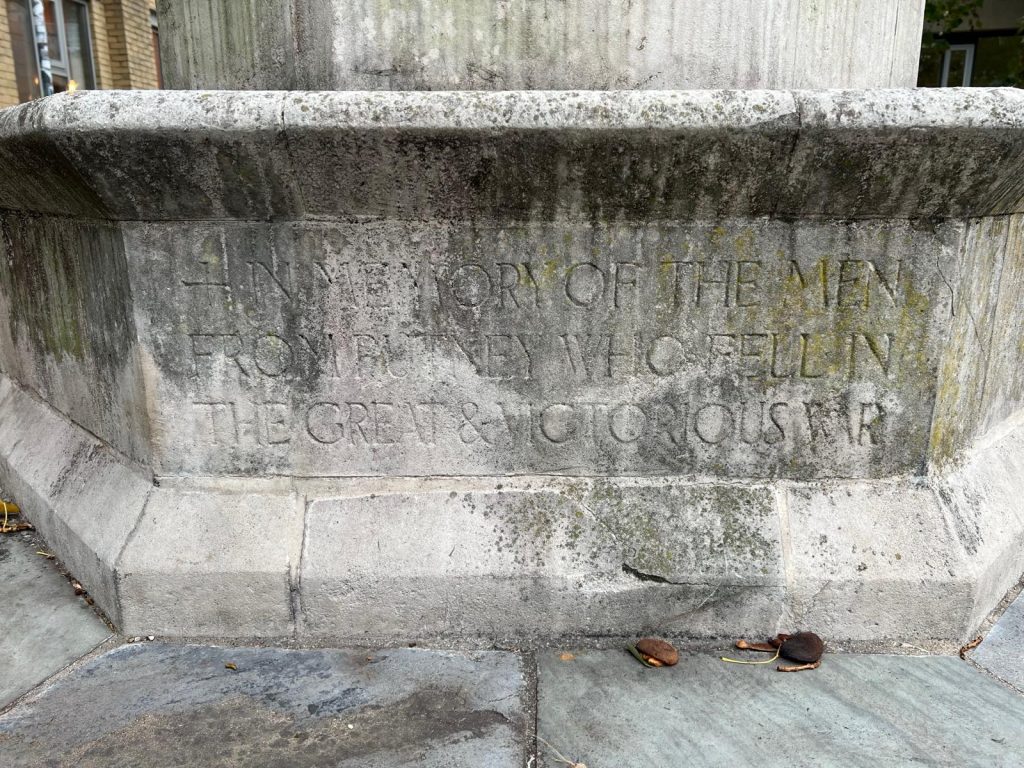
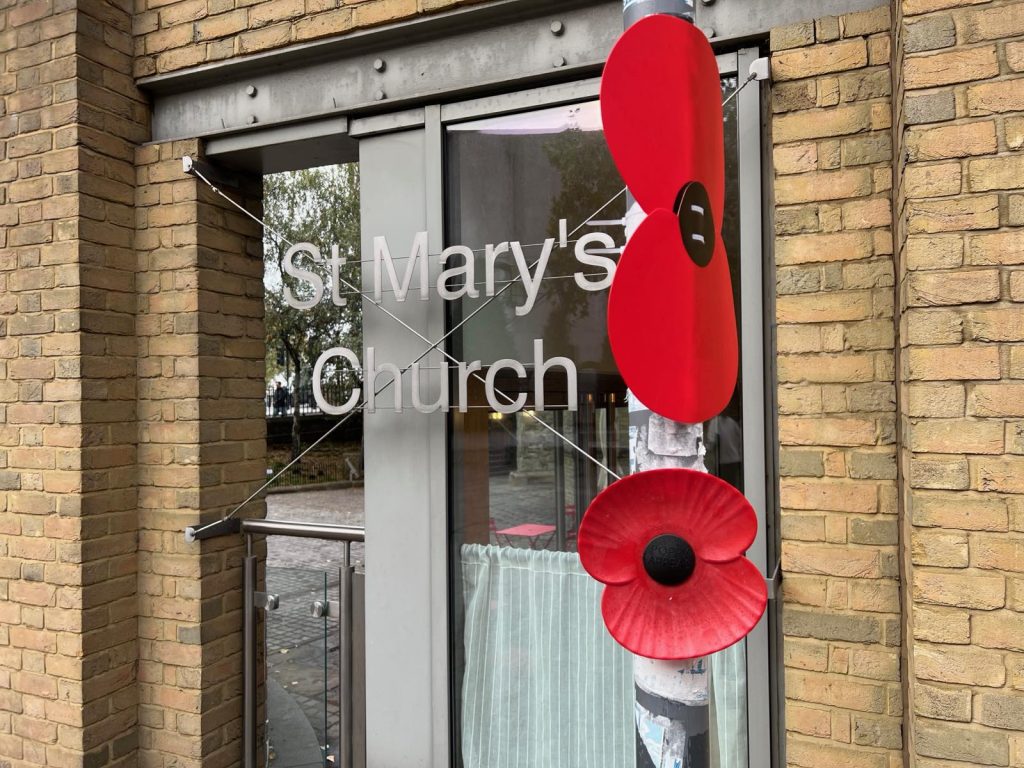
None of these names is on the war memorial in Church Square, where Putney gathers this morning for Remembrance Sunday. The stone cross beside St Mary’s Church, put up in 1921, carries only inscriptions. One is for “the men from Putney who fell in the Great & Victorious War”, another for “the civilians of Putney who lost their lives in the Second World War”. The names of more than 340 men who died in the First World War hang inside the church, on the Roll of Honour.
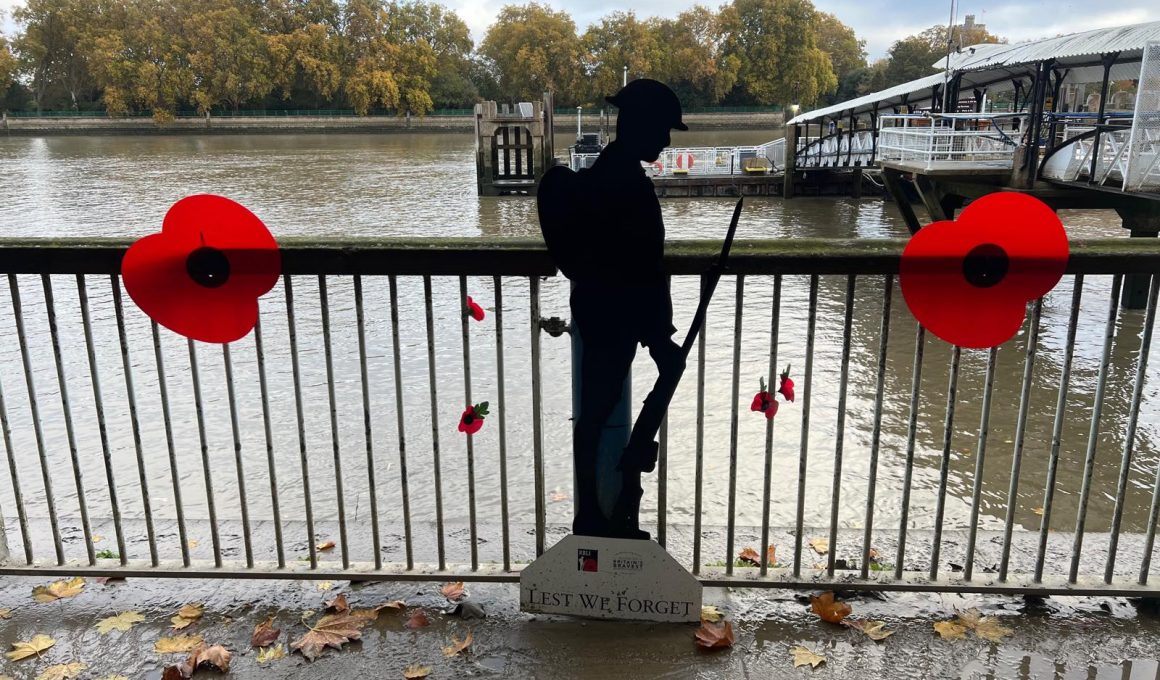
Lest we forget. Forget what?
Maggie Jones, who lives in Putney, has spent ten years finding out who the names inside St Mary’s belonged to.
“After retirement I needed to find things to occupy my time,” she told Putney.news. “I saw the war memorial hanging inside St Mary’s church and I remember thinking how sad it was that we only knew their names and nothing about them or their lives pre war.”
She takes each name through the war graves records, the 1901 and 1911 censuses, the admissions register of St Mary’s Boys’ School on Felsham Road and the electoral rolls. Then she walks to the house and photographs it. She co-wrote a book, Putney Remembers the Men of the First World War, in 2017, and the research continues on her blog.
In 1911, 15 people lived at 3 Pentlow Street, off Lower Richmond Road, among them the Down family. George Arthur Down, then a house painter, was killed in action in July 1917, aged 33. His younger brother Walter died in July 1916, aged 22. He has no known grave and is remembered on the Amara Memorial in Iraq.
A third name on her list, H Down, has no war graves record. From the census, Maggie Jones identifies him as probably Herbert William Down, another of the brothers, who was 18 in 1911.
“The parents appeared to have lost three sons in the war,” she said.
Seven men on her list came from Pentlow Street. The youngest on the whole list were 17 and the oldest 43, and the average age, where it is known, was under 26.
“I still think there’s about 50 men who we know nothing about,” she said. Nor has she found a list of Putney’s Second World War service dead: “I was hoping the church would have a list or memorial to them.”
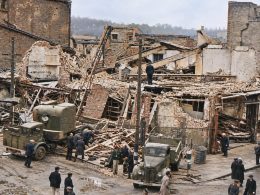
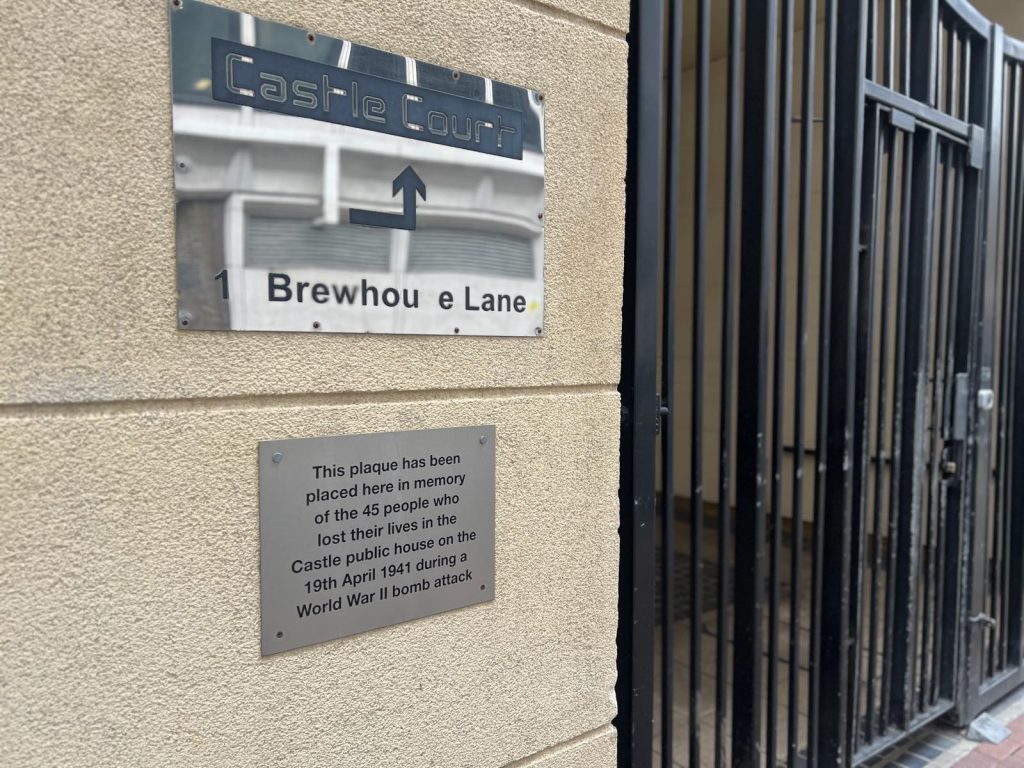
On 19 April 1941, a bomb hit the Castle pub on Putney Bridge Road, killing 45 people.
On the evening of Sunday 7 November 1943, a single bomb hit the Cinderella Dancing Club, killing 81 people. At least 22 of the dead were 17 or younger. Jack Pearce, of Deodar Road, was 16. This morning’s parade passes the corner of Putney High Street and Putney Bridge Road, where the club stood.
Your street
The map below puts hundreds of Putney’s war dead back where they lived. Tap a pin to see who lived there.
It opens on two layers. One holds 176 of the men named inside St Mary’s, at the addresses Maggie Jones has found for them. The other holds the 182 civilians killed in the Second World War whose war graves records give a home in Putney, Roehampton or Southfields.
Neither layer is everyone who died. Men named at St Mary’s whose homes have not been traced are not on the first. The second holds civilians only: the people from these streets who died serving in the forces are not on it.
Three more layers can be switched on (top-left tab). One shows the homes of over 50 of the 81 people killed at the Cinderella, and the club itself. One shows where bombs fell between October 1940 and June 1941. The last shows the 56 houses where people were killed or fatally injured at home.
This morning
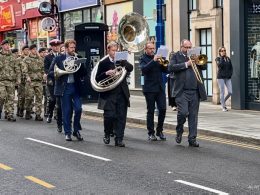
This year’s parade was in doubt. The Putney branch of the Royal British Legion was not in a position to organise it. Natalie Angell and Serena Coats, from the committee of the Legion club on Upper Richmond Road, took it on. They needed about £2,000. An online appeal opened in July had raised £1,410 by Wednesday morning. Once the shortfall was reported, the rest came in within hours: by 9.30am, the appeal stood at £2,050 from 72 donations.
One of the great values and great losses of humankind is our ability to both remember and forget. That people continue to move on with their lives despite unthinkable tragedy is remarkable. But as time fades, so do memories, and the fact that Putney’s Legion club struggled to raise the money for this year’s parade is poignant.
Not everyone will be at the cross. Some will wear a white poppy instead of a red one. Some feel the day has become too much about the military. Some stay away.
As the world again bends toward populist, authoritarian leaders who launch wars and pull their countries and the world with them, it’s important to recall what can happen and the terrible cost that comes with it.
The parade sets off from Keswick Road at 10.25am – see the parade route and road closures. The ceremony at the war memorial starts at 10.45am. The Last Post sounds at 11am, followed by two minutes’ silence at 11.02am, and the service in St Mary’s begins at 11.15am.
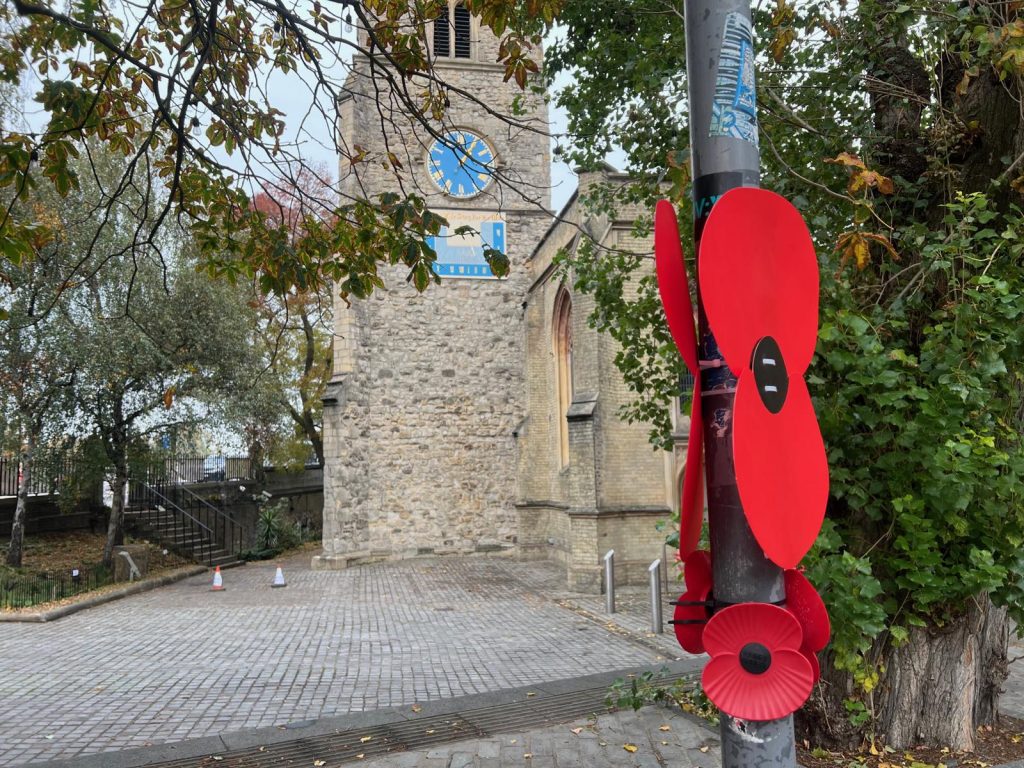
Before or after, find your street on the map above. If you tap on the symbols, you will learn the names of those who walked the same street, and lived in the same house as you. We may no longer know the people we silently commemorate, but they lived among us. They were us.
“If a reader recognises the name they can use this email to contact me,” said Maggie Jones: maggieinlondon@outlook.com.