Walk south off Putney Bridge and the first building on your left has stood there since the 1400s. Across the little square beside it, wrapped round the back of the Odeon, is a concrete office block by the architects of Centre Point. Most of us pass both without looking up.
This weekend, look up. A loop round both takes twenty minutes, runs from the 1400s to the age of Centre Point, and ends with a coffee.
The tower has a warning on its south face
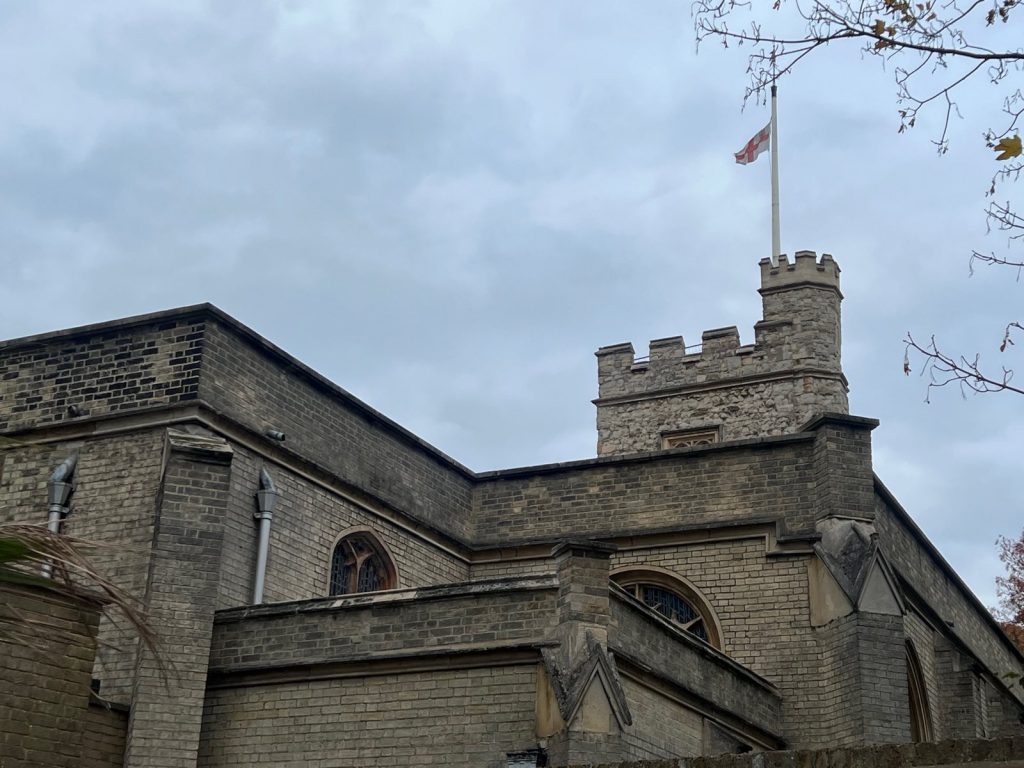
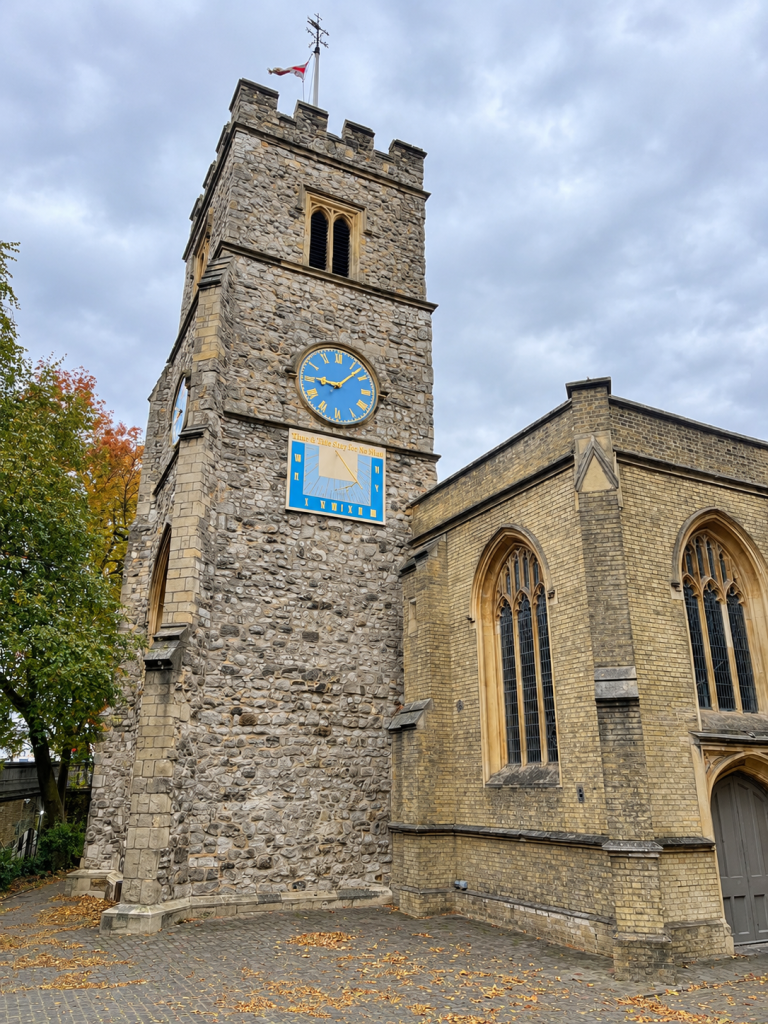
St Mary’s tower was built in the second half of the 15th century, of coursed ragstone, with battlements on top and a stair turret tucked into one corner. With the arches inside the nave, it is the oldest part of the church.
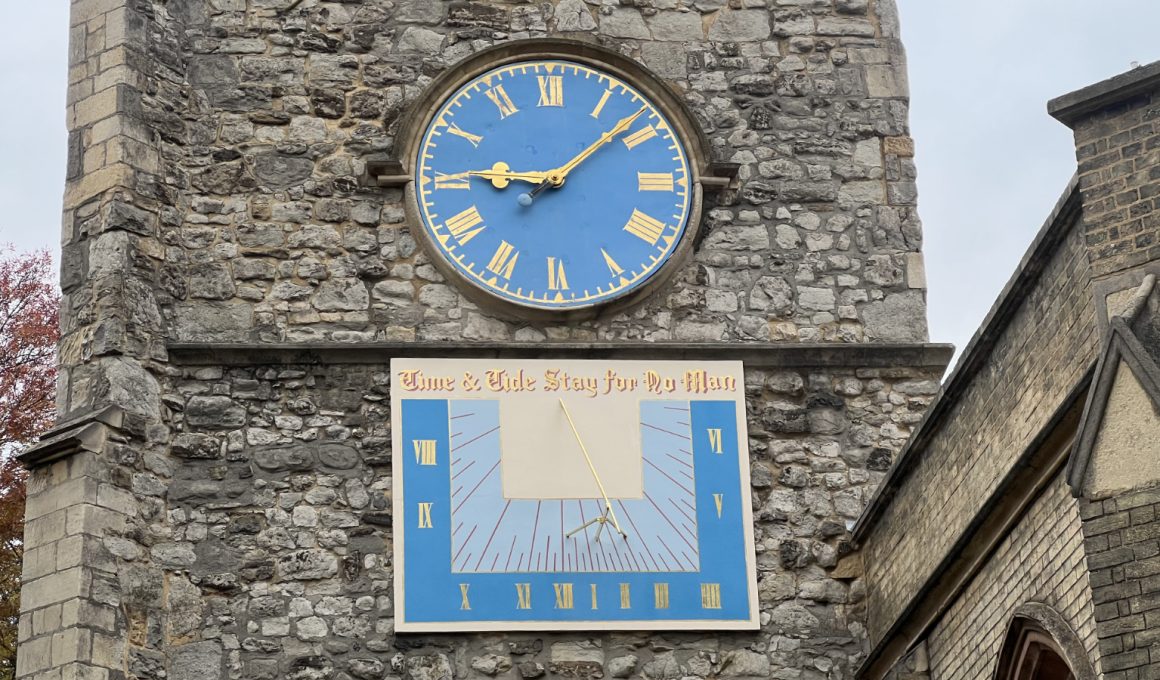
Start on the south side of the tower and find the sundial. Its motto reads “Time & Tide Stay for No Man”, which is a fair thing to carve on a church that has watched the Thames go past for five centuries. Look up again for the clock: a blue face with gold numerals.
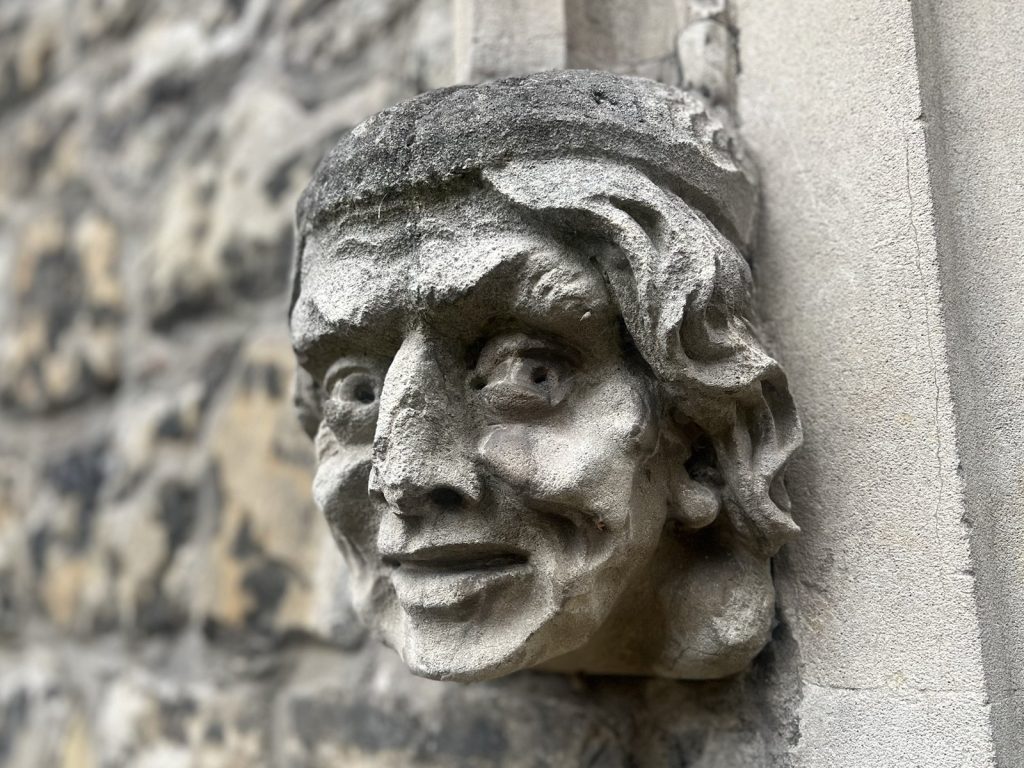
Then walk round to the west door. Two carved heads keep watch either side of it.
Most of what sits behind the tower is younger. In 1836 and 1837 the architect Edward Lapidge rebuilt and widened the church in yellow brick, keeping the tower and parts of the old nave.
Inside, at the east end of the north aisle, is the chapel Nicholas West, Bishop of Ely and chaplain to Henry VII and Catherine of Aragon, added between 1515 and 1533. Its fan-vaulted ceiling is probably modelled on St George’s Chapel, Windsor, where West had been dean. Lapidge moved the whole chapel from one side of the church to the other.
The argument that began here 379 years ago this week
On 28 October 1647, officers and soldiers of Cromwell’s New Model Army sat down in this church to argue about who should get a vote. The Putney Debates ran until 11 November, so 379 years ago this week, they were still going.
The radicals wanted a vote for every man. Colonel Thomas Rainsborough put it in one sentence: “the poorest he that is in England hath a life to live, as the greatest he.”
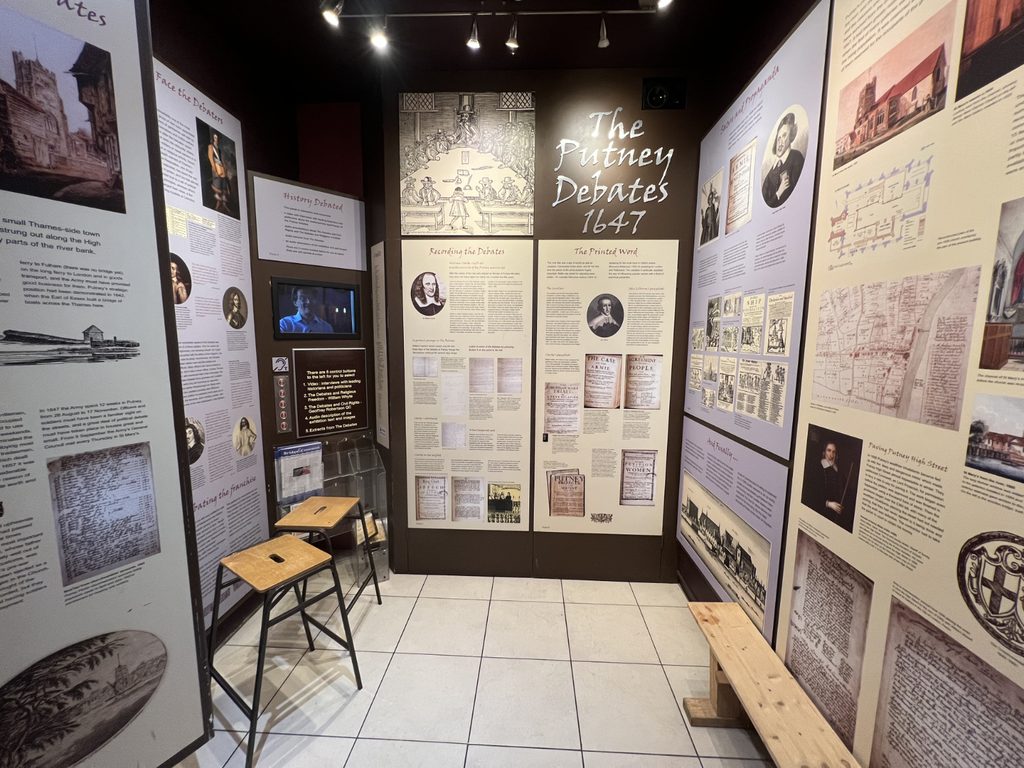
The army’s secretary, William Clarke, took down the first three days. His record was not published at the time and only turned up in 1890, in the library of Worcester College, Oxford. An exhibition about the debates has been in the south aisle since 2007.
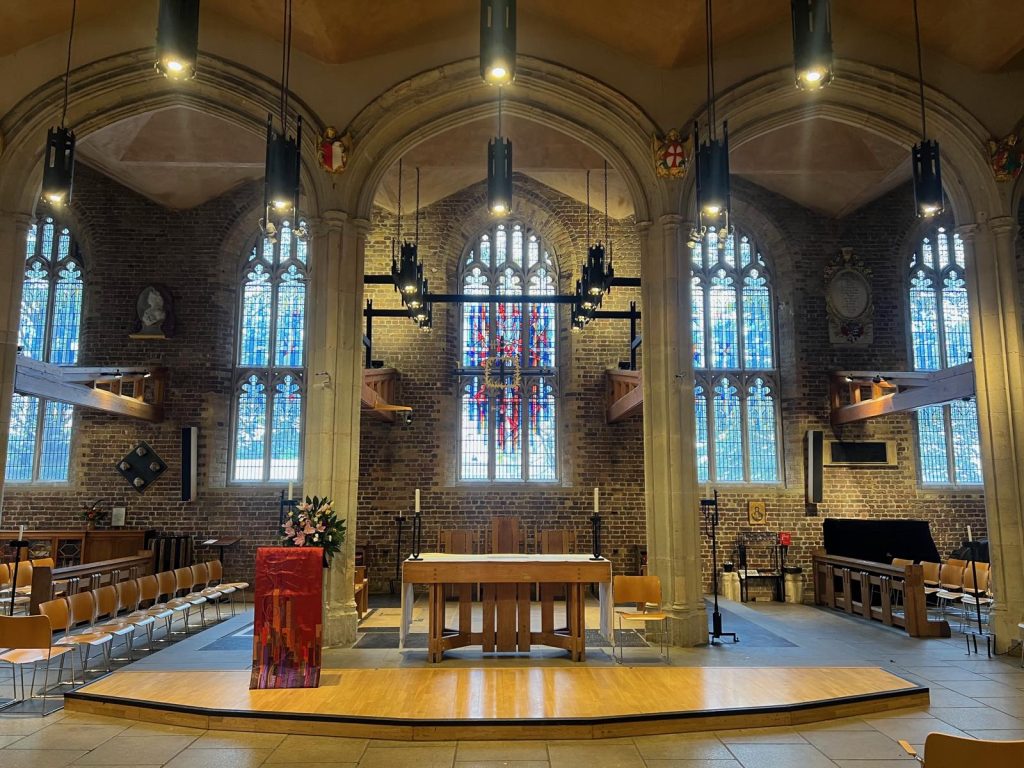
In 1973 an arson attack destroyed much of the church’s roof. The restoration, finished in 1982 by the architect Ronald Sims, gave the nave a ceiling of unpainted plaster pressed into deep upside-down pyramids. Historic England calls it daring. Stand under it and decide for yourself.
The last layer went on in 2005: a steel and glass box against the south side, which is now the way in. It holds the café, under new owners since January. You can drink your coffee in 2005, looking at 1836, in a church first recorded in the 1290s.
The architect’s name is cut into the stone
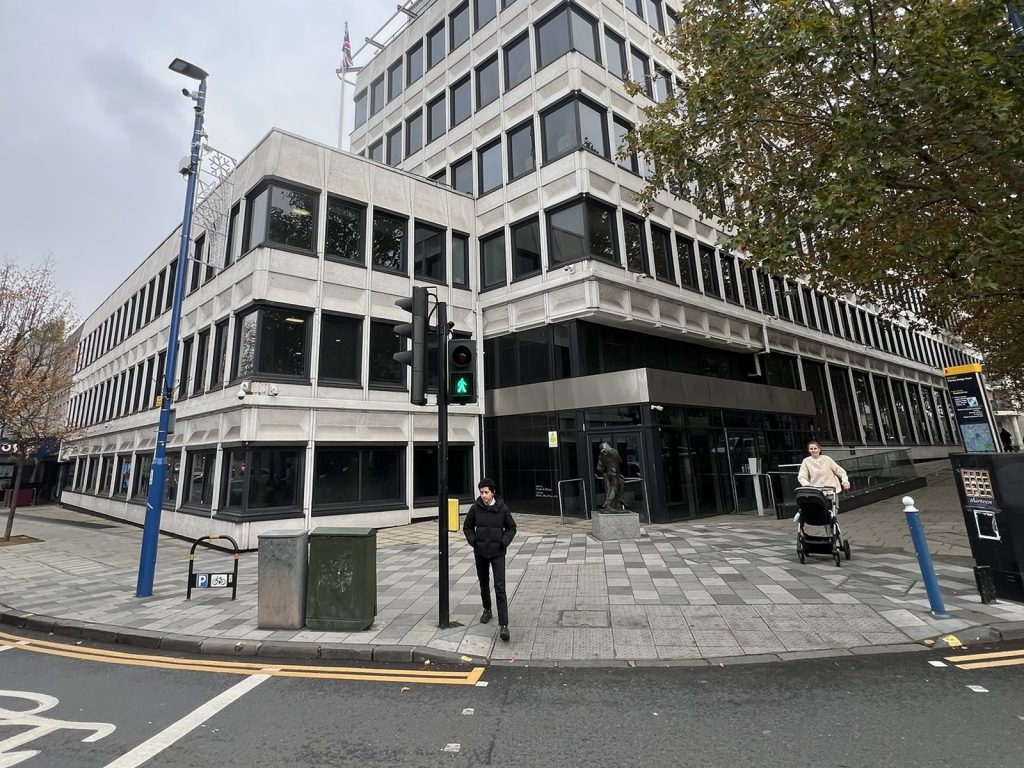
Walk on, past the Odeon, to the corner of Putney Bridge Road. Jubilee House wraps right round the cinema, from this corner back to the square beside the church, and it is Putney’s police base. It is held for the Met on a 75-year lease that began in March 1976.
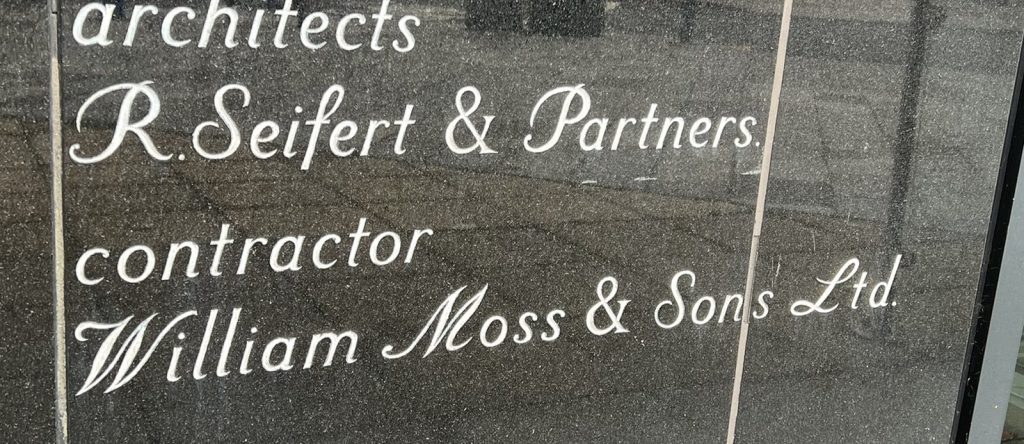
By the entrance, cut into black granite, is the building’s own credit line: “architects R. Seifert & Partners / contractor William Moss & Sons Ltd”.
Richard Seifert, who died in 2001, designed Centre Point and the NatWest Tower, now Tower 42, and his practice designed more than 500 office blocks. The practice often used precast concrete to give its towers a sculpted, textured face. Here the frame is precast concrete, and every window surround is angled inwards.
The records disagree about when it went up. The Royal Institute of British Architects’ collection and the Putney Society both say 1966, the same year Centre Point was finished. A rent review paper for the Mayor’s Office for Policing and Crime says the mid-1970s. The building does not say.
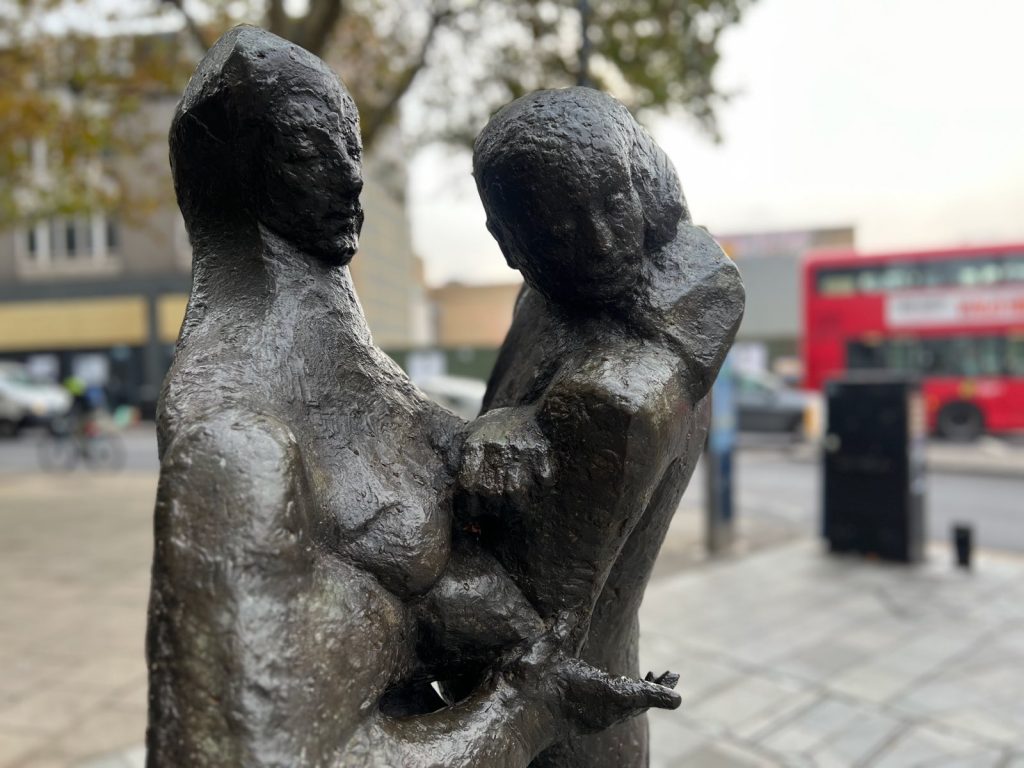
On the corner stands The Turning Point, a bronze by the Putney sculptor Alan Thornhill and one of nine on the Putney Sculpture Trail, which opened in 2008.
One view with both buildings in it
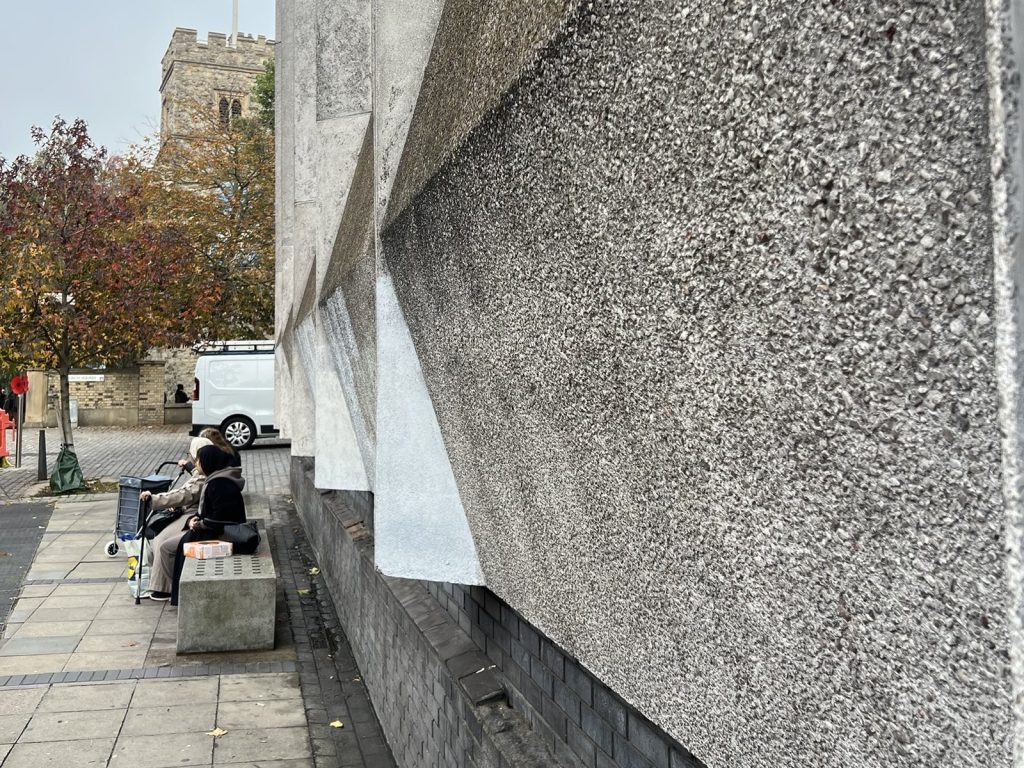
Turn into Church Square, between the Odeon and the church. The back of Jubilee House is a blank wall of rough aggregate panels with ribs standing proud of it, and over it rises the tower. Stand here for the view with both buildings in it.
Outside St Mary’s is the war memorial. Tomorrow morning the Remembrance parade ends there, with the ceremony at 10.45am.
Then go back in through the glass doors, order a coffee, and look at the ceiling.
Which Putney building do you walk past every day without looking up? Tell us, and it could be the next one we walk to.