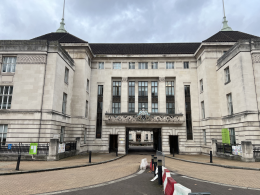
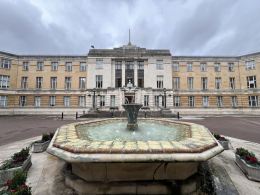
Wandsworth Council’s Cabinet last night approved a plan to nearly double council tax next April, at a testy meeting where the only voice raised against it had no vote.
The plan assumes Wandsworth’s share of a Band D bill rises from £510 to £1,468. With the Mayor’s share, a Band D household would pay about £1,978 a year instead of £1,020: £958 more, or about £18 a week. Full Council makes the final decision in March.
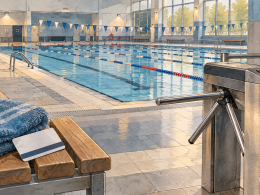
In the same evening Cabinet closed Access for All, the free gym and swim scheme used by more than 10,000 residents on low incomes, and put a £30 charge on bulky waste collections, which have been free since January 2025. It suspended the Wandsworth Grants Fund, which supports local charities and community groups, for four years, and ended the Borough of Sanctuary programme for refugees.
It also voted to pay for 25 extra police officers and more street cleaning, and agreed to consult on ending full council tax support for 7,102 low-income households.
The closure of KITE, the council’s own team that helps people recover at home after hospital, drew a threat of strike action. A GMB representative told Cabinet the union would ballot members across Wandsworth and Richmond councils unless the council changed course. The leader, Cllr Robert Morritt, agreed to meet the union.
What was agreed
Most of the detail was set out in the papers before the meeting, and no paper was amended on the night. The one late change, announced by Cllr Nick Austin, Cabinet Member for Transport, was a pause to the Weiss Road one-way scheme in Putney, pending a fuller consultation.
Access for All takes no new members after 31 October and ends on 31 December. Its replacement offers 20 to 40 per cent off leisure only, for people on Carer’s Allowance, students, children in care and care leavers. Universal Credit no longer qualifies.
Bulky waste collections will cost £30, with half as many slots. The money pays for two more jet-washing crews for high streets and daily sweeping on selected busy streets.
Police: 22 constables and three sergeants, paid for by the council at up to £4.9m a year with a new enforcement team, starting between January and March.
Council tax support: the consultation would make every working-age household pay something. For those losing full support, the average first-year increase for a Band D home is about £309.
Cabinet also agreed to put the library service out to tender, charge utility companies for digging up busy roads at peak times, move the pedestrian crossing on Putney Bridge, drop £9.5m from Portswood Place on the Alton estate in Roehampton, and allow extra rent rises from 2027 for up to 9,900 council tenants.
A Cabinet that agrees with itself
The meeting had an unusual shape. Under the deal independent councillor Malcolm Grimston struck with the Conservatives after May’s election, which gave them a working majority, the leader of the opposition can take part in every item at Cabinet. He cannot vote.
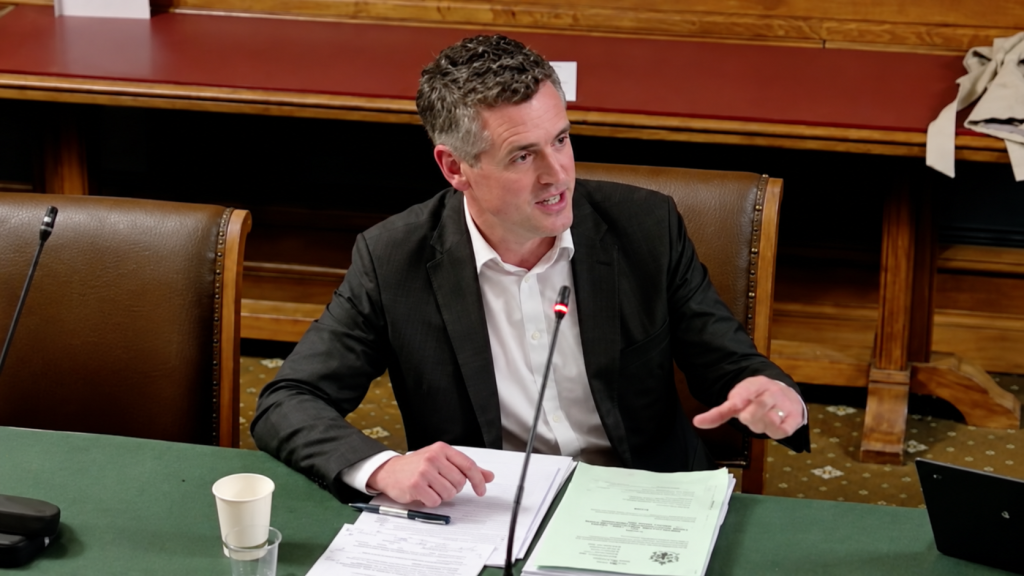
In practice, that made Labour’s Cllr Simon Hogg the only source of argument among the councillors at the table. Cabinet members did not question each other’s proposals. Item after item, Morritt turned to the end of the table: “Councillor Hogg, is this another one that you have on your list?” He did so on at least a dozen of the 18 items. When Hogg had nothing to say, the item was agreed without a word of discussion. Six went through that way, including tendering the library service.
When Hogg did speak, it was in a calm, level voice, reading out lines that were anything but. He spoke about the Cabinet members beside him in the third person, as if addressing a full chamber or the cameras rather than the people at the table.
“This paper sets in stone the plan for Wandsworth Conservatives to double your council tax,” he said. “They plan to bribe you with your own money and hope that you don’t notice.” The new administration, he said, had “brought chaos. They are extreme, they are divided.” Its approach was “grim bookkeeping”, run by “people without experience” who were “trying to take us back to the 1980s”.
There is no love lost between Hogg and Cllr Peter Graham, the Deputy Leader and Cabinet Member for Finance. Hogg relayed what he said a Tory councillor had told him: “Councillor Graham’s filled his nappy and now he has to sit in it for a while.” Graham accused him of “juvenile and slightly perverse language on every possible occasion”. Later, Hogg told Graham he could not “keep saying things in a creepy voice”, and said that if he showed up and “wipe[d] the floor” with him too often, his chance to speak would be withdrawn.
The residents, and the numbers
Hogg’s strongest moment came when he read out messages from residents. Labour, he said, had more than 10,000 signatures on a petition and more than 2,000 messages. “As a paramedic on NHS wages, I cannot afford to pay an increase,” read one. A couple who had bought their first home two months ago said they felt “absolutely blindsided”. “At 70 years old, this increase will financially cripple me,” read another.
Morritt said he was “almost nostalgic for the days of Jeremy Corbyn when he used to read these out at PMQs”.
Graham argued that the funding cut behind the rise was the Labour government’s, and that a Treasury minister had described Wandsworth’s council tax as “artificially low”. When it was put to Hogg that two of the borough’s Labour MPs had voted to take the money away, he said: “You’d have to ask them about that.” The Conservative side of the table roared with laughter.
Earlier, when Graham pressed him on Labour’s alternative, Hogg said he was “not here to give evidence or to answer Councillor Graham’s questions”. Morritt told him that the best thing he could do “to protect local residents would be just to publish your numbers and show us how it all works”.
Later in the evening, Hogg did set out how Labour would do it. Council tax would rise by no more than 5 per cent a year. Reserves would smooth the change over several years. The council would cut payments to private landlords for temporary accommodation, reduce duplication in back-office services, modernise and work more closely with Richmond Council. He said the administration was “exaggerating the scale of the financial challenge”.
The council’s own figures leave little room for that plan. To close the gap, its financial strategy says council tax income needs to rise by £143m a year by 2030/31. Rises of 5 per cent a year would bring in about £17m more by then. That leaves about £126m a year to find, on top of the £79m of savings already planned. The council spends about £100m a year on everything outside adult social care, public health and children’s services.
The strategy also says 5 per cent rises “would exhaust the Council’s reserves fully within two years”, too soon for savings on that scale to arrive. Independent councillor Malcolm Grimston, whose vote the Conservatives need in March, ran the sums himself earlier this month and found a gap of about £400m over three years between the two plans.
None of the savings Hogg listed came with a figure.
Full Council will vote on next year’s council tax in March.