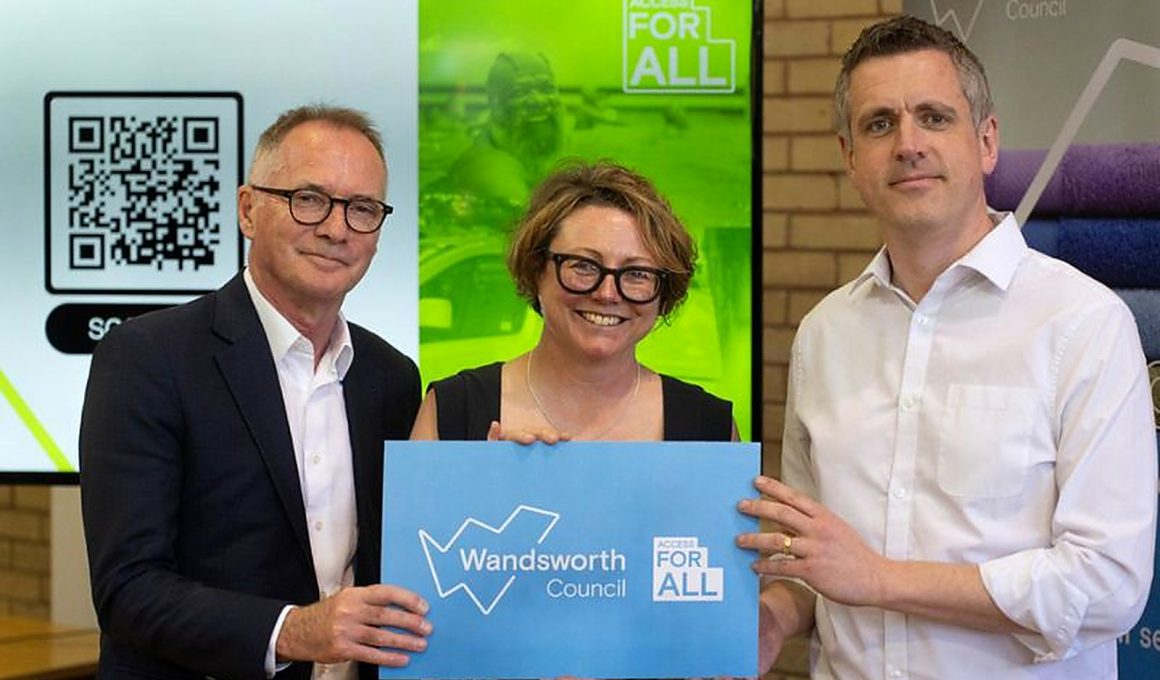
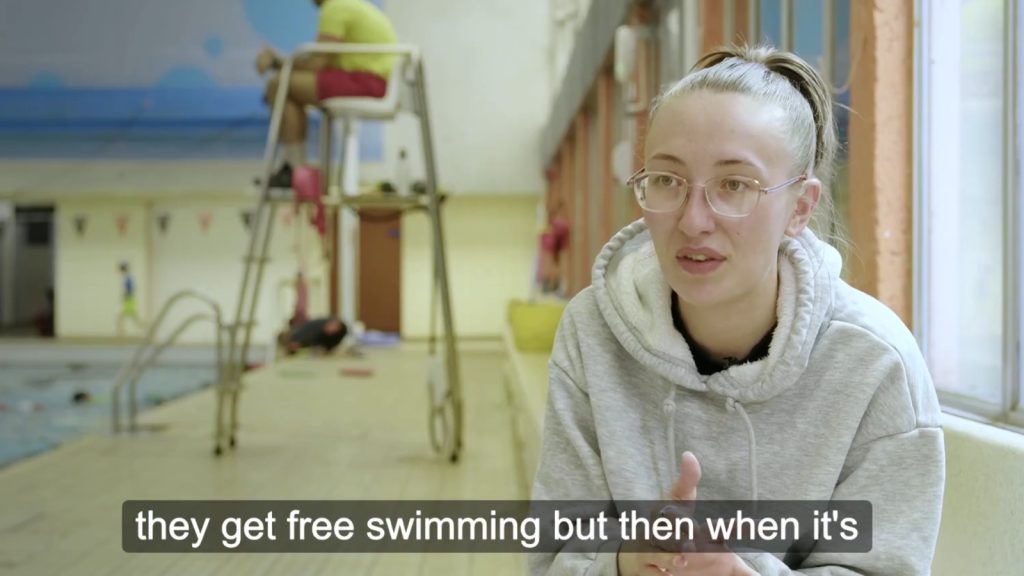
In a short film Wandsworth Council made about Access for All, its borough-wide concession scheme, a resident called Chloe takes her children swimming for free at Tooting Leisure Centre. The council has used her story in three press releases as proof the scheme was working.
Tomorrow evening, the council will shut the scheme down.
Under the plans going to Cabinet, the scheme will take no new members or bookings at the end of this month, and will close entirely at the end of the year. A replacement arrives in the new year, but it is significantly smaller: 20 to 40 per cent off leisure rather than free sessions, and only for people on Carer’s Allowance, students, children in care and care leavers. The free off-peak gym and swim sessions, the heart of the scheme, will go. Universal Credit, the qualifying benefit for more than 80 per cent of adult members (4,839 of 5,942), will no longer count. The scheme has 10,895 members in all, and 4,953 of them are children.
Wandsworth spent more than £2m on Access for All over three years and promoted it repeatedly as the best concession scheme in Britain. It is ending without anyone having checked what it achieved. More worrying still, there is no plan to find out.
Access for All was the flagship policy of the last administration, and it is about to be replaced. There is a great deal to learn from it, starting with how to make its successor work.
What began as a well-intentioned goal ended up showing what goes wrong with council schemes: a plan launched with no way of measuring it, then rebuilt on the fly; figures kept from the public while the claims grew bigger; politicians who came to believe their own press releases; constant change that ate up time and energy; and a council that, rather than learn from its own record, would sooner forget it and move on.
Access for All started with a big ambition: to build the best concession scheme in Britain, and to open the council’s pools, gyms and services to the residents who could least afford them.
Nine months later, that goal was presented as fact. In April 2025, when the scheme was widened beyond leisure centres, the council’s press release was headlined “Wandsworth launches Britain’s best concession scheme”. “The scheme’s success speaks for itself,” it said, “with 80,000 bookings made in our leisure centres already.” Simon Hogg, then leader of the council, said the council was proud to offer “both the lowest Council Tax in the country and Britain’s best concession scheme”.
Three months later, amid a flurry of additions to the scheme, the council added half-price hire e-bikes and scooters and became “Britain’s most generous concessionary scheme”. Two months after that, a press release marking six months since the scheme was widened said it was “constantly evolving, using a data-driven and feedback-led approach”. Hogg was again quoted: “The scheme’s success so far speaks for itself.” In March 2026, another press release, this time announcing 100,000 bookings, and the council called it “the best concessionary scheme in the country”, and Hogg said “the take up of these opportunities show that it’s working.”
Each time, the proof offered was a count: bookings, visits, sign-ups. A count shows that a scheme is being used. It does not show that it is working, and the council’s own records – which took Putney.news 15 months to get hold of – show these counts were weaker than they looked.
The 80,000 bookings announced in April 2025 sat beside a number the council did not produce: across the whole of 2024-25, 2,433 people used the scheme, in a borough of 327,500.
The bookings themselves were inflated by the way they were counted. Until August 2024 the leisure booking system logged each activity separately, so one visit would often lead to multiple counts. In August 2023 the records show 2,623 uses; counted as visits, they come to 793. Across the scheme’s first year the system recorded roughly three times as many uses as visits.
The “more than 10,000 members” of January 2026 were sign-ups. But in May 2026, which was the busiest month for the whole scheme, only a fifth of those – 2,446 people – actually used it.
The figures announced by the council did not align with the stats eventually released. Even now, the council paper that will shut down the scheme quotes a usage figure that is 100,000 higher than the figures released to Putney.news for almost the same period. We asked the council to explain the discrepancy; it has not responded.
The claims, and what the council was holding back
Every time the council called Access for All a success, it was refusing to release the usage figures Putney.news had asked for, and it held no evaluation of the scheme.
- A claim by the council
Source: Wandsworth Council press releases, 29 April 2025 to 18 March 2026; council equality assessment, July 2024; paper 26-239, October 2026; Information Commissioner decision notice IC-413027-X9L4; council Freedom of Information responses. Putney.news analysis.
Bigger, but never measured
It began in July 2023 with a £4.85m fund set aside by the then Labour administration. At first it covered leisure: free off-peak gym and swim sessions for residents on benefits. The report that set the scheme up committed the council to evaluating its impact and take-up. But the evaluation never happened.
The council later told the Information Commissioner it had set no timetable for an evaluation, and the paper this month confirms the scheme’s impact “has not been formally reviewed” over its three-year lifespan.
Nor could it easily have been. The membership card every member had to apply for showed only that the holder was eligible, and recorded nothing else. “No data fields are captured at the point of each service use,” the council revealed in June, comparing the card to a student ID, in response to our Freedom of Information request. The only usage figures come from the leisure operator’s own booking records.
The scheme was widened to what Hogg called “almost all chargeable Council services”. Most of those offers were barely touched. Between May 2025 and July 2026, pest control was used 69 times, allotments 42, hall hire 10 and fishing permits twice. Sports pitch bookings, library online courses and street traffic orders were never used at all. The half-price hire e-bikes and scooters, announced as a “pioneering deal”, recorded 777 take-ups. That may sound a lot, until you set it against the 6.8 million trips a year that hired e-bikes make in the borough.
The leisure centres were the scheme
Access for All offered 51 things, from swimming to pest control. Seven leisure centres accounted for more than nine in every ten uses. The council’s own paper says: “Many offers have had limited take-up”.
The other 44 offers, by how often they were used
Twenty-four of the 44 were used fewer than 100 times in 15 months.
Half-price hire e-bikes: what 777 looks like
Each dot is 680 trips. All 10,000 dots make the 6.8 million trips hired e-bikes make in Wandsworth in a year. Access for All’s half-price offer fills just over one.
The two figures are not like for like: the 777 take-ups cover 15 months (May 2025 to July 2026), the 6.8 million trips one year (May 2024 to May 2025). The council does not say whether a take-up is a ride or a rider. All take-up figures are the council’s, May 2025 to July 2026.
Source: Wandsworth Council paper 26-239, Appendix D and paragraph 3.2; council press release, 16 July 2025. Putney.news analysis.
There is no sign the council ever asked why so few people were using so much of what it offered. It kept adding to the scheme instead, and the scheme kept changing shape underneath. The leisure booking system was replaced, which changed how a visit was counted. Each change made it harder to compare one year with the next.
Putney.news asked for the usage figures, and for any internal evaluations. The council refused. It said it would publish data in a report to Cabinet that September, and that it was fairer to “elected public representatives” for them to see it first. An internal review upheld the refusal: “Any update provided now would be premature and only provide a partial picture.”
We took the case to the Information Commissioner, and the truth about the scheme began to come out. The card, the council admitted, “does not log individual usage”. Nor did it hold any internal evaluation of the scheme, 20 months after the leisure offer began.
The report the council had promised did go to Cabinet in September. But it covered only May to August 2025, and left out the figures that had been asked for. “It appears that the Council did not intend to publish it,” the Commissioner concluded.
The Commissioner ordered the council to answer properly. It released the figures, then three weeks later admitted that a filtering error had left more than 2,000 bookings out of them.
The council did run one survey of members, at the end of 2025. It drew 22 responses. Asked six months later whether anything had been written up from it, for councillors or anyone else, the council replied: “there is no other reports, analyses, summaries etc.” A question asking whether any evaluation had been done since was never answered. Nor were questions about the closure.
Busy at last, and never proven
Monthly visits under Access for All at Wandsworth’s leisure centres. The scheme stayed small for 18 months, then took off in 2025.
- Old booking system (estimate)
- Changeover month
- New booking system
- School summer holidays (20 July to 1 September)
The council took its update on the scheme to Cabinet, and announced "almost 30,000 visits", in September 2025, a month after the peak: read the council's press release.
Small, then suddenly busy
12,000 to 82,000Visits in 2024, then in 2025. July 2025 was more than five times busier than July 2024.
Who used it
2,433 peopleused the scheme in 2024-25. By May 2026 there were 9,638 leisure memberships, and 2,446 members used them that month. Nine in ten uses were at the leisure centres.
The money
£2.007mspent by March 2026, £1.623m of it in 2025/26. A further £742,000 is budgeted this year, and £2.287m of the £4.85m fund goes to a general reserve.
Who paid
No cost to the councilFrom 1 October 2025 the leisure offers were “subsidised by providers at no cost to the Council”. The council announced 100,000 bookings five months later.
Before August 2024 the booking system recorded each activity separately. Those months are estimated by counting one visit per membership type, postcode, day and centre, because member numbers were redacted, and may slightly undercount. The records end in December 2025. The council’s two counts for May 2025 onwards differ: 231,469 uses in the Cabinet paper (May 2025 to July 2026) against 134,450 in its Freedom of Information spreadsheet (May 2025 to May 2026).
Source: Wandsworth Council paper 26-239; Freedom of Information disclosures WBC-FOI-13940 and WBC-FOI-13932; council press releases. Putney.news analysis.
Nobody is looking back
Tomorrow evening’s decision is to shut Access for All down. The paper behind it calls itself a review of the scheme, but its only case is cost: the scheme’s “current broad, reserve-funded model is not financially sustainable”. It does not ask what three years, more than £2m and more than 10,000 members produced, or what could be learned from them. Its own equality assessment says so plainly: “The full Scheme has therefore been in place less than 18 months and its impact has not been formally reviewed.”
The replacement will be treated differently. Its timetable ends with a review in autumn 2027 of “usage, income, feedback and equality impacts”. Access for All will simply be switched off, with no review, no findings and nothing written down.
The paper admits how little the council knows about the scheme it is closing. The usage information it relied on is marked “Not in public domain”, and it holds no information on the background of members under 20, who make up almost half the membership. The new scheme, it promises, will have “better data capture and analysis”.
The paper does include one backward look. Free school uniform vouchers under Access for All had “very low” take-up, it notes, and were replaced this year with an offer that gave free uniforms to 1,400 children. No other part of the scheme has been looked at that way.
Nobody has much reason to. For Labour, which built the scheme and called it Britain’s best at every turn, a review risks showing the claim did not hold. The Conservatives have no such worry, but no appetite either. They have given their own scheme a review and are treating the old one as Labour’s. A scheme is seen as belonging to the party that launched it, so when power changes hands it is closed rather than learned from, whether it worked or not.
Officers, meanwhile, have a new scheme to launch by January. Looking back takes time and money nobody has set aside, and they may feel they already know what went wrong. But the council’s officers ran the old scheme too, and nothing they learned from it has been written down. A review would make the new scheme better. Nobody involved sees it that way.
We put questions to the council and to the former council leader who championed the scheme so heavily, Cllr Hogg, earlier this week. Neither responded.
What the council should be doing if it wants to improve
A review does not need to be grand. The Treasury’s own guide to evaluating public spending, the Magenta Book, rewritten this spring, says evaluation should be “proportionate and fit for purpose”. It sets out three tests: whether a scheme worked as intended, what difference it made, and whether it was worth the money. For Access for All, the material to answer all three already exists.
What a review would ask
The Treasury’s guide to evaluating public spending, the Magenta Book, says reviews should be “proportionate and fit for purpose”, and serve two ends: “learning and accountability”. Its three tests, applied to Access for All, and what already exists to answer them.
Did it work as intended?
The Magenta Book: “What is working more or less well and why”
- Why did most offers outside the leisure centres go almost unused?
- Why was the membership card built to record nothing?
- Why did visits climb from January 2025, before the relaunch?
Already exists: Officers who ran it; Appendix D take-up for all 51 offers; the 22 survey responses
What difference did it make?
The Magenta Book: “An objective test of what changes have occurred”
- Did free swims and gym sessions make people more active?
- Or did they mostly help people who would have gone anyway?
- Did they reach the groups expected to lose most from the closure?
Already exists: The leisure operator’s booking records; membership data by group (Appendix C)
Was it worth the money?
The Magenta Book: “A comparison of the benefits and costs of the intervention”
- What did more than £2m buy?
- What did £1.623m pay for in 2025/26, when the operator funded the leisure offer from October?
Already exists: The council’s own spending figures (paper 26-239, para 4.2)
Source: HM Treasury, Magenta Book: Central Government guidance on evaluation, updated 15 May 2026; Wandsworth Council paper 26-239. Putney.news analysis.
The sharpest question is the money. The council spent £1.623m on the scheme in its last full year, and for half of that year the leisure operator was already paying for its biggest part. Nobody has said what that money bought.
The Magenta Book also asks: “If we were to do it again, what would we do differently?” Wandsworth is about to do it again, in January. Planning an evaluation early, it says, can “reduce the costs of data collection by building this into the intervention’s delivery”. A card that logged each visit would have made most of these questions cheap to answer. The replacement has the chance to get that right from its first day.
The Magenta Book is written for central government, and no council is bound by it. But every council has a legal duty to “secure continuous improvement” in the way it works, and it is hard to improve on a scheme nobody has examined.
“It was all very internal”
Malcolm Grimston has sat on the council since 1994, first as a Conservative and for the past 12 years as its only independent. In our interview with him last week, he described the failure of Wandsworth’s children’s services. His reading was not that the cabinet or the officers were poor, but that no department had any way of learning it was falling behind. “It was all very internal,” he said.
He spent years arguing for peer review: outside assessors brought into Wandsworth, and its councillors sent to assess other councils, on the view that the assessor learns as much as the council being assessed. The resistance, he said, came down to money and a belief that nobody outside could tell Wandsworth anything it did not already know. Two other councillors took part. “All the stuff that we used to do was cutting edge is now twenty years out of date.”
He puts the problem in one line: “Scientists spend their whole career trying to prove themselves wrong and politicians spend their whole career trying to prove themselves right.” A review exists to find out where a scheme went wrong as well as where it went right. On his account, Wandsworth has never made a habit of it.
Hogg’s line in March was that take-up showed the scheme was working. Take-up is the one thing that was counted, and on that measure it grew. Whether it worked, nobody asked.
The council’s film of Chloe and her children at the Tooting pool says the scheme helped one family. Whether it helped the rest of its 10,895 members, Wandsworth will never know. The next scheme will start from a stack of press releases calling Access for All Britain’s best, and nothing to say whether it was.