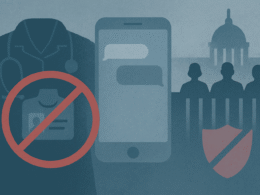
Staff at the group running Putney’s hospitals, St George’s and Queen Mary’s, have told its board, in public, that colleagues who raised concerns faced repercussions.
The warning came from the group’s own Inclusion Board, made up of its staff, at the start of the board’s meeting last month. Some colleagues found it hard to talk about what they had been through “even within the safety of the inclusion board”, they said, let alone in their own teams. A number gave examples of where they had “raised concerns and faced repercussions”.
The papers for the same meeting show where that leaves Black and minority ethnic staff. At St George’s they are now twice (1.98x) as likely as white colleagues to be put through a formal disciplinary process. That is the highest in five years of the group’s figures, and up from 1.17x a year earlier. White applicants who reach a shortlist are nearly twice (1.76x) as likely to get the job; for doctors’ and dentists’ posts, more than three-and-a-half (3.65x).
The group’s chief executive, Matthew Shaw, told the meeting the group had “a plan for dealing with” the cultural issues raised. “We must get on top of these cultural issues because they do directly link to safety issues,” he said.
Heard before
Inspectors found the same thing. When the Care Quality Commission examined the leadership of St George’s in February 2025, some staff told it they “feared reprisals or not being believed”. They raised concerns anonymously, or not at all.
Staff contacted the regulator 23 times around the inspection, saying they were afraid to raise concerns about patient safety for fear of retribution. Its report, published in October 2025, rated the trust’s leadership as requiring improvement for the second time running.
The regulator told the trust to tackle this as a priority, because staff “have important information to share that can keep people safe.” Staff gave their own verdict in this year’s NHS Staff Survey, which put St George’s near the bottom in London, 17th of 18 trusts.
In July, the board gave itself only “partial assurance” on whether staff feel able to speak up when something is wrong. Its chief medical officer, Richard Jennings, told the same meeting that a member of staff who raised concerns about a consultant’s care at St Helier had left the organisation afterwards. They had not felt able to stay.
-
From the health regulator
Inspectors report 23 contacts from St George’s staff afraid to raise patient safety concerns inside.
-
From a member of the public
Marion Parkes asks about the MyOrb contract. The finance chief says he was “not that aware” of possible fraud until her question, and refers it to counter fraud.
-
From a coroner
Two elderly men died after falls in an overcrowded A&E. The hospital’s changes since have not removed the risk, the coroner warns.
-
From a member of the public
Marion Parkes tells the board she has referred the imaging system contract to the NHS fraud agency herself.
-
From the Information Commissioner
He reports he had to serve the trust with a legal order after it failed to respond to his initial inquiries.
-
From its own staff, in public
The Inclusion Board tells directors that colleagues who raised concerns faced repercussions.
A coroner and the Information Commissioner have since added their own warnings. In December, a coroner warned that two elderly men had died after falls in an overcrowded A&E at St George’s. Both had waited many hours, cared for by their families, and fell after their families left in the night. The hospital had made changes, she said, but not enough to remove the risk, and she sent her report to the Health Secretary.
In August, the Information Commissioner reported that he had had to serve the trust with an information notice, a legal order. The trust had “failed to respond to the Commissioner’s initial inquiries” in our freedom of information case.
Questions from the public seats
Questions about the culture at the St George’s Trust also extend to other parts of the organisation, in some cases all the way to the top: two of the group’s technology contracts have come from a member of the public, Marion Parkes.
In November 2025 she asked about a contract with a company called MyOrb for software to support clinical decisions, signed at the end of 2021. She told the board that £445,000 had been paid in full when the contract was signed, without a business case or a tender, and that nothing was ever delivered.
The group answered that a pilot had been completed at Kingston and Richmond, and there were no funds to recover. Ms Parkes also asked whether this was fraudulent misappropriation of public money. The group’s chief finance officer at the time “was not that aware of fraudulent misappropriation of public fund until this question was raised,” the approved minutes record. He had then referred the matter to the counter fraud team. The group later confirmed the referral had been made, and that MyOrb had gone into liquidation.
In May, Ms Parkes told the board she had been the south west London programme manager for a new system to store and share X-rays and scans, supplied by Optum. She said she had now referred that contract to the NHS counter fraud agency herself. She did so, she said, after the group’s interim chief executive told the March board he did not believe there was any cause to suspect fraud.
By her account, the contract was signed in November 2021 and the system was found clinically unsafe when testing ended in February 2024. The group told her that about £34,000 of a further £900,000 had been spent, and that legal advice had been taken throughout. In an answer read out at last month’s meeting, it said November 2027 was “a planning assumption for the first trust deployment rather than an unconditional or guaranteed go-live date.”
One problem surfaced in the board’s own papers rather than from outside. When the St George’s maternity unit moved to a new electronic record in February 2025, the system showed the wrong early warning score. It used the one for other adults, not the one designed for pregnant women and new mothers. The board’s papers set out the fault in September 2025. A fix was relaunched in May this year, after more than a year of getting pregnancy risk scores wrong.
When the maternity service listed what it needed to put right after a mother’s death early in 2025, the missing early warning chart was one item. Others included communication between A&E and maternity, and senior support for midwives out of hours.
Decided in private
The board decided in private to merge St George’s with Epsom and St Helier, and told residents afterwards. At last month’s meeting, non-executive director Andrew Murray said some things had not been challenged much in public “because we had had discussions in private about elements of that,” giving finance as an example.
Dr Jennings called the Inclusion Board’s feedback “a challenge to us” last month. “We haven’t done all the things that we should have done and we haven’t been as successful as we should be,” he said, “which is how I feel.”
The group says a new Freedom to Speak Up strategy is being written and will come to the board later this year. By then, more than a year will have passed since the regulator told the trust to make tackling the problem a priority.
If you work at St George’s, Queen Mary’s, Epsom or St Helier and want to raise a concern, the group’s Freedom to Speak Up Guardian is Karyn Richards-Wright: karyn.richards-wright@stgeorges.nhs.uk or 020 8725 4001.
If you do not feel safe raising it inside, you can tell the Care Quality Commission directly, as St George’s staff have done.
If you believe that sunlight is the best disinfectant, you can contact Putney.news at news@putney.news where we will treat all correspondence with utmost confidence.
Anyone can ask the board a question. Send it to board@stgeorges.nhs.uk at least 24 hours before a meeting; answers are given in public at the end. The next meetings are on Friday 6 November at St Helier Hospital and Thursday 7 January at Queen Mary’s, Roehampton.