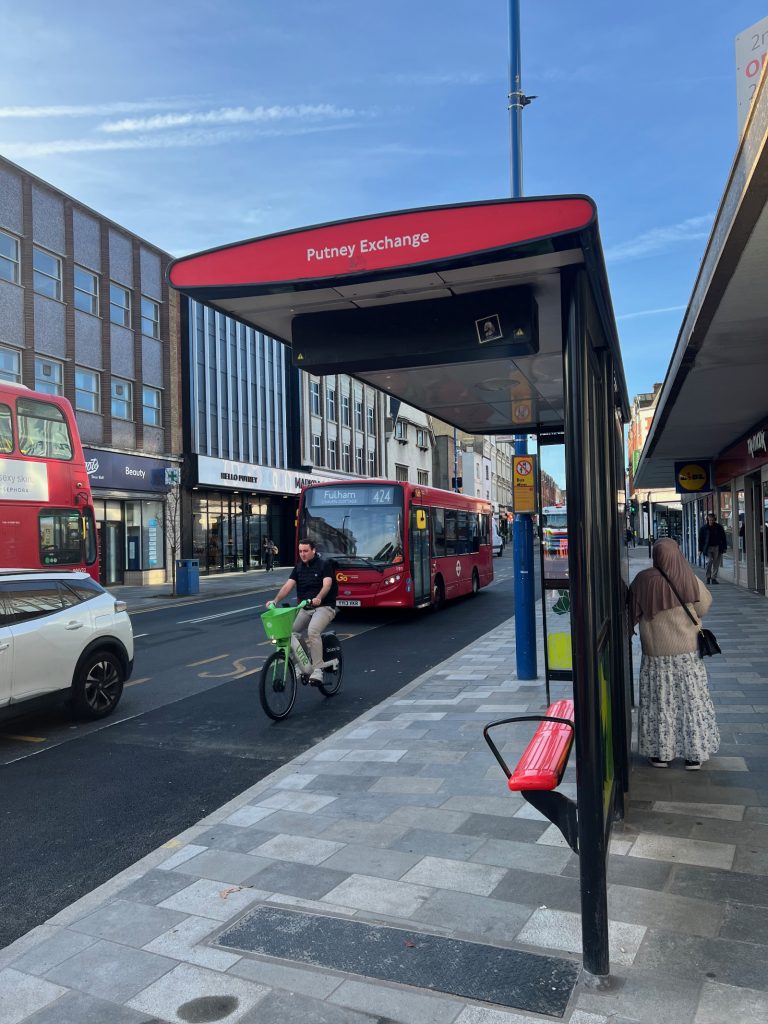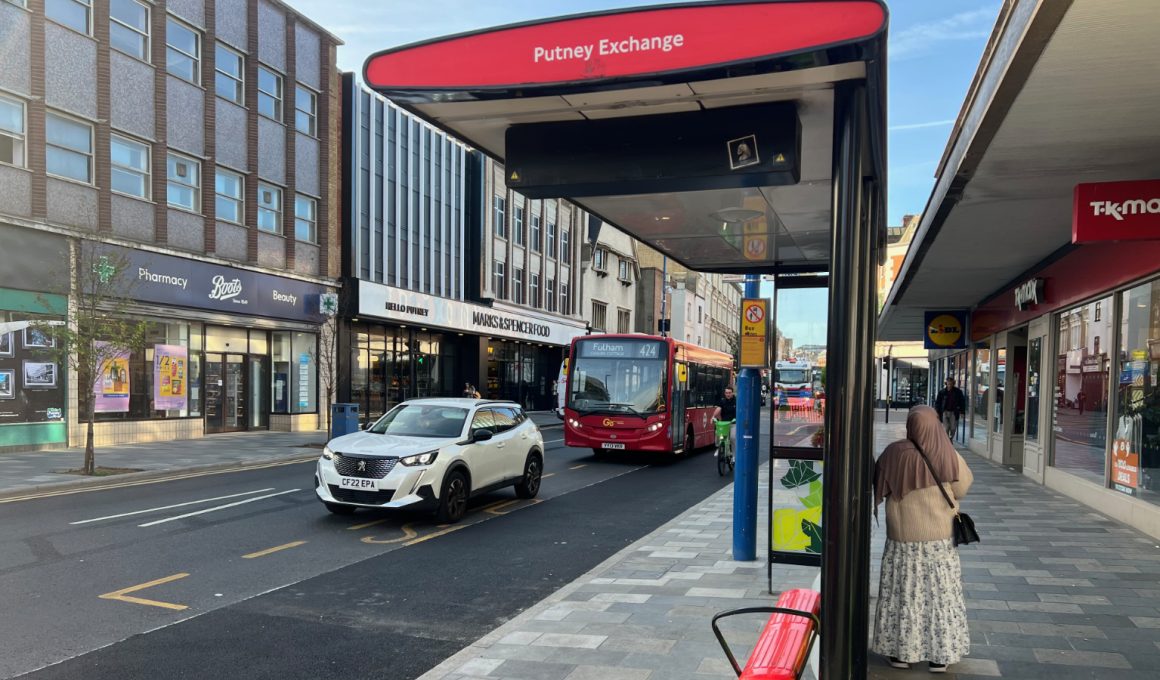
The bus stop outside TK Maxx on Putney High Street reopens this morning, 19 months after the council first identified it as a pinch point.
Seven daytime routes stop there: the 14, 39, 74, 85, 93, 424 and 430. Until now, every one of them has pulled up in the traffic lane and held up everything behind it, with queues stretching back to the lights by Morrows and Marks & Spencer and having a knock-in effect all the way up Putney High Street.
The fix is smaller than many expected. The kerb has only moved in by about two feet. Buses will still stop at the side of the road, and the pavement outside TK Maxx is still wide. The difference is that there should now be room for cars to get past on the right of a waiting bus instead of sitting behind it.
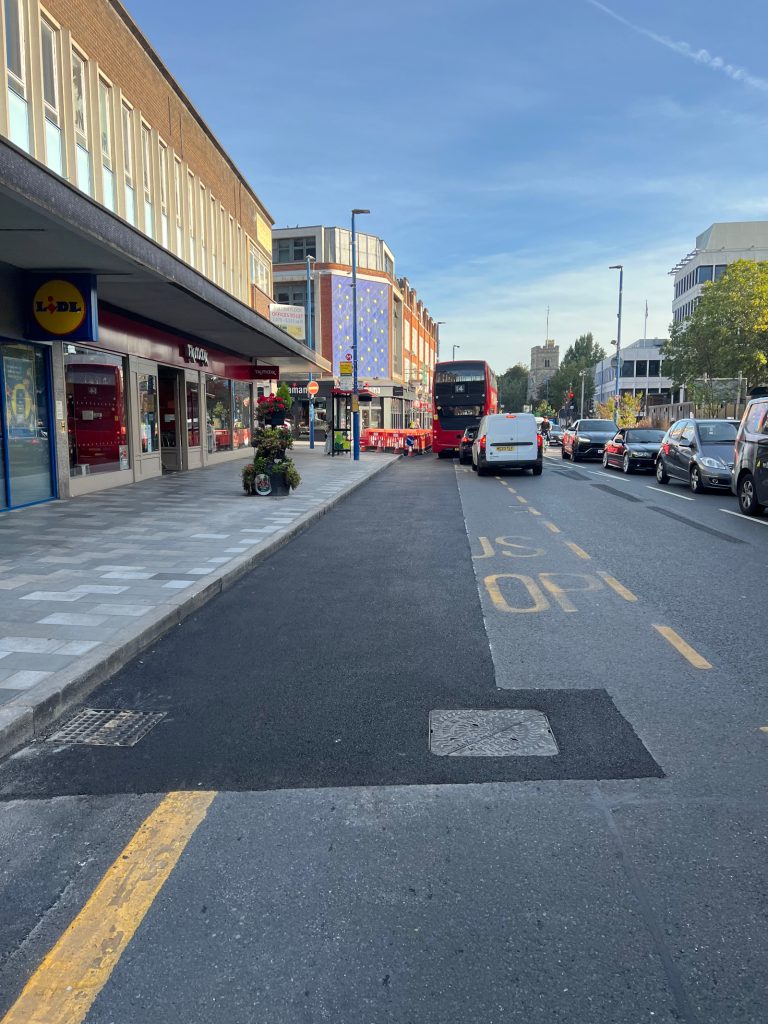
That is the test. Down at the bridge, the High Street feeds two lanes onto Putney Bridge beside a wide cycle lane, and it takes only one car sitting slightly out of its lane to block both. If drivers are just as wary of squeezing past a bus here, two feet will change little. If they pass comfortably, the queues that build behind buses and then get caught at the lights should shrink.
For an observer not from Putney, the amount of energy and attention going into a single bus stop – including this article – would seem a bit mad, but a lot rides on it. The council’s plan depends on traffic moving freely enough at this end of the High Street for Transport for London (TfL) to give more green time to the rest of the junction.
Cllr Nick Austin, the council’s cabinet member for transport, has said retimed lights would let an extra 11 cars through from Lower Richmond Road on every green. That change is TfL’s to make, not the council’s. But if it works, it could finally ease up two years of excessive traffic that has become a defining issue for residents.
The long wait
The council sent TfL proposals for a pull-in bay at the stop in March 2025 and, after chasing, a formal request in June. Then it ran into phone boxes.
BT had already put a notice inside the two boxes outside TK Maxx in November 2024, saying it was time to remove them. They were rusty and the phones didn’t work. The council asked BT to take them away in July 2025.
That December, Putney MP Fleur Anderson posted a video about them that was watched 750,000 times and sparked to post another announcing a “Phone Box Breakthrough” when BT agreed to finally remove them. One of the two boxes went. The other one stayed.
While it stood, the council widened the road on the opposite side as a stopgap, with works starting in January. In June, with the remaining rusty phonebox still place, over 100 Putney.news readers emailed BT’s phone-removal service.
The box was finally cut out of the pavement on 23 July, two months after the council approved a an entirely coincidental BT “street hub” carrying two digital advertising screens elsewhere on the High Street. Work on the pavement at the stop began at the start of September.
And on Thursday
The next change is bigger, and more contested. On Thursday evening, councillors on the council’s transport scrutiny committee look at a £450,000 plan to move the pedestrian crossing at the foot of Putney Bridge, installed as part of the junction redesign in late 2024, and send people back to the old three-stage crossing. The aim is to give traffic turning left out of Lower Richmond Road 42 seconds of green on every cycle instead of 25. The cabinet decides on 12 October.
If you drive, cycle or catch a bus through the bottom of the High Street this week, tell us whether you notice a difference: news@putney.news.