

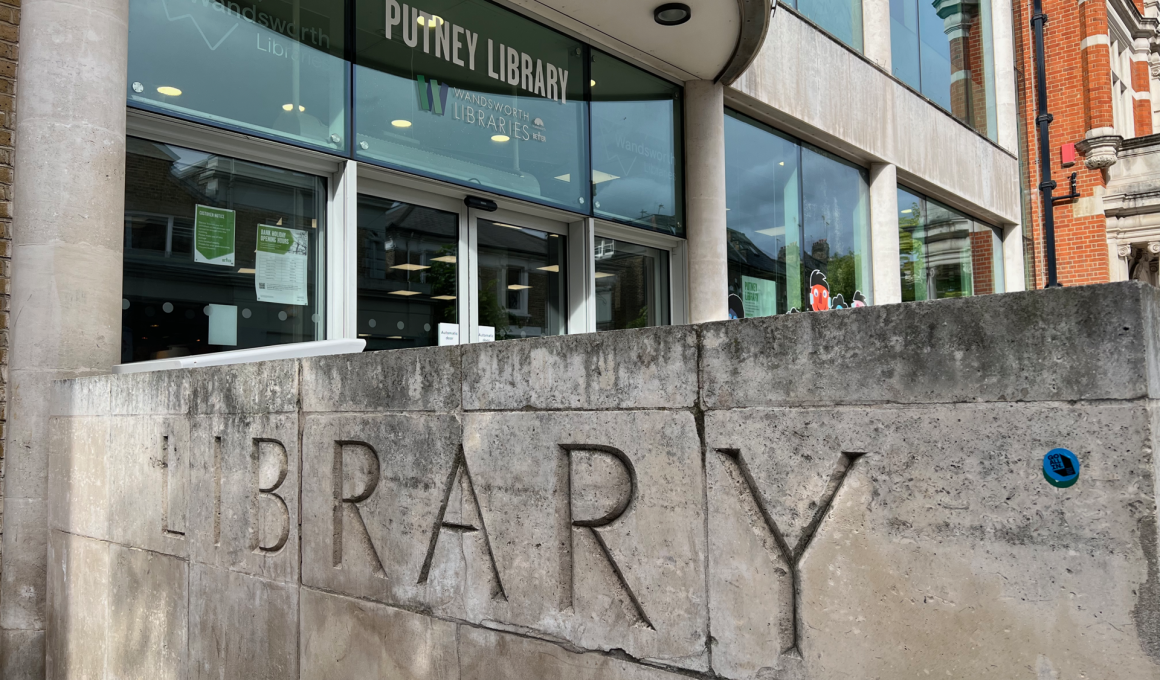
Wandsworth’s libraries face possible cuts, with the council looking to retender the contract to run them just a year after it extended the current contract.
Councillors will discuss a plan on Wednesday to rebid the current deal with GLL. Retendering is the recommended choice out of five with the clear intent to save money: the paper behind it uses the word “savings” 13 times.
The opening slide says the Government’s “Fair Funding pressure increases the need for sustainable savings”. Four of the 14 slides that follow are about cost; one shows how the libraries are used. What the council wants from a new contract – “a more modern, efficient and financially sustainable service” – is council code for a cheaper one.
The plan is part of a wider push by the new Conservative administration to cut costs. In July the council launched “a comprehensive Spending Review across all service areas” and paused most new recruitment, and it says council tax will double in April, blaming an £84m a year cut in Government funding.
Other London councils have cut the cost of their libraries by handing them to volunteers or closing them. Wandsworth’s paper does not recommend either. It recommends retendering a contract the council extended only last year that was intended to deliver a library strategy that runs to 2030.
The Environment Overview and Scrutiny Committee, will meet and comment on the plan on Wednesday, with the decision made at Cabinet on Monday 12 October.
The libraries are run by GLL, a charitable social enterprise that trades as Better and has held the contract since the service was outsourced in 2013. It costs £5.2m a year and runs until March 2028.
The council extended it in July 2025, rolling it forward to 2028 to deliver Libraries First!, its five-year strategy, and announced that at a time when many councils were scaling back, Wandsworth was investing in its 11 libraries. The administration changed hands in May.
The libraries themselves are busy. People made 1,323,330 visits last year, about four for every resident in the borough and 18 per cent more than two years earlier. They borrowed 1.9 million books and e-books. Events have doubled in two years, to 6,795. The council’s own report calls the service “high performing”.
What cheaper looks like
The council’s papers compare Wandsworth with 15 other London boroughs. Coming out at £15 a head in 2024/25, it spends £1 less than the London midpoint, and less than Camden, Southwark, Richmond, Islington or Greenwich. The report concludes the service “is not an outlier on cost”.
Four boroughs on the council’s chart spend less. Three of them have closed libraries or handed them to volunteers.
Ealing, the cheapest at £6 a head, decided in 2019 to pass seven of its 13 libraries to community groups to save £1.1m. Hanwell, Perivale, Northfields and West Ealing libraries have been run by volunteers since 2020, and in 2024 Ealing agreed to hand Greenford Library to a charity.
Croydon, at £9 a head, closed four of its 13 libraries in November 2024: Bradmore Green, Broad Green, Sanderstead and Shirley. Brent, at £12, closed six of its 12 in 2011. Redbridge, at £14, runs its libraries through a charitable trust.
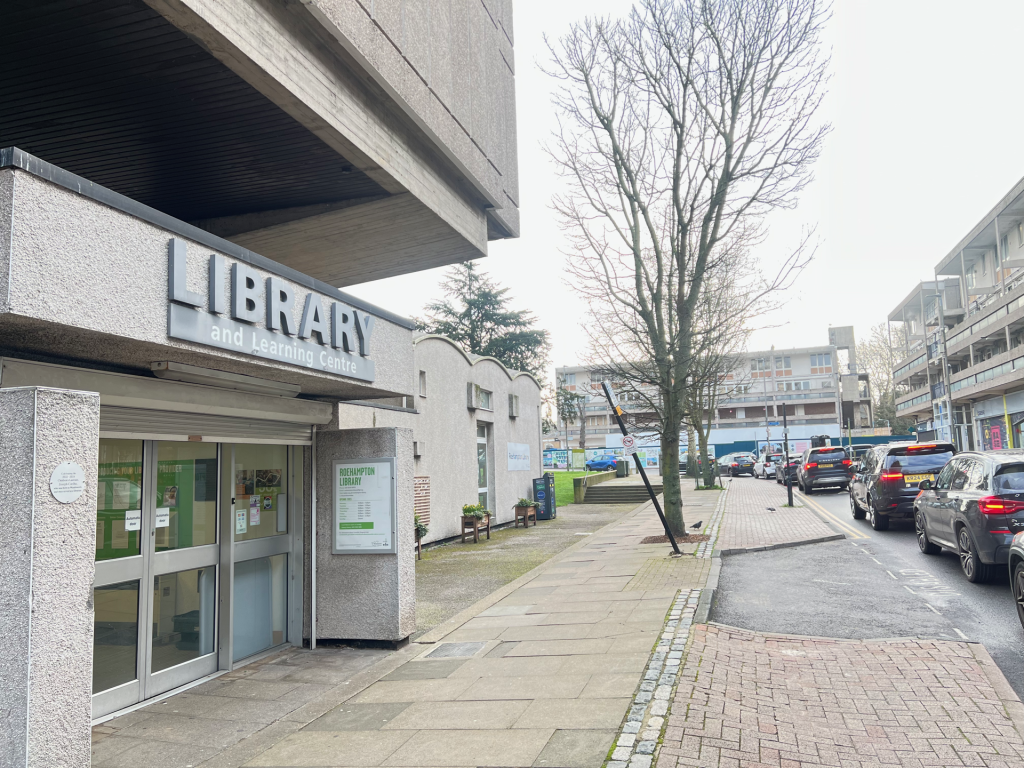
Wandsworth’s papers looked at Ealing’s route. A model in which the council runs the main libraries while “smaller libraries are delivered through community organisations” is listed as “not preferred”, because it “depends heavily on community capacity”. The council wants a new contract instead. But we will note that nothing is written down yet that requires a company to keep all 11 libraries in the borough open under the next contract.
What the papers do not say
The papers do not propose closing a library. They do not propose shortening opening hours or cutting staff. They do not mention hours or staffing under a new contract at all, and nowhere do they say that the number of libraries will be protected in whatever the council asks bidders to deliver.
One sentence covers what a new provider might do differently: the tender “will include reviewing the operating model, with the aim of securing a more modern, efficient and financially sustainable service while maintaining accessibility for residents”.
In a library service, the money goes on staff, buildings and books, so that is where any saving has to come from. The papers do not say which.
There is one place the paper does insist on a number. Any alternative to a tender, a slide tells councillors, must “quantify the reported operating savings before a final decision”. The saving expected from the tender itself is quantified nowhere in the 20 pages.
Retendering a library contract will require the council to carry out an equality assessment but in a sign of how swiftly the council plans to act, the paper claims that it can rely on the assessment produced for the current library strategy that it says, “remains current until 2030”.
No consultation mentioned
No public consultation is mentioned anywhere in the papers. Under the Local Government Act 1999, councils have a Best Value duty to run services economically, efficiently and effectively, and before deciding how to meet it they must consult representatives of council tax payers and of the people who use their services.
The council’s slides say the five options were compared “against Best Value tests”. They do not mention consulting anyone.
What “reviewing the operating model” turns out to mean will be settled over the winter – after the decision rather than before it. If Cabinet agrees, the specification telling bidders what they must provide, is written by the council’s executive director of resident services, working with the finance director and the cabinet member for environment, Thamesfield councillor Ethan Brooks.
The draft will go “for comment” to a body the papers call the Leader’s Group, which is not an official body and is not named anywhere else in the council’s own papers or constitutional review papers from July. The next decision taken in public is the choice of winning bidder, in late 2027 or early 2028.
A further year with GLL is kept as a fallback. Bringing the libraries back in house, possibly alongside Richmond, is “not preferred”: the council would pick up business rates of £614,586 a year, £120,175 of it for Putney Library alone, which GLL gets relief on as a charity. It would also pay to move staff across, at somewhere between £150,000 and £761,000, a very wide range the papers mark as an estimate and say still needs validating. A council-backed trust is “not recommended at this stage”.
When more will be known
- Wednesday 23 September, 7.30pm: the scrutiny committee questions the plan in Room 123 at Wandsworth Town Hall. Its comments go to Cabinet.
- Monday 12 October: Cabinet decides.
- Autumn and winter: officers write the specification.
- Spring to autumn 2027: bids invited and scored.
- Late 2027 or early 2028: the winning bid returns to committee and Cabinet.
- March 2028: GLL’s contract ends.
Wednesday’s committee meeting is open to the public. The agenda says anyone wanting to know how to have their say should contact its democratic services officer on 020 8871 6312 or rebecca.hickey@richmondandwandsworth.gov.uk.
The committee is chaired by Cllr Leonie Cooper. The cabinet member named on the report is Cllr Ethan Brooks.


When my family moved to Roehampton, I was seven.
I walked down to the library and it smelt wonderful as it was relatively new. The library is a wonderful place to go not only to borrow books but to study.
It will be a huge loss to students and all should it ever close.