

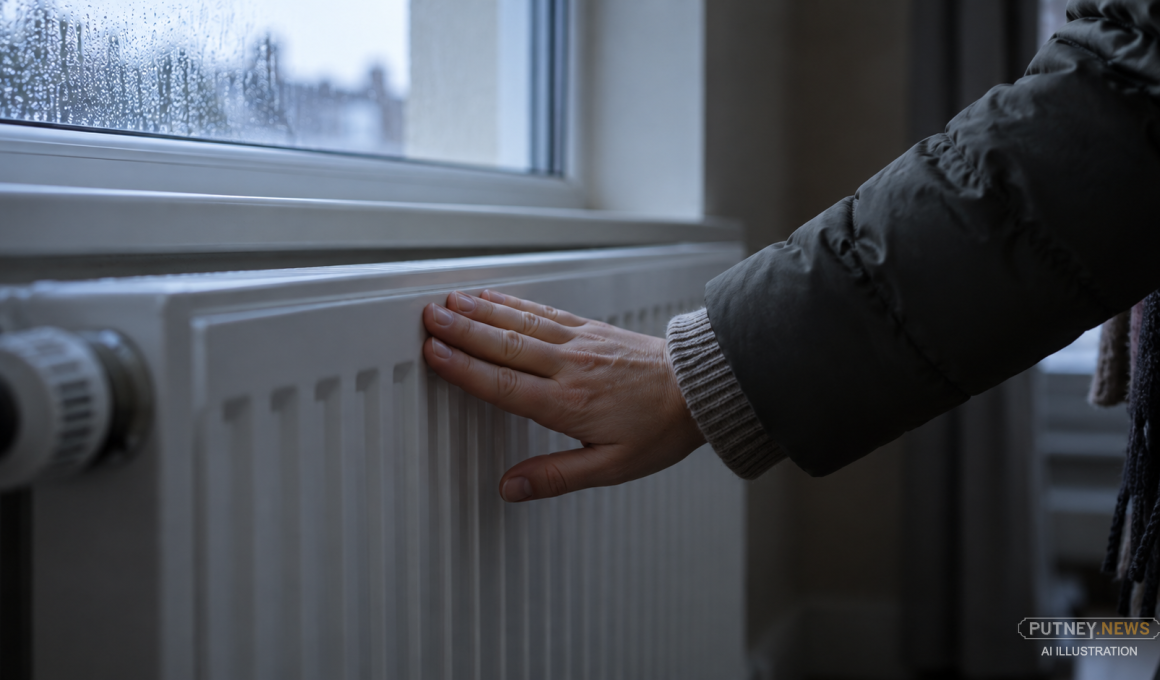
She emailed Wandsworth Council in late November to say her temporary home had no heating and no hot water, and that the company running it had stopped answering her.
It took the council four months to visit. By then she had written again, in early April, to say the power had been off for 24 hours. There was no response.
The Local Government and Social Care Ombudsman has found the council at fault for not responding to the reports – from 2024 and last year – and for not checking whether the home was suitable. Wandsworth has agreed to apologise and pay her £250, a sum the Ombudsman calls “symbolic”. It found no fault in how the council first housed her, or in the homes it offered her afterwards.
Four months of nothing
The woman, referred to as Ms X in the Ombudsman’s report, was evicted on 9 May 2024. The council had accepted a duty to help her six days before that and offered her somewhere on the day she lost her home. She turned down its first offer and took a second instead.
The next month the heating and the hot water stopped working, and she emailed to say so. She raised damp as well. The company running the accommodation, she told the council, was not answering her requests to fix any of it.
Nobody at the council answered either email, and the heating was never repaired. When somebody did come, in March 2025, the visit went badly.
The council’s notes record that she refused to let officers in, that repairs were needed, but that the landlord already knew about them. The council left it at that. It accepted the repairs were necessary, the Ombudsman found, and then “failed to ensure the landlord acted”.
The law requires more than just acknowledging a problem: if the council is housing someone it has to check – and keep checking – that the accommodation is suitable and respond when something changes, so a tenant reporting that her heating has failed is not simply a repair request; it’s a duty to act. Her reports, the Ombudsman said, “should have prompted the Council to reconsider the suitability of the accommodation”.
When she complained formally, the council described the situation differently to its initial notes. Its reply to the complaint in August 2025 said she had refused access and had not raised any specific concerns. But her November email had named them: Heating. Hot water.
What the compensation is for
The £250 is not compensation for the winter. It covers what the Ombudsman calls “a period of uncertainty over whether the property was suitable”, which is the only harm it found. The decision does not say whether the heating was ever fixed.
The council agreed to apologise and pay within a month, and to send the Ombudsman proof it had done so. The council has not said publicly whether it met it.
The rest of her complaint failed. She had told the Ombudsman that the company running her accommodation evicted her without notice and discriminated against her, that the council failed to act, and that it then moved her somewhere unsuitable, and that all of it affected her mental health.
On each of those it found against her: no evidence of discrimination, none that the council or any of its providers had forced her out, and none that the first home was unsuitable (a question she had never asked it to review). “The Council fulfilled its homelessness duties and offered Ms X suitable accommodation,” the report says.
Nor was the council at fault over the three places it offered her between July and September 2025 – the period in which she formally complained. She refused the first because of what had happened to her in that area before, and when she challenged it the council withdrew the offer itself, noting it was too far from her children’s school. She refused the second because it would not accept pets.
She accepted the third, on 30 September 2025, and says that one is unsuitable too. She has complained again, and the Ombudsman says she can bring that case to it as well.
A long history of failings
Wandsworth has been here before, many times. Two months ago, we reported a decision that the council had left a disabled woman in a house it had ruled unfit three years earlier and was told to pay her £6,300. In February it was a domestic abuse survivor who came home from hospital with a newborn to a temporary room with no heating and no hot water, and the council again took four months to act and again failed to answer any of her emails.
There are others. The Ombudsman upheld three similar complaints against the council last year it which it had accepted a duty to help somebody, and then stopped. One woman heard nothing for nine months after it agreed she needed rehousing. A seriously ill man’s reassessment sat untouched for 18 weeks while he chased it for an answer. In June it was a care assessment that took more than seven months, by which point the young woman it was meant to help had told the council she no longer wanted its help.
Each time, the council tells the watchdog it will review its processes so that it does not happen again. That promise has been given at least six times and the cases continue to arrive. The Housing Ombudsman had found “severe maladministration” against Wandsworth in May last year, over a roof leak it left unfixed for four years, and ordered it to overhaul the way it runs repairs and handles complaints.
The council’s new leader has put the problems with its housing department in stronger terms. At a full council meeting earlier this month, when one councillor described an 86-year-old widower in his ward who had been sent a letter threatening eviction – a step the council then said it had never intended to take – Councillor Robert Morritt offered to write to the man to apologise. “I do feel there is a cultural challenge,” he said, “and rather sadly, he’s just found a perfect example of that.”
This is the nineteenth time we have covered a successful ombudsman complaint against the council in the past 14 months. We have no way of knowing how many people have been placed into accommodation without heat or electricity or water but not chosen to go through the year-long complaints process.
If something breaks in your temporary accommodation
Tell the council in writing, not just the landlord or the company managing the building, and keep a copy. The council’s duty to make sure the place is suitable lasts as long as it is housing you, so a report of disrepair is something it has to act on.
If it does not act, you can ask for a formal review of whether the accommodation is suitable, under section 202 of the Housing Act 1996. If the review finds it unsuitable, the council has to find you somewhere that is. If it goes against you, you can appeal to the county court.
If the council does not answer at all, complain. Its complaints process runs in two stages, and if that gets you nowhere you can take it to the Local Government and Social Care Ombudsman, which costs nothing: lgo.org.uk, 0300 061 0614. Shelter’s free helpline is 0808 800 4444, Monday to Friday.
In temporary accommodation with repairs nobody will deal with? Get in touch.



1 comment