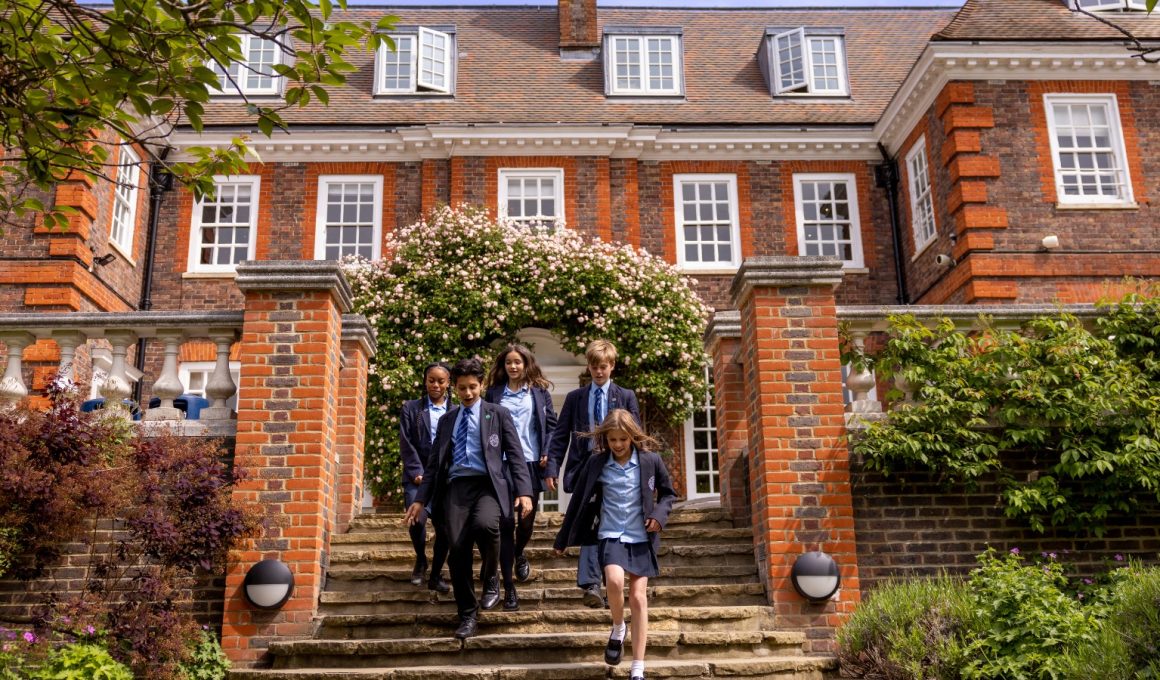
Ibstock Place School sits at the boundary not only of two London boroughs, but of two different worlds.
On one side, in Wandsworth, is the Alton Estate, one of the largest council estates in Britain, once celebrated as the finest modern housing the London County Council ever built. On the other, across into Richmond, lies Richmond Park, the largest of the royal parks, enclosed by Charles I in the 1630s as a royal hunting ground.
Between the two, behind a brick wall and complete with private footbridge is a fee-paying school few of its neighbours could place. The obscurity is the first surprise, because the school was built to be seen.
The children’s garden
It opened in 1894 as a Demonstration School, and the name was meant literally. Its job was to demonstrate (to teachers, to parents, to anyone who would come and look) that a particular idea about children worked in practice. The idea belonged to a German educationist, Friedrich Froebel, who held that a child grows much as a plant does: not drilled into shape but cultivated, through play, through making things, through time spent in the natural world. He gave it the name we now use without a second thought. Kindergarten, children’s garden.
In late-Victorian England this was close to a creed. It arrived alongside the first laws compelling children into school at all, part of a wider turn towards taking childhood seriously. Froebel’s English followers, led by the educational benefactor Julia Salis Schwabe, set up a teacher-training college with a demonstration school attached, so the method could be shown rather than merely argued. The cause drew in well-connected champions. One of them, Mrs Alfred Bailey, gathered friends in the drawing room of her West Kensington home on 31 March 1894 to make the new Institute known, telling them the kindergarten would be “the growing-ground for the budding-time of a child’s life”, where head and hand would work together to invent and create. She urged them to go and see it and, if they could, to send their children at once.
Then the strangest thing happened to it. It won. The theory was absorbed so completely (every sandpit, every learning-through-play corner in the country descends from it) that it stopped looking like a theory and started looking like common sense. And the place where it was first put on display faded into a wall and a gate on the edge of an estate.
Which makes the school a third thing between the other two: not council estate, not royal park, but the last visible trace of a vision every bit as ambitious as theirs.
What it is now
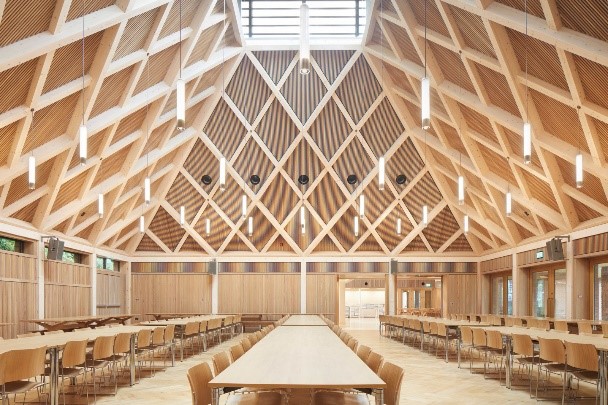
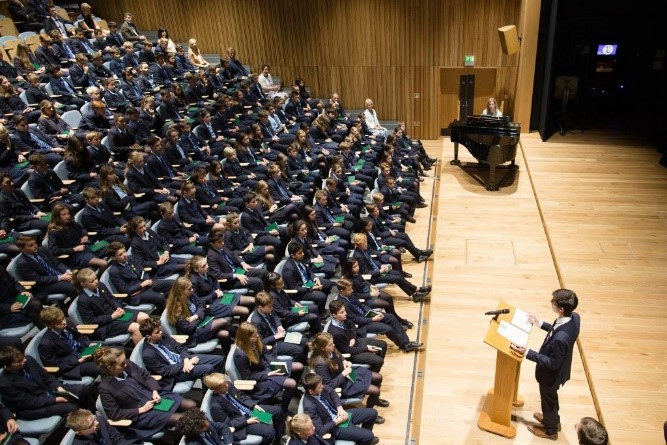
Today the school is anything but radical-looking. It is an independent, co-educational day school running from age four to eighteen, set in handsome grounds with a swimming pool, an all-weather pitch and a 300-seat theatre. The families are mostly local (“a normal lot”, as one put it to the Good Schools Guide, affluent but low-key) and the same guide files the place under “hidden gem”.
It still calls what it offers a “liberal and humane education”, and the phrase is not just marketing. It is the direct descendant of Froebel’s creed, the conviction that a child is to be drawn out rather than filled up, now dressed in the vocabulary of a modern prospectus. The kindergarten once put on public display has become a quieter, fee-paying school behind a wall, a stroll from a council estate built on a different dream of how life might be improved.
But the building it occupies, and the ground it stands on, had lived several other lives before the children arrived.
The house of tapestries and frogs
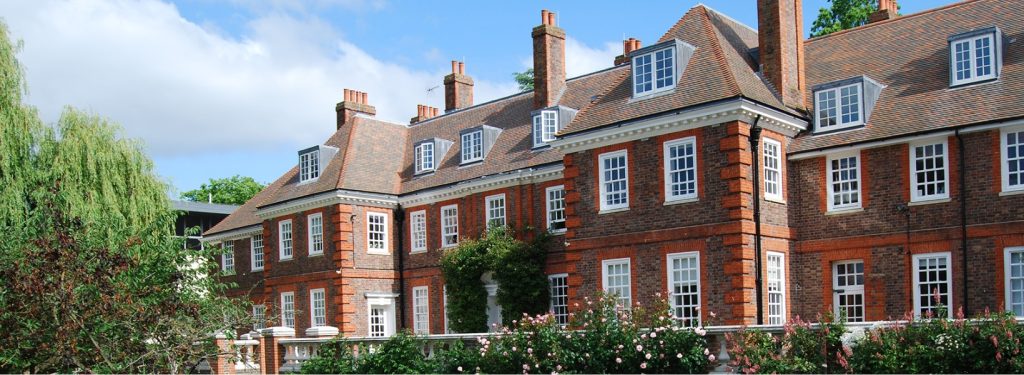
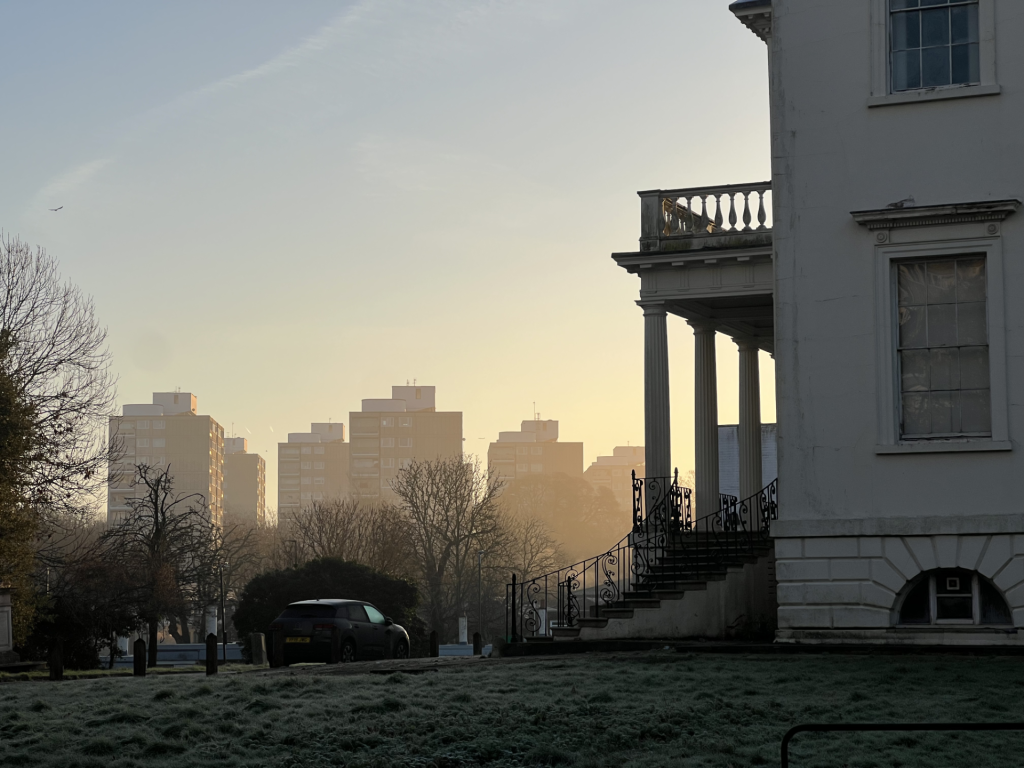
The main house was not built as a school at all. It went up in 1913 as a private residence called St Serf’s, designed by the architect Frank Chesterton, who also built nearby Roehampton Court. The Duchess of Sutherland owned it and added a ballroom, before leaving for war work in France. In 1925 it was bought by Major John Paget, who renamed it Ibstock Place after the Leicestershire village that was his family’s ancestral home.
Paget made it a small monument to Edwardian money and modern gadgetry. He filled it with antiques (a Louis XVI suite of Aubusson tapestries, two grand pianos) and equipped it with a sun-bed parlour, a private telephone exchange, and one of the first private outdoor swimming pools in Britain. By one account, the pool, built before anyone locally understood the virtues of chlorine, promptly turned green and filled with frogs. The household ran on a staff of thirteen, plus a night watchman and a gardener who lived in the lodge on the corner.
That world ended with the war.
A secret on the hill
In 1939 the Pagets left for Oxfordshire to wait out the fighting. In 1942 the house was requisitioned by the Ministry of Supply and handed to the Army Operational Research Group, scientists doing secret work on radar. For a few years the genteel villa with its grand pianos was a research station for one of the technologies that won the war.
Meanwhile, the school Froebel’s followers had founded was having a war of its own. It had spent its whole life in a small house at Colet Gardens, on Talgarth Road in West Kensington. When war broke out it was caught up in Operation Pied Piper, the mass evacuation of children from London’s likely targets, and its headmistress, Barbara Priestman, went house-hunting for somewhere “as close to London as seemed compatible with safety”. She found Denison House at Little Gaddesden in Hertfordshire, and the day school became, by necessity, a boarding school.
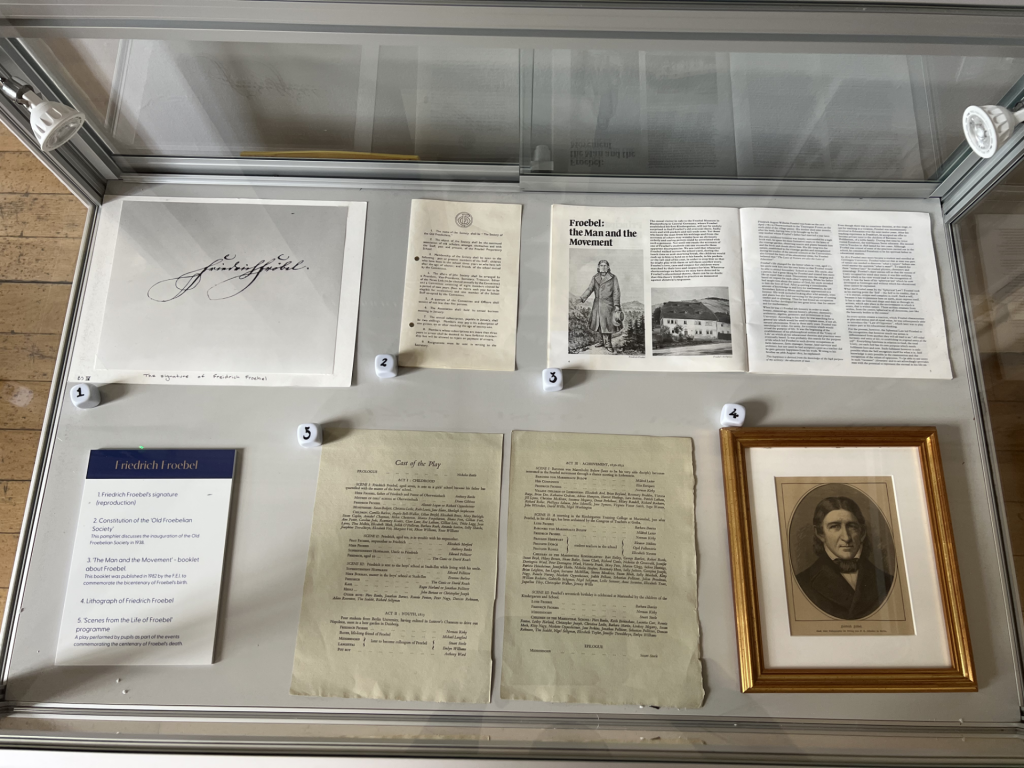
The exhibit at the school today preserves the small human texture of those years: children playing in a great cedar tree they called the Girls’ Cedar; donkey rides at the village monument; the Games Field cut for hay; the National Milk Campaign, which the children joined in the name of “the backbone of young Britain”. Letters home survive too. “Dear Daddy, I can do my tie now,” writes a boy named Michael. “I have finished Book IV in Reading. Miss Duncan says I am getting on very well.” Not everything was gentle. A poem in the children’s own Anthology of Poetry mourns an airman shot down: “It sounded normal in the news, but it was tragic hearing.”
When the war ended, the school’s governors went looking for a way back to London, and found a neo-Georgian house in Roehampton, recently vacated by the army’s scientists, called Ibstock Place. In 1945 the Pagets sold it to the Froebel Educational Institute for £30,000. The school moved in the following year with 156 children, forty-eight of them boarders. It took the house’s name as its own, and has been there ever since. The evacuated children and the secret radar men had, in the end, passed through the same front door.
Three dreams on one hill
To understand why the school sits where it does, you have to know what the hill around it used to be. Roehampton’s high ground, breezy and green and a short ride from town once Putney Bridge opened in 1729, became a place for the wealthy to build summer villas. Some were grand: Mount Clare, finished in 1772, its grounds laid out by Capability Brown; Grove House, of 1777; the 1760s Palladian villa later known as Manresa House. For a century and more this was a landscape of great houses and their gardens.
The twentieth century swept most of it away, and did so, twice over, in the name of improvement. First the London County Council built the Garden City-inspired Dover House Estate in the 1920s and 30s. Then, in the years after the Second World War, with London desperate for homes, the LCC acquired the surviving villas and their grounds and built the Alton Estate. The best houses and some of the old landscaping were kept; around 130 acres of the rest were cleared.
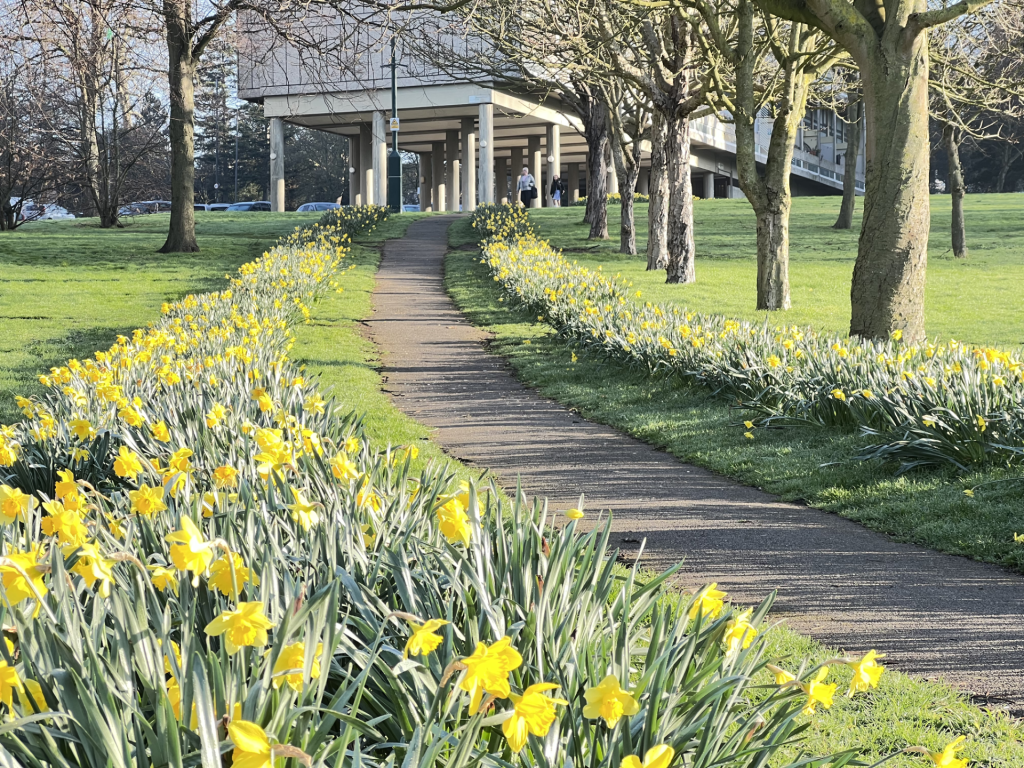
What rose there was, for a moment, the most admired public housing in the country. Alton East, finished in 1958, was gentle and Scandinavian in feel. Alton West, a year later, was something bolder: five great eleven-storey slab blocks (Binley, Winchfield, Dunbridge, Charcot and Denmead, all now listed) set striding across retained Georgian parkland on the very edge of Richmond Park, directly inspired by Le Corbusier’s Unité d’Habitation in Marseille. It was hailed as the crowning glory of post-war council housing. In 1966 François Truffaut used those same towers as the backdrop for Fahrenheit 451, casting the housing utopia as a vision of a chilly future, a verdict history has argued over ever since.
And the old villas that survived the clearance? Several were folded into education. Grove House, the 1777 Georgian villa, became Froebel College, the very teacher-training institution that had founded the school, which moved out to Roehampton in 1922. The exhibit’s photographs of children at “Grove House Nursery” are a quiet record of that link. So Froebel’s movement came to occupy two houses on the same hill: a preserved Georgian villa for its college, and the Edwardian survivor down the lane for its school.
Stand back, and the hill resolves into three answers to a single question: how should people live among trees? The royal park keeps nature for the Crown and, later, for everyone to walk in. The Alton Estate tried to give the working families of London the light, air and greenery the rich had always enjoyed. And the children’s garden behind its wall set out to grow children the way Froebel grew his ideas: in contact with the natural world, by play and making and patience.
Their fates diverged. The park endures, serene and unbothered. The estate was celebrated, then troubled, then argued over, and is now caught up in the long, contested business of regeneration, admired by architects, lived in by thousands, easy to caricature and easy to romanticise, and deserving of neither. And the school, the oldest dream of the three, survived by going quiet. Its idea was so thoroughly victorious that it became invisible: the theory we now mistake for the natural order of childhood.
That is the strange achievement of the place at the end of Clarence Lane. It was built to be looked at, and it won its argument so completely that we stopped looking. A buried idealism, in the corner of an estate, on the edge of a park, still, after all this time, quietly doing the thing it was always for.
This is the third in an occasional series about the things in and around Putney that you’ve walked past a hundred times without ever realising what they are. Read the others: Brazil’s admirals have been quietly shopping for warships in Putney since 1971 and The Putney house at the centre of a sovereignty dispute with Rome.