Kate Beach was two minutes away when the call came in. She ran.
When she got there, Lisa’s teenagers were already at the house, and Astra had been returned home. There were a lot of tears.
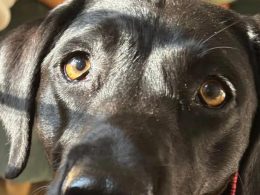
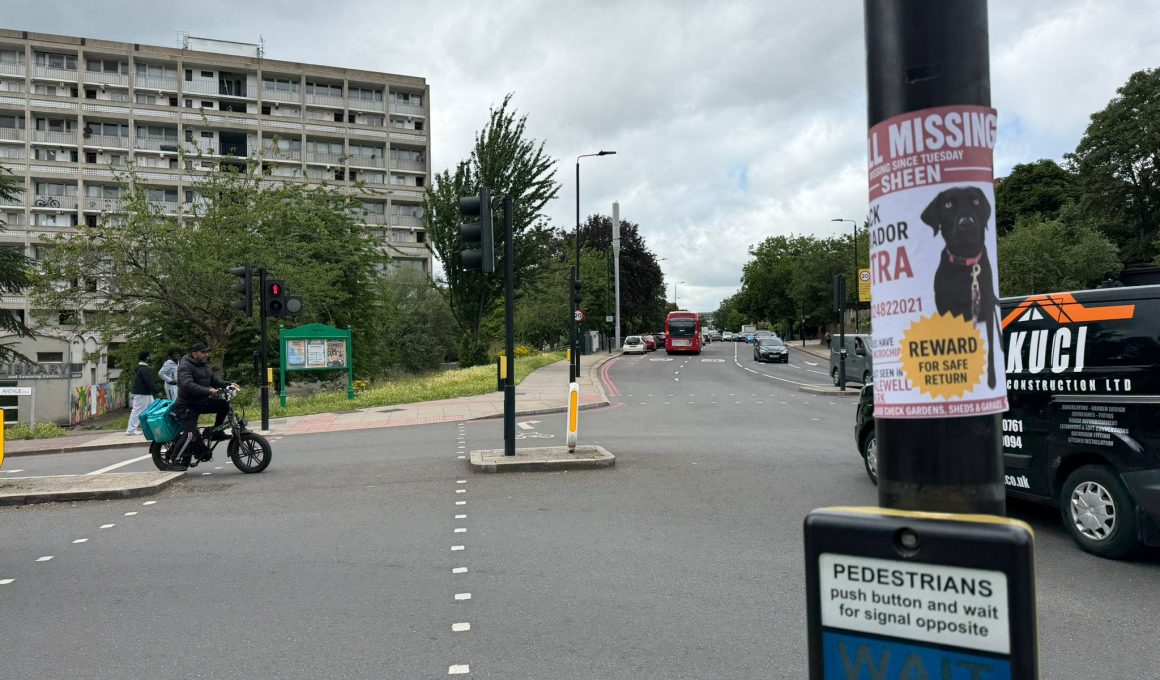
This is the story of how a black Labrador went missing and how a community rallied over five days to track her to a location five miles away. Nobody knew where the dog was or what had happened to her. Here’s how a neighbourhood found out.
Tuesday evening
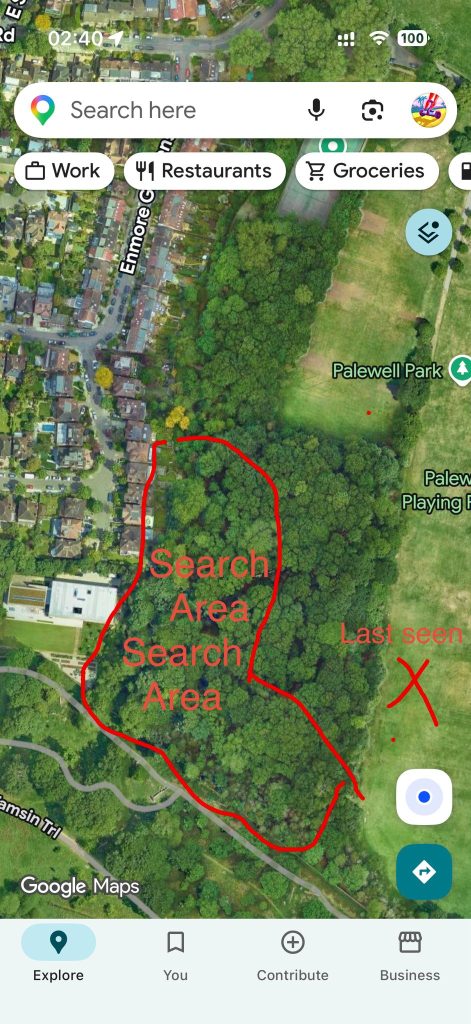
Astra slipped away near Palewell Park, next to the north end of Richmond Park, last Tuesday evening. From the beginning there was something wrong about it. She’s a friendly and well-known dog in the area and had been let off the lease to run around. Then she simply vanished. Fearing the worst, the family called emergency vets. Nothing. Overnight and the next day, despite frantic searching, there was no sign of her. By Wednesday night, owner Lisa was despondent. They had no idea what had happened.
Only two days later did she find out that Astra had been taken.
Palewell Park is unusually busy in June, not just because of the lovely weather but because it is deer-birthing season in Richmond Park and the big park is closed to off-lead dogs. So everyone goes to nearby Palewell instead. It was a warm evening, neighbours strolling chatting and then, within 30 seconds, Astra was gone.
“The dog walker was exceptionally distressed, as you would imagine,” Kate recalls nearly a week later. “It genuinely could have happened on anybody’s watch. I’d hate for people to think we can’t ever take our dogs off the lead.”
Thursday, 3.13am
In the early hours of Thursday morning, unable to sleep, Lisa set up a WhatsApp group, waited a few hours and then posted to a small circle of friends. They had run out of ground to search and run out of theories. She had one more idea: what if they just asked everyone they knew?
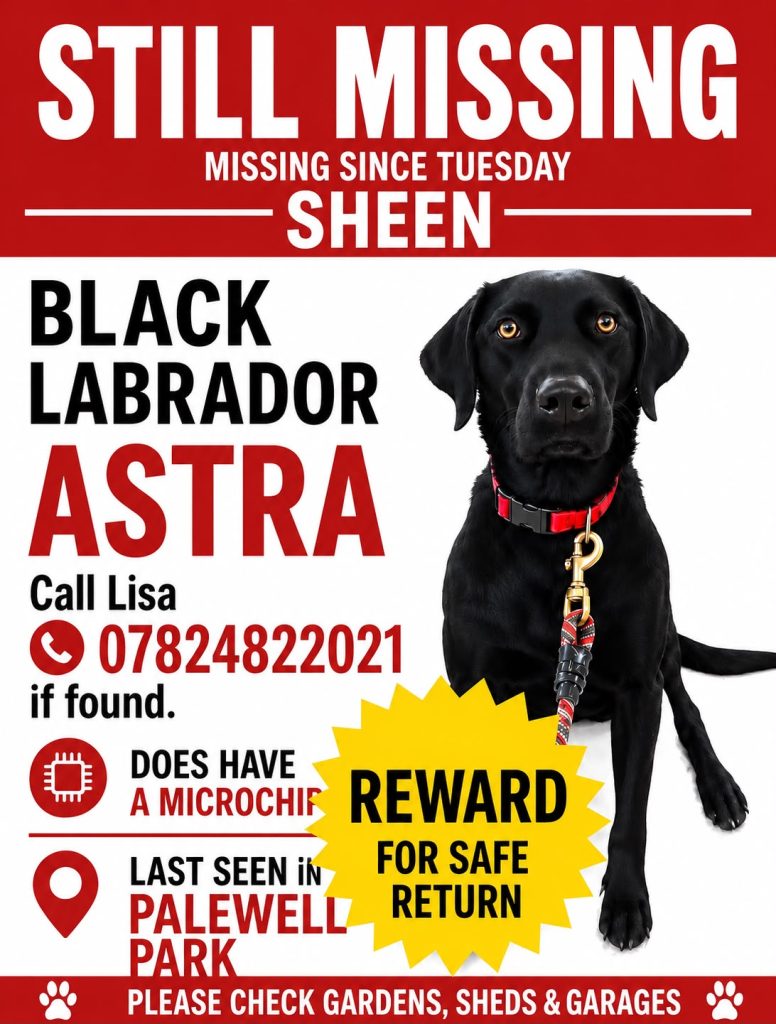
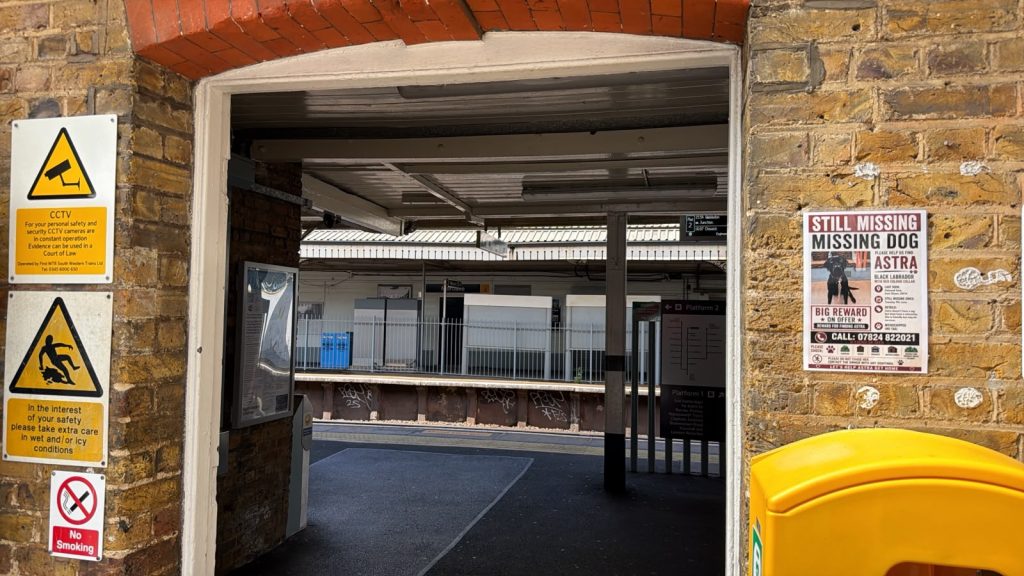
Within hours, makeshift posters had been printed and posted up around the neighbourhood as people left for work and parents dropped off their kids at school. Through worth of mouth it spread through street WhatsApp groups, fitness groups, dog communities, networks that nobody had mapped and nobody could have predicted. People who had never met Astra, had never been to Palewell Park, had no particular reason to care about a black Labrador in East Sheen joined. By lunchtime the next day the group had more than 400 members.
“It became so overwhelming so quickly,” Kate explains. She is one of Lisa’s closest friends; their daughters were in the same class at Sheen Mount. “There was no way anybody could read and respond to all of the messages. The best people to search for Astra were the people that knew her best. So I thought: I can do this bit. I can do this from anywhere.” Kate is a management consultant; problem solving is what she does best.
For the hundreds following on their phones, trying to coordinate and track progress, the group became an extraordinary live vantage point of a rapidly growing effort that began when the sun came up and continued past when it went down. Kate was the public face of the digital effort, regular condensing posts: this is what we know, this is what we need, this is what you can do right now.
People were joining at all hours and arriving with suggestions. Have you checked Richmond Park, have you tried Beverley Brook? Yes, three days ago. Call her name; don’t call her name. Cook food, don’t cook food. Is this her? A sighting in Chiswick; another back in Palewell. The posts kept the group moving and, mostly, moving in the right direction. Maps were built and shared of both search areas and Astra’s typical routes. People waded into thick undergrowth and up water tunnels they hadn’t been in since kids.
To keep pace, Kate tells us she had an unusual assistant. “Things were moving so quickly that we just needed urgent, quick comms as and when. I’m literally walking around shouting at ChatGPT: write me a message that says this, in this tone, following on from the last post.”
Collective wisdom, carefully picked, resulted in an extraordinarily efficient search. Within a few hours of the group opening, a thermal drone had been proposed, identified, booked and was flying over Palewell Park, the allotments, the back of the Bank of England sports ground, Ibstock and the Danebury Estate. By early afternoon the results were back: she was not there, and not trapped. It narrowed the search but did not resolve it.
By evening, things were, in Kate’s word, bleak. Lots of suggestions, lots of people joining. No sign of the dog.
That night the drone went up again at two in the morning, over the edge of the park. It heard barking. It could not tell where from, or whose. The next morning, an army of volunteers knocked on doors backing onto the park asking house owners if they heard their dog barking last night.
Despite becoming the epicentre of the effort, Kate is at pains to note that what followed was not her doing. “Everybody just leant into their own skill,” she says. “We had people driving around and chatting to people on the streets. People operating in the dog community, ringing vets, contacting dogs’ homes, contacting homeless shelters. So many amazing things happened. It was a true team effort and everybody did what they felt they could do best.”
Friday
Suggestions kept coming in and some were leapt on. A sniffer dog went out on Friday morning, following a cloth that had been wiped against something that carried Astra’s scent. The dog picked up a trail, but the trail ran along routes Astra walked every day and told them nothing new. A call went out asking people to checking their security cameras to see if they had caught a glimpse of a black dog days earlier.
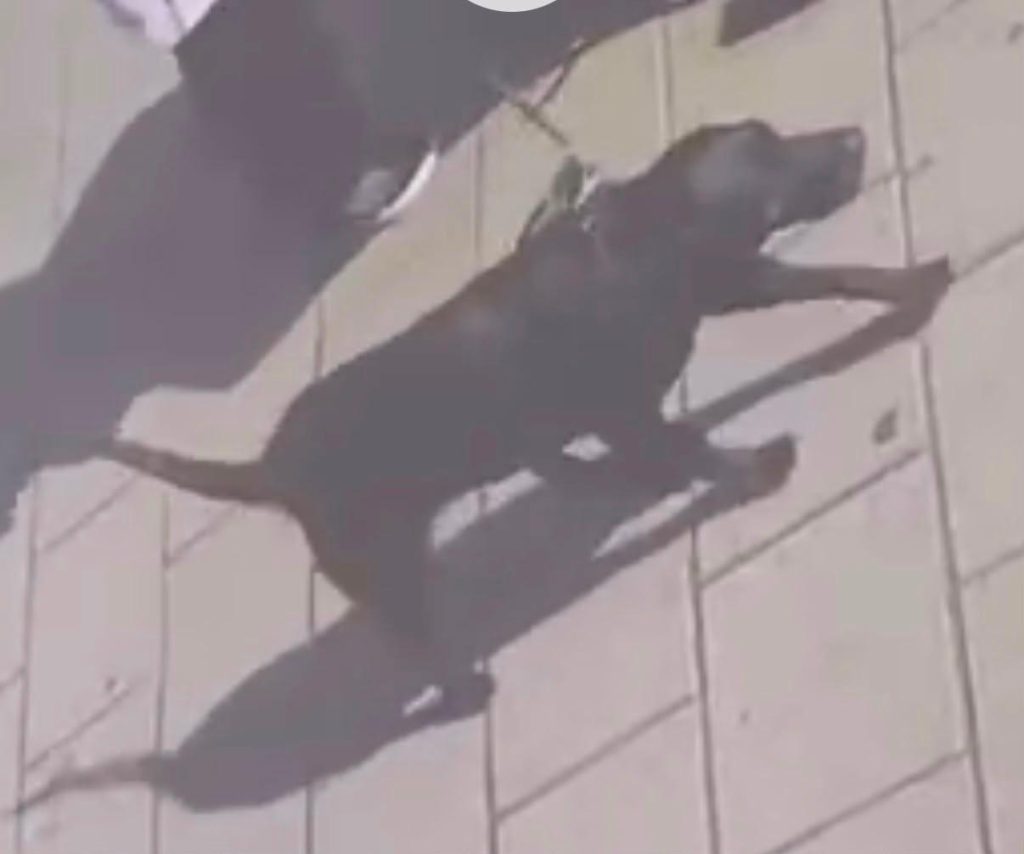
Then, just after 11am, something extraordinary happened. A piece of blurred footage arrived from a doorbell camera on Enmore Gardens, running behind the park, and it had captured a woman with a large trolley and a dog. Did anyone else have any video or stills they could help identify the dog as Astra? The army of volunteers set off again; this time knocking on doors asking neighbours if they wouldn’t mind checking their cameras and providing any footage they found. It didn’t take long. At 1.26pm, a new video clip appeared on WhatsApp. “This is her!!!” Lisa exclaimed. That’s when they knew that Astra wasn’t lost or stuck. The gentle, friendly Labrador had been led out the park on a lease by a stranger – three days earlier.
Where AI had proved to be an huge help in distilling, summarising and writing coordinating messages in a calm, clear tone when nobody felt particular clear or calm, it now became a dangerous distraction. Messages started appearing of people in the group trying to use AI to enhance the blurry stills, TV crime fighting-style.
It doesn’t work like that of course. AI can’t sharpen footage or find information in an image that doesn’t already exist. But it can give a very good impression of doing so. When a photo-realistic image appeared of the same grainy, blurry pic clearly identifying someone (just not anyone that exists outside a data centre), the group caught it quickly. After a quiet word, the images were removed. No drama, no accusation. People’s urge for clarity in a desperate moment, very nearly made things worse.
Kate asked the group to send anything else they had privately, not to the group. And sure enough more footage came in and the search left East Sheen, passed through Putney, and sped toward Clapham Junction.
The details of what happened next can’t be fully told yet. A police investigation is live and the family have asked for care in reporting. We will tell you more when we can. What we can say though is what the volunteers did. From the moment the WhatsApp went quiet, a group of the most active volunteers fanned out across south London, cancelling Friday afternoon work meetings to speak to shopkeepers, bus drivers, neighbours, security guards, local vets, housing associations – anyone and everyone who might have a lead. The police were contacted and promised to come around the next morning.
Saturday
The police arrived expecting to just take statements and were instead met with a case. And then they left, promising to brief the next shift. After days of determined searching and a disturbing realisation, having walked the police through everything they knew, the search stopped. The family again found themselves waiting as the afternoon went on and nothing came through.
“We felt despondent,” Kate explains. “We thought, this isn’t good enough. It’s not gonna happen. They’re not gonna do anything. We can’t just sit here.”
And so they went back out again. Drove around. Kept looking at the local parks, just in case they had got it wrong. Kate was back on the phone, ringing vets, this time not just the local ones but every emergency vet across south and south-east and south-west London.
This, it turns out, was the right call. It’s worth knowing why. All dogs in the UK since 2016 have been required by law to be microchipped, with their details registered on an approved national database. Any vet can scan the chip. Lisa had marked Astra as lost, so if the dog walked into any vet anywhere in London and someone scanned her, the system would flag it immediately and Lisa’s contact details would come up.
“If she turned up at a vet, we’d get her back,” Kate says. “In a weird way, we were thinking: if she is out there, she’s more likely to be picked up by somebody and taken to a vet than we are to find her ourselves.”
Between four and six on Saturday afternoon, Kate says, was probably the lowest point. No word from the police. The phones going round the vets. A gorgeous sunny day and no idea where the dog was or whether anyone was acting on what they had handed over.
At around half past six, Lisa got a call.
Astra was already at a vet. Microchip read. She would be home in five minutes.
Kate was two minutes away. She ran. When she got there, the teenagers were with the dog, and there were a lot of tears. Friends who had been out searching all afternoon abandoned the search and came to the house instead.
“Everybody was able to just put themselves in that family’s situation,” Kate says. “Either because they were Ibstock parents or Sheen Mount parents, or their dog walks in Palewell Park, or they just know Lisa and Nick from whatever. Everybody was able to jump on it and say, that could have been us. So many people went above and beyond. We had people offering to cook meals. We had people giving witness statements. Everybody got behind the urgency.
“The overriding message is just thanks, really.”