

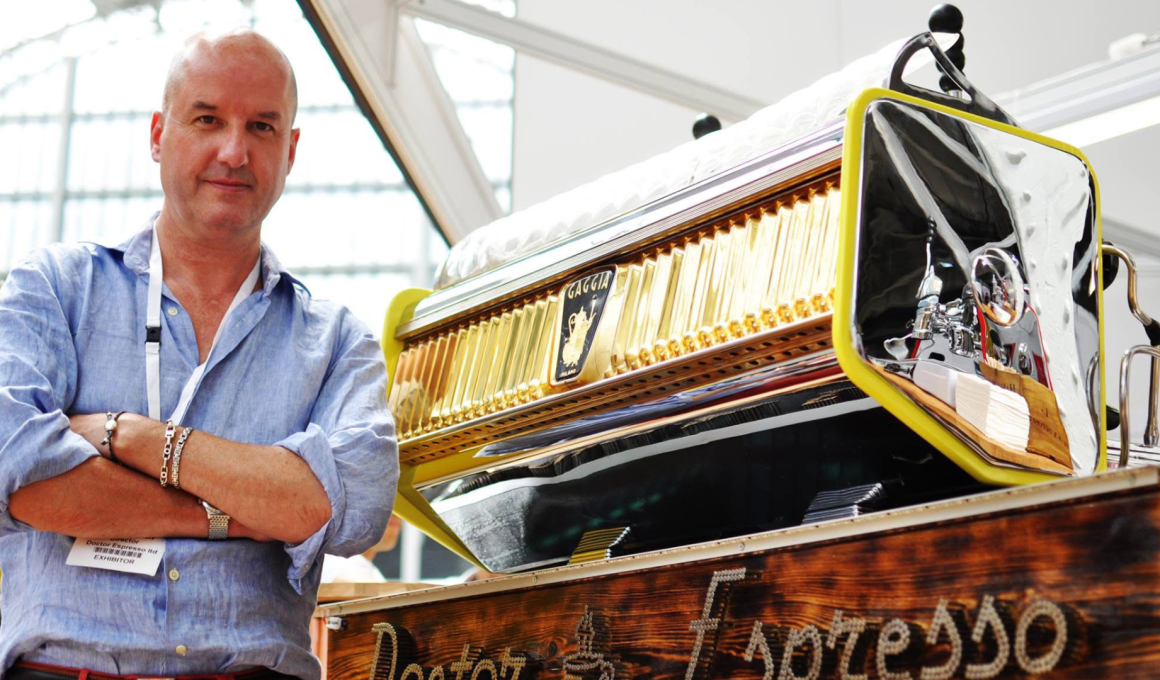
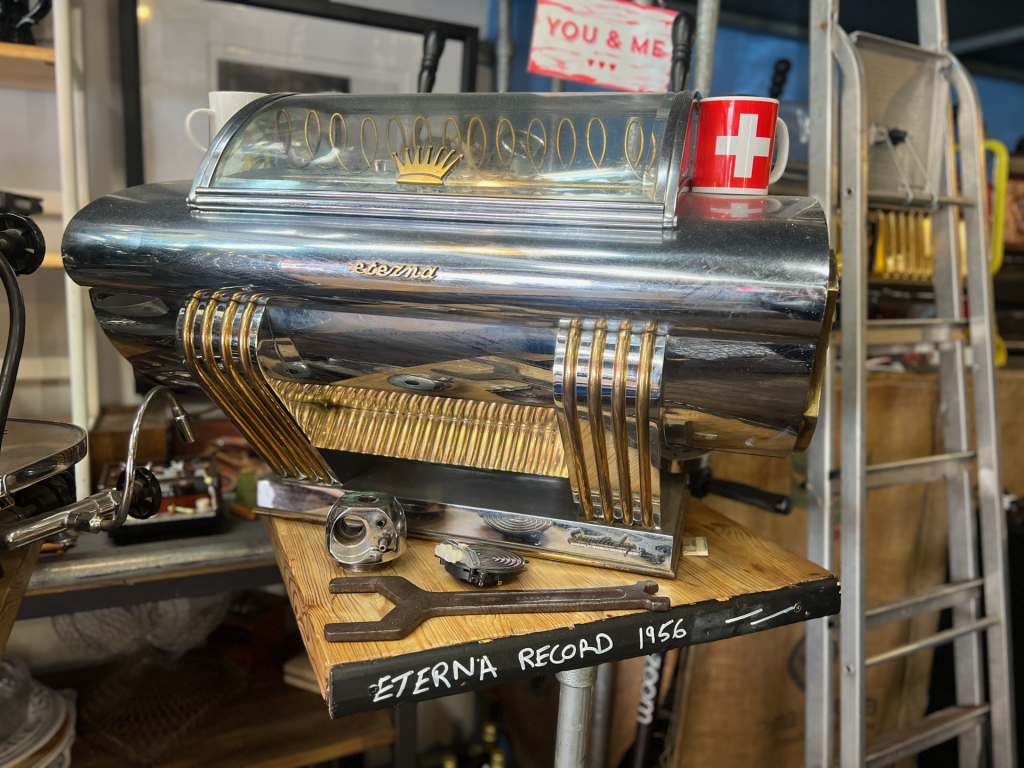
Her name is Rebecca. She is 70 years old, she makes 400 to 500 coffees a day by hand, and the baristas who work her have to warm up first or risk a frozen shoulder.
Rebecca is a 1956 Gaggia lever espresso machine, and she sits on the counter of a small Italian café directly opposite Putney Bridge tube station. Most mornings there is a queue before the District line platform across the road has begun to fill. She is reckoned to be the oldest working espresso machine in London, and she has been pulling shots on Station Approach since 2013.
How a machine that old came to be working this hard, this late in its life, comes down to an engineer from Londonderry who fell for machines from another era.
Russell Kerr is not a barista. He is an engineer who spent around 20 years looking after the temperamental old machines in London’s Italian restaurants before he ever pulled a shot himself. One of them, a lever machine fired by gas, was probably the only working example left in the country.
The café came second. When the lease on the Station Approach site became available, Russell took it, put a restored 1950s machine on the counter, and opened up. The whole thing took him about a month. ‘It was busy from the day it opened,’ he says. The name is an old one. Russell was the man the restaurants called when a machine died, the doctor, and he gave the title an Italian flourish to suit the coffee.
Found in a cave, a nightclub basement and a demolition site
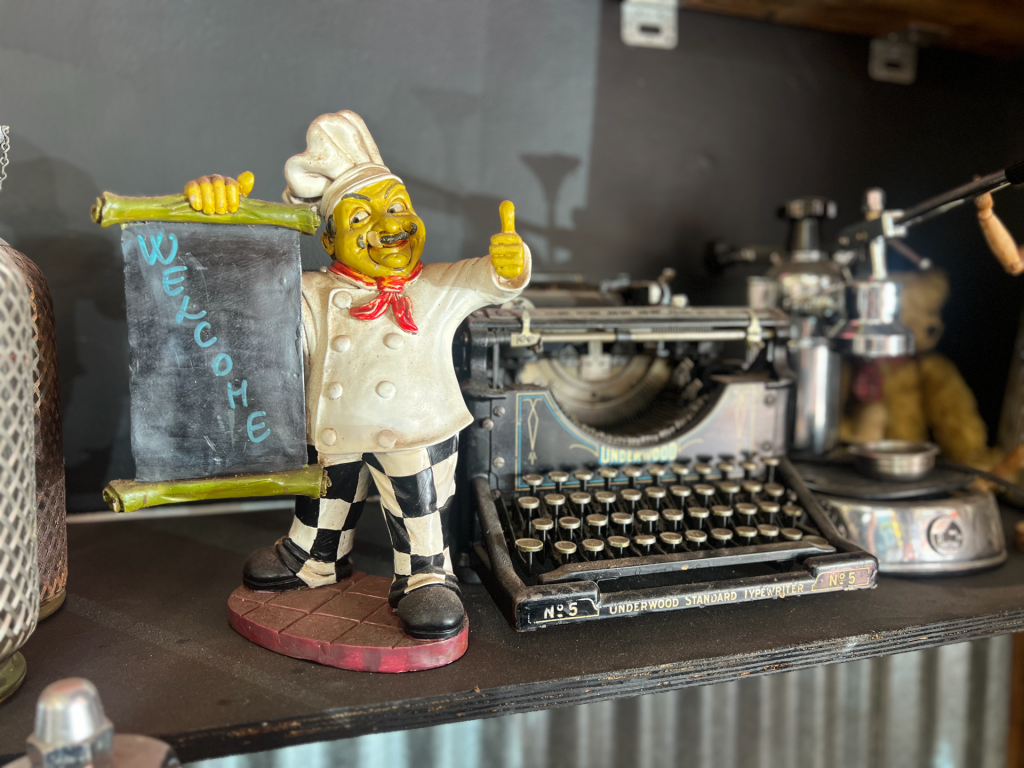
Rebecca is one of many. Russell’s machines come from barns, skips and locked-up garages, and from stranger places still: a cave in Sardinia, the basement of an Aberdeen nightclub being stripped out, a department store storeroom where a 1950s machine had sat for decades in its original box, never once used.
The find he tells best is a demolition site. The walls had already gone. The machine was still standing in the open under a tarpaulin, wired up and waiting. It was caked in decades of nicotine. They cleaned it off, and it worked first time.
Putney is not short of serious coffee. One local café family is currently driving a bag of their blend to Australia to keep a relative supplied. But few places turn the drink itself into a history lesson the way this one does.
Spend any time at the counter and Russell will tell you things about coffee you did not know you wanted to know. The cappuccino, he explains, was never really about taste. It was about money. After the war, milk was scarce and expensive, and the old steam wands had wide nozzles that blew big, open bubbles into it. That was the point. ‘If you blow large bubbles in a pint of milk, you’ve now got three pints,’ he says. The froth made a little go a long way. The dusting of chocolate on top was just to make a luxury of it.
He is full of these. When he started in the coffee trade in 1987, a cappuccino took 5.5 grams of coffee. Today the same drink takes 12. The cups got bigger, and the coffee had to keep up.
The business is run with his wife, Vanessa Lancellotti, who is Italian and the managing director of Doctor Espresso Ltd. The Putney Bridge café opened first, in 2013. A second followed in Clapham, named Mama V’s after her. There are now four, the newest in Wandsworth town.
Vanessa and Russell can tell you where every machine in the collection came from, which is why a broken part is never just a repair job. ‘Even when I break any little thing, for us, it’s a memory loss,’ she says.
Her favourite thing is to hand the machine over. On a good morning she will wave a curious customer behind the counter to try the lever for themselves. They reach up, pull it down, feel the weight of it, and look up surprised. ‘They say, I never realised how hard it is to do,’ she says. ‘We make it look simple, but it’s not simple.’
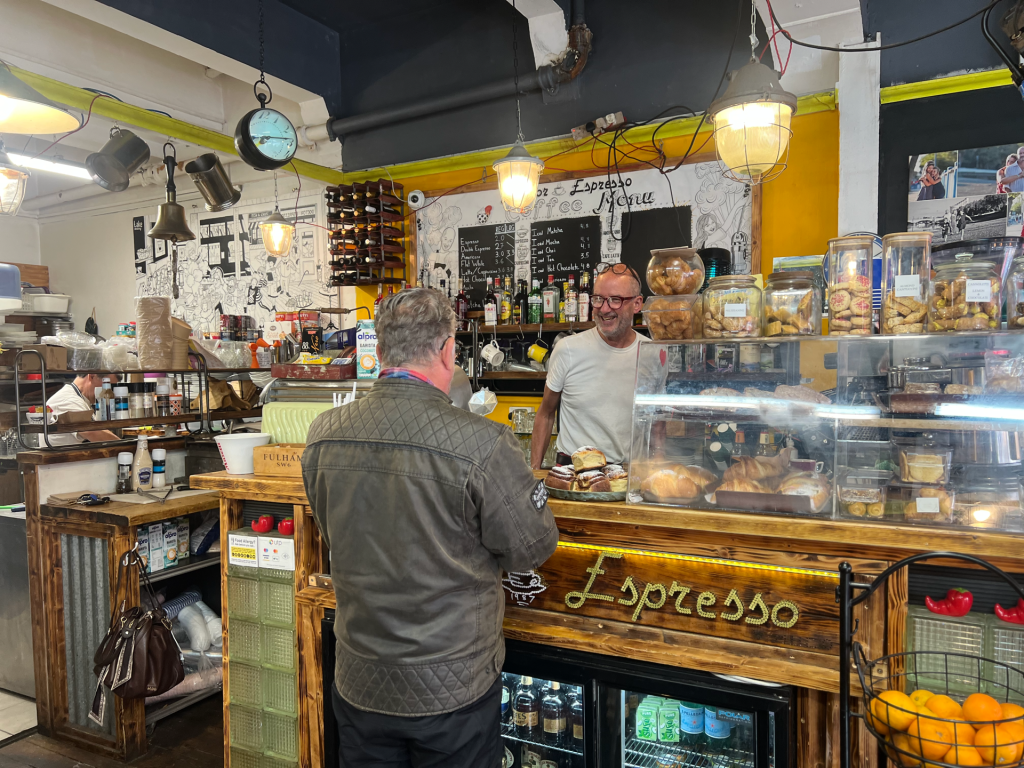
That is the whole point of the place. It does not just sell you a coffee. It shows you what a coffee is. And tomorrow morning, Rebecca will be back at it, by hand, one shot at a time.

1 comment