Since 2020, Wandsworth Council has paid over £1 million settling claims from people who say they were exposed to asbestos in council buildings. In the same period, it has recorded zero incidents of asbestos exposure in any of those buildings.
It has also, for the second time in a decade, declined to say which buildings contain asbestos at all.
Forty-eight council-controlled buildings contain asbestos-containing materials. That covers schools, leisure centres, libraries, civic offices. The council knows which ones. The people who use them do not.
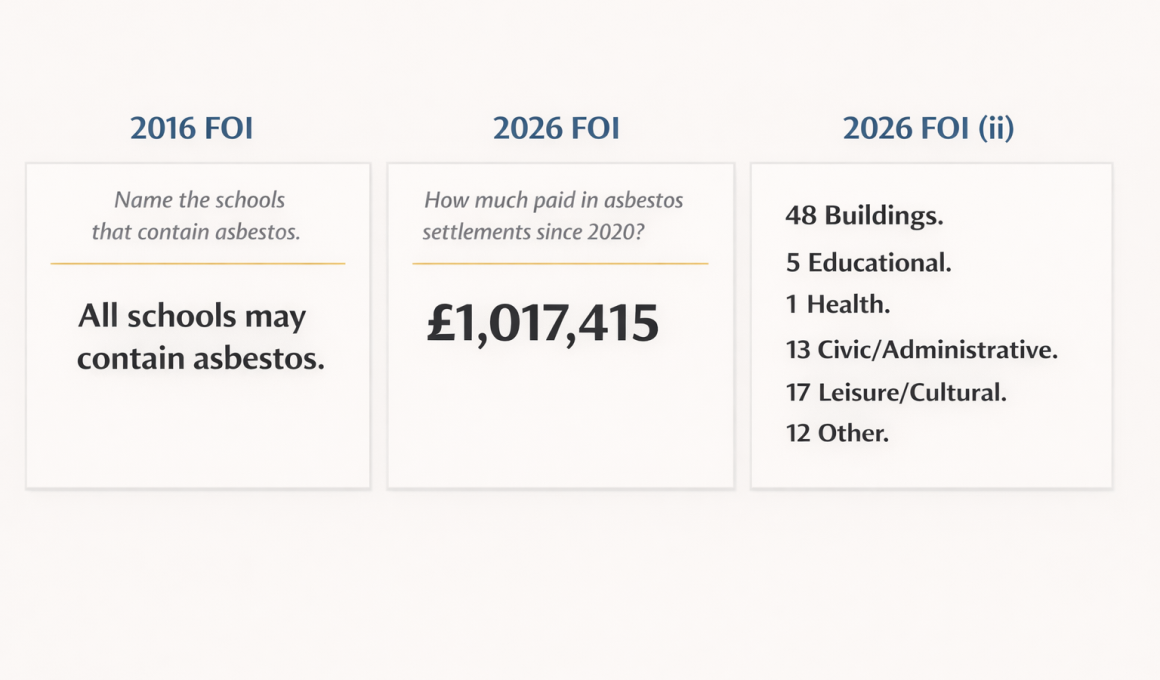
In 2016, a resident asked which Wandsworth schools contain asbestos. The council pointed her to the general schools directory: a list of every school in the borough, with no indication of which contain asbestos. In December 2025, a Freedom of Information request asked which council buildings contain asbestos-containing materials. The response gave numbers by category but did not give any addresses.
The answer, a decade apart, is the same non-answer.
What we know, and what we don’t
The 48 buildings break down as follows: five schools, 17 leisure and cultural buildings, 13 civic and administrative buildings, one health building, and 12 others. The request was submitted by Matt Hillier, a freedom of information researcher.
That is the full extent of what is publicly known about which buildings are affected.
It appears as though the council is taking a passive approach to the problem despite the massive payouts: asbestos management plans have not been updated since 2022. Asked specifically whether any of the 48 buildings has received an independent audit from an accredited external surveyor since December 2022, the council replied that “regular annual reviews have taken place.” Under HSE guidance, an internal annual review and an independent survey are not the same thing. The council’s answer does not confirm that any building has been independently assessed in over three years.
The last comprehensive independent survey of Wandsworth’s schools was completed in March 2012. That was 14 years ago.
A million pounds. Zero incidents.
Since 2020, there have been zero reported incidents of asbestos exposure in any council building. At the same time, the council has paid just over £1m – £1,017,415 to be exact – to settle 11 asbestos exposure claims: eight from current or former employees, three from members of the public. The council notes the figure may include its own and third-party legal costs.
The council says no one has been exposed. Eleven people have pursued legal claims saying they were. The council offers no explanation for the gap.
Asbestos-related disease does not announce itself quickly. Mesothelioma, the cancer most closely associated with asbestos exposure, typically takes 30 to 40 years to develop after exposure. Someone exposed in a council building in the 1990s, the last decade before the full asbestos ban, may only now be falling ill, meaning people filing claims today were, in all likelihood, not exposed recently.
The pool built in the asbestos era
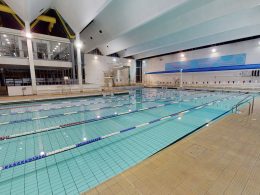
Putney Leisure Centre was built in 1968 by the architects Powell and Moya. In 1968, asbestos was not just permitted in construction, it was standard. It was prized for its fire resistance and insulation, and went into ceilings, floor tiles, pipe lagging, and partition walls across thousands of British public buildings built in that period.
The centre falls within the council’s category of 17 leisure and cultural buildings, though the council has not confirmed which specific buildings are included.
We reported in October 2025 on a £3.85 million green retrofit and a new 10-year contract with Places Leisure, the private operator now running the facility. Refurbishment of the reception, café spaces, changing rooms and pool areas is under way.
This matters because of what the law requires. Under HSE guidance, a pre-1999 building containing asbestos-containing materials that is undergoing refurbishment must have a Refurbishment and Demolition Survey completed by an accredited external surveyor before any work that disturbs the fabric of the building begins. Asbestos-containing materials that are left alone pose little risk. It is disturbance (drilling, cutting, demolition) that releases fibres into the air.
We asked the council whether such a survey has been commissioned at Putney Leisure Centre before the current works began. The council had not responded at the time of publication.
The decade of the same answer
In 2016, Wandsworth was willing to tell a resident which schools did not contain asbestos, confirm the survey history, and acknowledge that claims had been settled. The one thing it would not provide was the list of schools that did contain asbestos. When pressed, it pointed her to the general schools directory: a list of every school, with no indication of which were affected.
This month – a decade later – it provided numbers by category. Still no names. It paid out over £1 million settling claims from people who say they were exposed inside them.
Wandsworth’s 48 affected buildings is lower than comparable authorities. A 2023 investigation found 4,533 public buildings across 20 large UK councils still contain asbestos, an average of around 225 per authority. The scope of different councils’ responses varies, so direct comparison is not straightforward. What is consistent across the decade is Wandsworth’s approach to disclosure: aggregate figures, no building names.
Before the full ban in 1999, asbestos was everywhere in British public buildings. Wandsworth’s schools, leisure centres, and civic offices were built in that era. The people who work in them, swim in them, and send their children to them cannot find out whether theirs is on the list.
What Wandsworth Council was asked
Putney.news put six questions to Wandsworth Council: how it reconciles zero reported exposure incidents with over £1 million paid settling exposure claims; whether any of the 48 buildings has received an independent asbestos survey from an accredited external surveyor since December 2022; whether a new comprehensive independent survey of Wandsworth schools has been commissioned since March 2012; whether a Refurbishment and Demolition Survey was carried out at Putney Leisure Centre before refurbishment works began; whether there is a publicly accessible register of which specific buildings contain asbestos-containing materials; and what accounts for the increase in claims and payouts since 2020.
The council had not responded at the time of publication.
What you can do
The names of the 48 buildings have not been published. But residents, parents, school staff, and anyone who uses a Wandsworth public building can take steps to find out.
Submit your own FOI request asking whether your specific school, leisure centre, or other building is among the 48. FOI requests to Wandsworth Council go to foi@wandsworth.gov.uk. The council must respond within 20 working days.
Parents can ask their school’s headteacher or governing body directly whether the school has an asbestos register, when it was last independently reviewed, and what it contains.
Anyone with specific concerns about asbestos management in a building can contact the Health and Safety Executive at hse.gov.uk/contact.
You can also ask Places Leisure directly whether Putney Leisure Centre’s asbestos register is available and whether a pre-works survey was carried out before the current refurbishment began.