

Two hundred metres. That is how far west along the Thames towpath from Putney Embankment you travel before the borough boundary changes. Beverley Brook meets the river just past the rowing clubs, and from that point on, for the next ten miles (all the way to Teddington Lock) you are in Richmond. Barnes, the Wetland Centre, Mortlake, Kew, Richmond itself: all Richmond borough.
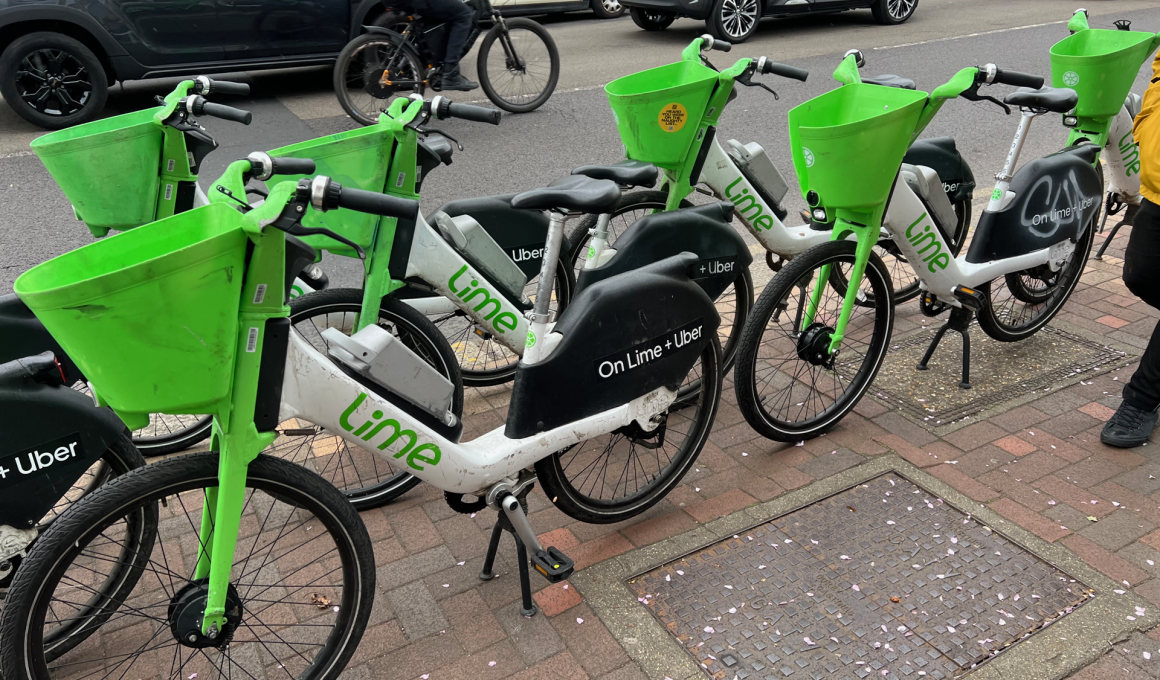
From this summer, none of those destinations will be reachable on a Lime bike.
Richmond Council voted last Monday to award an exclusive e-bike contract to Forest, banning Lime from operating anywhere in the borough. For Putney and Roehampton residents, it is one of the more quietly consequential local government decisions of recent years. The south-bank towpath is part of National Cycle Route 4. It is one of the most popular leisure and commuter cycling corridors in south-west London, used daily by riders who rely on hire bikes rather than their own. And it will shortly end, for Lime users, a short walk from where it begins.
How the decision was made
Richmond ran a tender process. It consulted over 1,000 residents. It held a public hearing with all the operators. It evaluated bids on service quality, safety, parking management, customer experience, pricing, and value for money.
Lime won on quality. Forest won the contract.
The council’s scoring system allocated a quarter of the available marks to the size of the “concession payment” the operator was prepared to make, or in plain terms, how large a cheque it would write to Richmond each year. Forest’s offer was larger. The exact figure is held in a separate paper that is exempt from public disclosure. Residents cannot see it. What has been heard is that the figure is around £3 million, according to Lime.
Richmond calls it a “significant annual concession payment.” There is a shorter word for that: bung.
The council’s press release described the outcome as the result of “a rigorous and transparent process.” That is technically accurate. It is also worth noting that the key financial figure driving the decision is the one piece of information the public is not permitted to see.
The connectivity argument does not hold
Richmond’s committee chair, Councillor Alexander Ehmann, said after the vote that the new arrangement aimed to replace current provision “with a single operator with all neighbouring boroughs being accessible.” The council’s press release foregrounded the benefit of connecting riders across Richmond, Kingston and Hounslow, all of which will now use Forest.
The council’s own committee papers say this consideration “was not decisive in the final analysis.”
It was a post-hoc justification, not the reason. The reason was the concession payment.
We know what happens next, because it already happened
Richmond is not the first borough to make this call. Hounslow banned Lime last August in favour of Forest and Voi. The outcome was swift and predictable: riders could not take Lime bikes through the borough, the bikes piled up at the boundary, and e-bike use in Hounslow dropped by 50 per cent. Lime has far more users in London than Forest, which is precisely why it outscored Forest on quality, and precisely why its exclusion costs riders more than Forest’s arrival gains them.
Comedian Dara Ó Briain compared the Hounslow situation to Checkpoint Charlie in Berlin. Richmond’s committee papers referenced this directly. It acknowledged the precedent, noted its consequences, and voted to replicate it anyway.
From Putney, the geometry of the new Checkpoint Charlie is particularly stark. Hounslow is to the west. Richmond is to the south-west. Wandsworth, which currently licenses both Lime and Forest, is the island in between. A Putney resident who wants to cycle to Barnes on a Lime bike will shortly be unable to do so. A resident who wants to cycle along the towpath beyond Beverley Brook faces the same problem within the first two minutes of their ride.
What changes, and when
Forest will take over in Richmond this summer, subject to finalising the contract. The fleet will increase from the current 250 bikes to 750, with an option to reach 1,000. Parking bays will rise from 65 to at least 150, a meaningful improvement on the current provision, which has contributed to Richmond’s complaints about abandoned bikes. (Putney has its own abandoned and broken bike problem; Forest’s bay-only model may reduce some of that here too if Wandsworth adopts it.)
Forest operates differently from Lime. Journeys must end in a designated bay; there is no flexible parking. Forest charges £1 to unlock and rewards bay parking with free minutes, rather than Lime’s unlock fee and per-minute rate. Cross-borough riders who currently rely on Lime should download the Forest app before the transition and become familiar with bay locations, which are visible in the app.
Wandsworth currently licenses both Lime and Forest. It has not said whether it intends to take any steps to protect cross-boundary cycling access for its residents. Wandsworth has previously faced pressure over e-bike parking in Putney but has not addressed the cross-border access question.
The bigger problem
None of this is illegal. It is, in its way, rational: Richmond has a budget to balance, an operator offered it money, and the procurement rules permitted the council to weight that heavily enough to determine the outcome. The process was followed.
The problem is that e-bike policy in London is decided borough by borough, with no city-wide oversight, no minimum service standards, and no requirement to consider what a decision in Twickenham does to a cyclist setting off from Putney. Transport for London has been seeking regulatory control over dockless e-bikes, and the English Devolution Bill currently in Parliament could give it that power. Even if the bill passes this year, meaningful uniform regulation is probably years away.
Until then, whether you can ride a hire bike to Barnes depends on which company paid which council the most money. Richmond has decided. The figure is confidential. The towpath is ten miles long.
What Putney and Roehampton riders need to know
The ban takes effect this summer, subject to contract. Lime bikes will continue operating normally in Wandsworth, including on Putney Embankment itself, but cannot start or end journeys in Richmond borough once the new contract is live.
If you cycle the towpath regularly: Download the Forest app now and register an account before the transition. Forest bikes must be returned to designated parking bays; check bay locations in the app before you ride. Costs differ from Lime (£1 to unlock, with free minutes credited when you park in a bay).
If you want to be heard: Wandsworth residents can contact ward councillors to ask whether the council will take any steps to protect cross-boundary cycling access. Councillors for Thamesfield, West Putney and East Putney wards can be found via the Wandsworth Council website. Longer term, the English Devolution Bill is the route to city-wide e-bike regulation, and residents can write to Fleur Anderson MP to support Transport for London getting regulatory oversight.

It’s not really a bung is it? As you say later in the article, it’s a perfectly rational decision to maximise value FOR RESIDENTS. Your words have suggested someone is profiting personally. Not very responsible journalism.
“Bung” is a pointed word, and deliberately so. It wasn’t meant to suggest personal corruption; it was meant to convey that a payment to the council was the deciding factor in a procurement decision where the higher-quality operator lost.
Councils exist to provide services, not just to maximise revenue, and ten miles of cycling corridor is a service. Whether “bung” is the right word is a fair debate. Whether the decision was right for residents is another one.
“Journeys must end in a designated bay; there is no flexible parking.”
That’s not true, you can park Forests anywhere?