Wandsworth Council is consulting on a funding strategy for its £3 billion pension fund that assumes investment returns of 5.1% annually – even as officials acknowledged at this week’s Local Pensions Board meeting that managers handling more than half the fund have been missing their performance targets for years.
The contradiction went unremarked upon during two hours of discussion. Board members reviewed both the disappointing investment performance and the draft Funding Strategy Statement – without anyone noting that the fund is setting return assumptions it hasn’t been achieving.
When investment returns fall short of assumptions, schools and the council pay more into the fund to make up the difference. Yet the consultation document setting those assumptions – which opens for comment next Monday 10 November and closes five weeks later – is proceeding with no public discussion of whether they’re achievable given actual performance.
The contradiction
The Funding Strategy Statement sets out how Wandsworth will fund pension obligations over the next three years. Central to this is the assumption about investment returns – set at 5.1% annually.
That assumption drives everything else: if the fund expects higher returns, employers pay lower contributions. If returns fall short, employers must pay more to cover the gap.
At Monday’s meeting, Head of Pension Finance Coral Baxter confirmed that three active equity managers handling 55% of the fund “have not been hitting the targeting performance” set for them.
When board member Peter Quirk asked about the “disappointing investment return” documented in the annual report, Baxter explained that the Pensions Committee – the councillors who make investment decisions, as opposed to the Board which only provides oversight – “has picked up on this” and has been monitoring it – but is still only “considering” whether to switch to cheaper passive management that is designed to track the market rather than try to beat it.
The two discussions – the high assumed 5% return and the reality of a poor 3% return – happened in the same meeting, in the same set of papers, with the same people present.
But they remained separate conversations. The structure of pension governance means return assumptions and actual performance live in different workstreams, reviewed at different moments, by different specialists – even when they appear on the same agenda.
Why it matters
When return assumptions prove too optimistic, the cost doesn’t fall on pensioners – their benefits are guaranteed regardless of investment performance. Instead, employers must increase their contributions to cover the shortfall.
For Wandsworth, that means the council and local schools paying more into the pension fund than budgeted. Money that could go to teachers, road repairs, or children’s services instead covers the gap between assumed and actual investment returns.
A rough calculation illustrates the scale: if the fund assumes 5.1% returns but achieves only 3%, that’s a 2% gap on £3 billion: a £60 million shortfall. Employers would need to pay roughly £10-15 million more annually to compensate, equivalent to 150-200 teaching positions or five to six children’s centres.
The actuaries who advise the fund, Hymans Robertson, set return assumptions based on the fund’s investment strategy and risk profile. But if that strategy isn’t delivering the expected returns, shouldn’t that affect the assumptions?
The structural problem
Why didn’t anyone at Monday’s meeting connect the underperformance discussion with the funding assumptions?
The answer reveals how the pension system’s complexity creates accountability gaps.
Different workstreams: The Funding Strategy Statement is an actuarial document produced by Hymans Robertson. Investment performance is managed by fund managers and monitored by London CIV. These are presented in different reports, discussed at different points in the meeting, and led by different officers.
Different timelines: The FSS operates on a triennial valuation cycle (2022, 2025, 2028). Investment decisions happen at quarterly Pensions Committee meetings. Performance reviews are annual or ongoing. These cycles rarely align to enable holistic discussion.
Diffused responsibility: Officers advise. The Pensions Committee makes investment decisions. The Local Pensions Board provides governance oversight. Actuaries set assumptions. Fund managers execute the strategy. And from March 2025, London CIV will manage the overall allocation.
Nobody owns the connection between “what returns do we assume?” and “what returns are we actually achieving?”
When Quirk asked about the underperformance, Baxter’s response was procedural: the Committee “has been monitoring it” and will be “considering” actions as part of the investment strategy review.
But the FSS consultation is happening now, with assumptions that don’t appear to account for this ongoing underperformance.
The March complication
The timing adds another layer of complexity. On 1 March 2025, control of Wandsworth’s investments transfers fully to London CIV, a pooling arrangement covering 32 London borough pension funds.
The FSS consultation happening now is based on Wandsworth’s current investment strategy. But in four months, Wandsworth won’t control that strategy anymore. London CIV will manage all investments, and Wandsworth will be one shareholder voice among many.
This means the return assumptions being consulted on are based on a strategy that is both currently underperforming and about to be replaced.
At Monday’s meeting, Baxter acknowledged there are “some concerns about the amount of time we’ve got remaining” for the transition. The agenda noted that “a lot of things are happening at the same time.”
But the FSS consultation document makes no mention of how the London CIV transition might affect return assumptions, or whether the underperformance of current managers has been factored into the projections.
What happens next
The Pensions Committee meets quarterly. Their next meeting will be on 11 December – just a week before the FSS consultation closes on 19 December.
The committee could decide to switch from active to passive management before the March transfer. They could commission a detailed review comparing the two approaches. Or they could continue monitoring until the decision becomes London CIV’s problem.
What they appear unlikely to do is pause the FSS consultation to address whether its return assumptions are realistic given three years of underperformance.
Board chair Richard Perry asked about the default pass-through contribution rate – the standard rate charged to new employers when they join the pension fund – initially listed as 18%, later amended to 16.6% to “mirror what we’d expect will be the primary rate for the fund.”
But nobody asked whether the primary rate itself is sound if it’s based on return assumptions the fund hasn’t been meeting.
The FSS will be finalised following the consultation and approved at a future committee meeting. Once set, these assumptions will govern funding for the next three years – until the 2028 valuation.
If they are wrong – and they were badly wrong for the past three years – that means tens of millions of pounds that could have been spent in the local economy, driving growth, will instead be pushed into pension pots that won’t see the light of day for decades.
What You Can Do
Comment on the Funding Strategy Statement consultation
The consultation is open from next Monday until Friday, 19 December 2025. You can raise the performance question:
“Given that investment managers have been underperforming their targets, and given that control is transferring to London CIV in March 2025, how confident are we that the assumed 5.1% returns are achievable? What analysis has been done of actual returns versus assumptions over the past three years? What happens if returns continue to fall short?”
Email the Pensions Committee
These councillors make the investment decisions:
- Councillor Norman Marshall (Chair)
- Councillor Ian Craigie (Deputy Chair)
- Councillor Kim Caddy
- Councillor Nikki Crookdake
- Councillor Aydin Dikerdem
- Councillor Judi Gasser
- Councillor Angela Ireland
- Councillor Tom Pridham
- Councillor Kuldev Sehra
Ask them: “Why are we setting return assumptions without addressing three years of manager underperformance?”
Attend the next Pensions Committee meeting
The committee meets quarterly to make investment decisions.
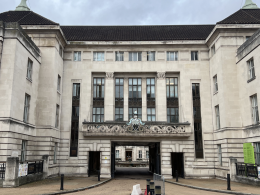
Next meeting: 11 December, 7.15pm at Wandsworth Town Hall.
You don’t need to register. Public attendance at these meetings is rare – your presence would be noticed.
Follow our reporting
Check back for updates as we continue tracking this story.
The Funding Strategy Statement consultation document runs to 40 pages. Investment performance is documented in the annual report. Both were discussed at Monday’s two-hour meeting.
But the question of whether the fund can actually achieve the returns the FSS assumes got about two minutes, buried in technical discussion of active versus passive management.
The consultation closes 19 December. After that, the assumptions are set for three years – regardless of whether the current strategy can deliver them.