

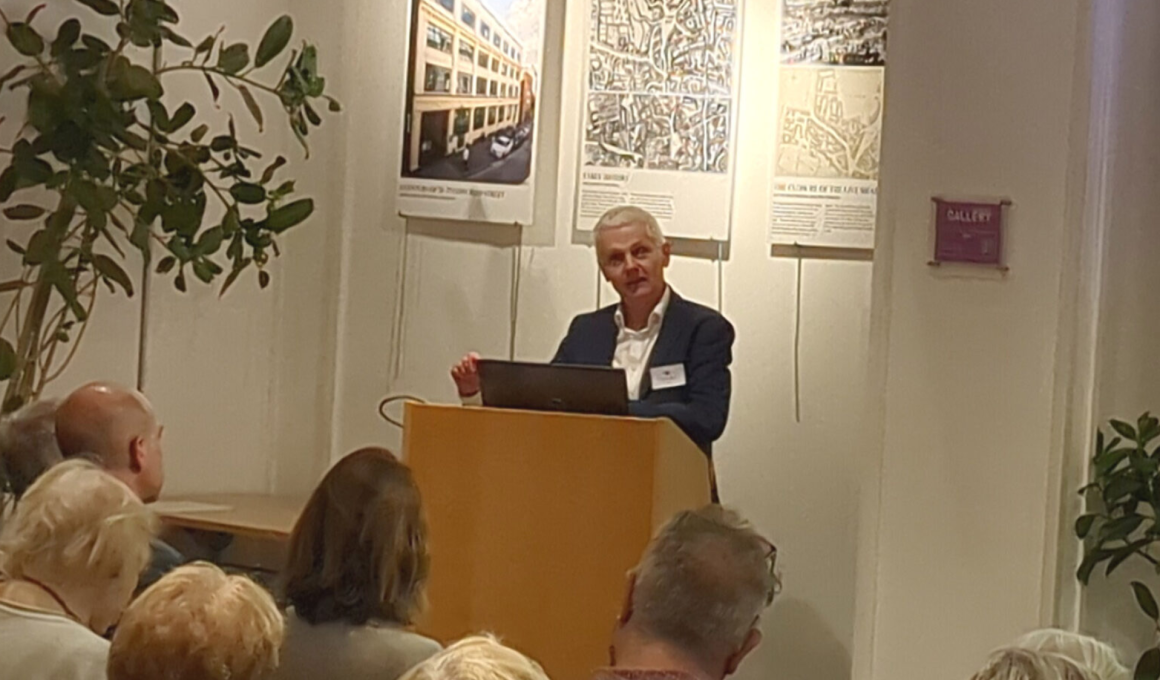
Wandsworth Council could buck London-wide trends and see Conservative gains in the 2026 local elections, despite the party’s national difficulties, according to leading political expert Professor Tony Travers.
Speaking at the London Forum’s Annual General Meeting last week, the LSE professor warned that Labour faces an unprecedented challenge defending its 21 London boroughs, with Wandsworth potentially returning to its status as a Conservative-Labour battleground.
“There will be parts of London which are still like the 1950s – the Labour-Conservative boroughs where there’s never been any real incursion by other parties: Wandsworth, Westminster, Barnet,” Professor Travers told the audience at the Gallery in Cowcross Street.
His analysis suggests that while Labour’s London-wide support has dropped 15-20% since the 2022 local elections, Wandsworth’s traditional two-party dynamic could actually benefit the Conservatives, who controlled the borough for over four decades before losing it to Labour in 2022.
The south west London picture
Professor Travers painted a complex picture for southwest London, with different dynamics playing out across neighbouring boroughs. While he predicted Wandsworth could swing back towards the Conservatives, he forecast that nearby Merton “could well be won by the Liberal Democrats,” citing their strong performance in the Wimbledon seat at the last general election.
“You can easily see the Lib Dems further entrenching themselves in southwest London,” he said, specifically citing Merton as likely to fall to them. However, when discussing Wandsworth, he twice placed it among traditional Conservative-Labour battlegrounds.
The professor, who serves as Director of LSE London and is the London Forum’s patron, described the 2026 elections as potentially “the most interesting ever” in London’s history, comparing them to 1968 when Labour suffered devastating losses, losing control of unlikely boroughs including Islington, Hackney, Greenwich and Lambeth.
A five-party fight
What makes 2026 different, Travers argued, is that London politics has fragmented beyond the traditional party system. While Wandsworth remains locked in Conservative-Labour competition, other boroughs face what he called “fighting on three fronts at once” with five parties now in serious contention: Conservatives, Labour, Liberal Democrats, Greens, and Reform UK.
He predicted Reform UK could make significant inroads in outer London boroughs like Bexley and Havering, while a “Green-Corbyn independent coalition” could damage Labour in inner London strongholds like Camden, Islington and Hackney, where the Greens believe they could even win the mayoralty.
Crucially for an area like Putney with multiple controversial developments, Professor Travers warned that planning and development issues would become electoral weapons against incumbent councils.
“Given that in many places planning and development isn’t that popular… I can see quite a lot of these parties opposing Labour when they are opposing Labour, using planning and development as a weapon in their manifesto,” he said.
This warning came as both speakers at the meeting confirmed that the government is about to announce a reduction in affordable housing requirements from 35% to 20% – a move Travers said represents “decision-making in desperation” that could become Labour’s “tuition fees moment.”
The numbers game
If Travers’s analysis proves correct, Wandsworth could benefit from what he calculated as a 5% swing from Labour to Conservatives – derived from Labour’s 20-point drop versus the Conservatives’ 10-point decline in London polling.
“If there is a small swing from Labour to the Conservatives, you might see Conservative advances even in an election where they lose lots of seats across the country, because they’re the main opponents to Labour,” he explained.
The professor predicted that up to 15 of London’s 32 boroughs could end up with no overall control after 2026, creating what he called “riveting questions” about coalition politics at the local level.
Listen to the full discussion
The complete recording of Professor Travers’s talk and the subsequent Q&A session is available on the London Forum website.
The London Forum AGM also featured a provocative talk from Leanne Tritton, Chair of the London Society, who challenged civic societies to stop playing “whack-a-mole” with individual developments and instead campaign for systemic change in how housing is funded and delivered.


Lib dem or green only, please!!