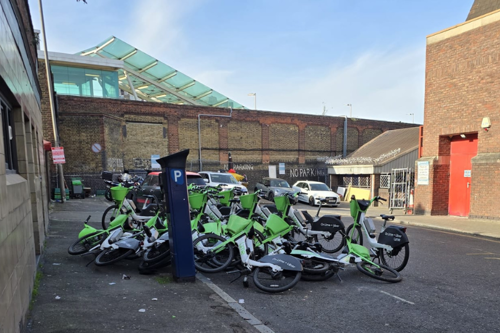
Wandsworth Council has launched a new enforcement scheme that will see officers remove and impound dangerously parked e-bikes at operators’ expense, marking the latest chapter in London’s ongoing struggle with micro-mobility chaos. But for residents who have watched similar promises come and go, the question remains: is this finally serious action, or just another press release masquerading as policy?
The announcement comes as no surprise to anyone who has navigated Wandsworth’s pavements in recent months. Over seven million trips have been taken by e-bike and e-scooter over the past year, and while the majority of users do finish their journeys and park correctly, the minority who don’t have created significant accessibility issues. With such volume, even a small percentage of poor parking creates substantial street clutter.
The issue has been particularly acute in Putney, where residents have been vocal about their concerns since the schemes were first proposed. As we reported when the e-scooter rollout was initially announced, the Council used a procedural route (Standing Order No. 83(A)) to fast-track the decision rather than holding full public debate: a move that raised eyebrows given the strong public interest and mixed views.
London’s wider enforcement challenge
Wandsworth’s new approach comes against the backdrop of similar struggles across London. Camden Council has been particularly active, issuing Fixed Penalty Notices of £100 per bike for bikes found left in resident, business, disabled and doctor parking bays and acquiring new powers to control poorly parked e-hire bikes through contract approaches with operators.
Westminster has also escalated its response, with one councillor calling on operators to ensure riders park only in designated bays and securing commitments from Lime to install bluetooth beacons to improve geofencing and staff high priority parking locations at peak hours.
The frustration is palpable across London boroughs. The legal reality however is e-bike operators do not have to ask permission to operate on the streets and the Council has no power to ban or restrict the use of hire e-bikes. The situation is different with e-scooters. But a lack of any legal authority over e-bikes has prompted multiple councils to lobby for new legislation.
What a council does have the right to do however is deal with any obstruction on pavements or the road (under the Highways Act). This is what Wandsworth’s new enforcement scheme relies on.
The financial reality
While Wandsworth promises this enforcement can be delivered without adding a penny to your Council Tax, the truth is that it continues to benefit financially from these schemes, though exact figures remain opaque.
The key test of Wandsworth’s new approach will be in the implementation. Officers will patrol the borough daily to monitor for issues and respond to online reports from the public, targeting vehicles that are lying across roads or in roads, preventing other road users from passing safely, positioned on pavements so pedestrians have to step into the road, or likely to fall over.
This represents a significant escalation from previous approaches, which relied heavily on operator self-policing and periodic council sweeps.
The success of Wandsworth’s new enforcement scheme will ultimately depend on consistent implementation and genuine commitment to prioritising pedestrian safety over revenue generation. The council says it will continue working with operators to ensure they strengthen their enforcement and safety practices, but the proof will be easily visible on Wandsworth’s streets.