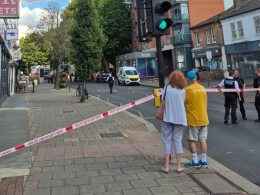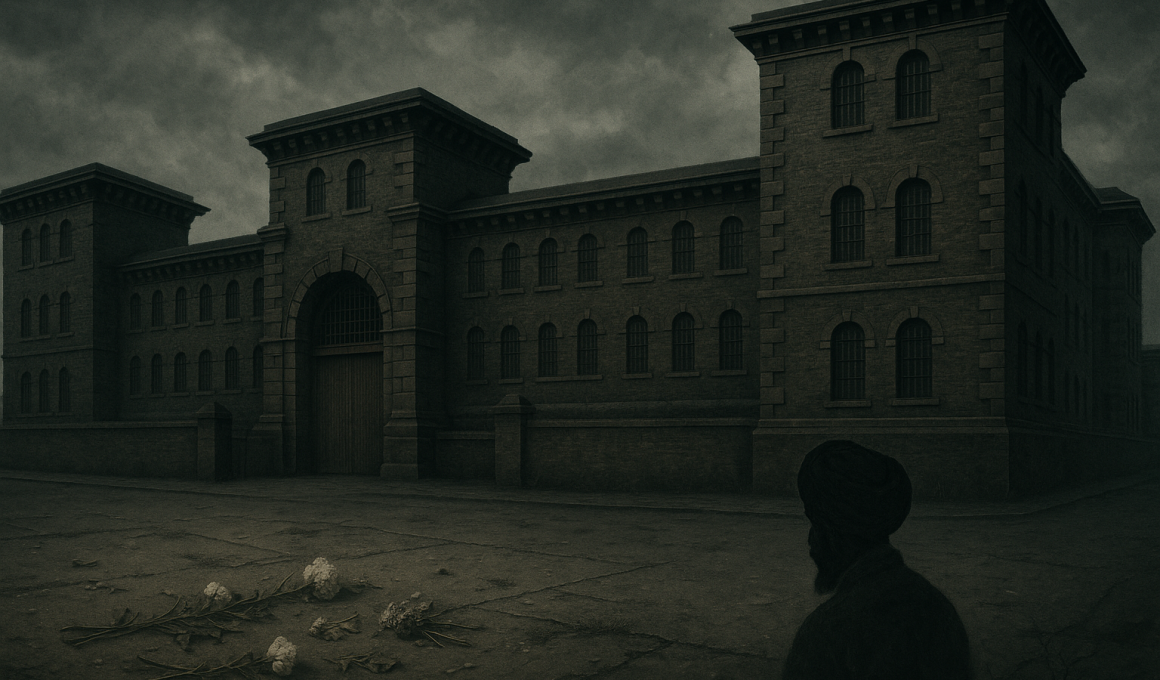
Rajwinder Singh would still be alive today if he had been sent to a different prison, according to a scathing report by the Prisons and Probation Ombudsman that lays bare the “voluminous and diverse” failures that condemned a vulnerable father of three convicted for financial crimes to death.
Mr Singh, 36, was found hanged in his cell at Wandsworth Prison on 20 June 2023, just 12 days after arriving at the crisis-hit jail. In the days leading up to his death, he had set fire to his own hair, tied ligatures around his neck, and repeatedly pressed his cell bell for help – only to be ignored by staff who were later found to have falsified their observation records.
“I do not make the following statement lightly,” wrote Prisons and Probation Ombudsman Adrian Usher, “but I consider that had Mr Singh been sent to a different prison in 2023, not in such a state of crisis, he would almost certainly still be alive today.”
The damning 25-page report [pdf], published following an inquest that concluded Mr Singh’s death was “misadventure contributed to by neglect,” reveals how Wandsworth’s “shambolic” suicide prevention procedures failed at every turn. Staff falsified observation records, ignored emergency cell bells for 30 minutes, and failed to conduct urgent risk assessments despite Mr Singh’s escalating self-harm.
Mr Singh was one of five prisoners who took their own lives at Wandsworth during 2023 – part of what inspectors described as an “alarming” pattern at Britain’s largest prison. The facility has seen 10 self-inflicted deaths since its last inspection, with seven occurring in the 12 months leading up to May 2024.
“The challenges faced at Wandsworth are tragically demonstrated by the inadequacies in Mr Singh’s care,” the report states. “There were stark and repeated failings to adequately assess and manage his risk to himself and support him appropriately.”
Missed opportunities and fatal delays
Mr Singh, who suffered from fibromyalgia, depression and alcohol problems, arrived at Wandsworth on 9 June 2023 to serve a four-year sentence for financial crimes. His escort documents clearly warned of his history of attempted suicide and self-harm, including jumping from a roof and overdosing just months earlier.
Yet reception staff failed to properly assess these risks, with one officer unable to explain why he ignored the warnings. A nurse conducting his health screening never saw the critical risk documentation, despite prison policy requiring it to be shared.
From 12 June, Mr Singh was placed under suicide prevention procedures known as ACCT (Assessment, Care in Custody and Teamwork). But the system designed to protect him became a catalogue of failures:
- No case coordinator was ever appointed to manage his care
- Staff failed to conduct urgent reviews after four separate incidents of serious self-harm
- Observation records were falsified, with CCTV evidence showing staff recorded checks that never took place
- His medication was reduced without explanation, causing his mental health to deteriorate further
On 17 June, staff found Mr Singh with a ligature around his neck. On 19 June, he set fire to his hair. Hours before his death on 20 June, he set fire to his cell – yet still no urgent review was conducted.
The final hours
The report reveals the tragic final moments of Mr Singh’s life in devastating detail. At 8.36pm on 20 June, he pressed his emergency cell bell. Staff did not respond.
Thirty minutes later, an officer conducting routine checks discovered Mr Singh hanging from a ligature attached to his cell window. By then, it was too late.
“This was a serious missed opportunity to save Mr Singh’s life,” the ombudsman concluded.
Prison and healthcare staff provided emergency resuscitation, and paramedics arrived within 13 minutes. Mr Singh was taken to hospital but died five days later from hypoxic brain injury caused by lack of oxygen.
Healthcare failures
The report also condemns healthcare failures, including the decision to reduce Mr Singh’s pregabalin medication without consulting him. The drug, used to treat nerve pain and anxiety, was being gradually withdrawn because staff could not confirm his self-reported epilepsy diagnosis.
But Mr Singh was never told about the reduction, leading him to believe his medication was being “stopped” – a source of enormous distress that contributed to his declining mental health.
A mental health assessment on the morning of his death was described as “poor” by clinical reviewers. Despite Mr Singh’s deteriorating condition and recent serious self-harm, the nurse failed to arrange follow-up care and simply placed him on a psychiatrist’s waiting list.
A pattern of preventable deaths
Mr Singh’s death is part of a disturbing pattern at HMP Wandsworth, which has become synonymous with preventable prisoner deaths. Since 2020, the facility has seen 17 deaths, with the majority being self-inflicted.
In May 2024, HM Chief Inspector of Prisons issued an urgent notification – the most serious warning possible – describing conditions at Wandsworth as characterised by “a degree of despondency that I have not come across in my time as Chief Inspector.”
The inspection found:
- 40% of emergency cell bells were not answered within five minutes
- Seven prisoners had taken their own lives in the previous year
- 44% of prisoners tested positive for drugs
- Most prisoners spent over 22 hours a day locked in cramped, squalid cells
Prison’s response
Following Mr Singh’s death, HMP Wandsworth accepted all six recommendations [pdf] made by the ombudsman, including:
- Introducing robust audits of suicide prevention records against CCTV
- Improving staff training on suicide and self-harm prevention
- Ensuring faster response times to cell bells
- Better communication about medication changes
- Enhanced monitoring for prisoners withdrawing from certain medications
- Improved induction for agency healthcare staff
Two officers received 18-month written warnings following internal investigations, while a third had already resigned.
The prison has also appointed additional safety staff, strengthened its mental health team, and entered the Prison Service’s “cluster death support process” – reserved for jails with multiple suicides.
“Systemic and cultural failures”
But critics argue these measures fail to address the fundamental problems identified by inspectors as “systemic and cultural failures” stemming from “poor leadership at every level.”
The prison entered a restricted regime in 2023 due to chronic staff shortages, with only 60% of officers available for duty on any given day. Prisoners frequently went without medication, food, or time outside their cells.
“Very limited time out of cell, absent staff and no key work reduced the opportunity for staff to develop meaningful relationships with prisoners,” inspectors found.
The Independent Monitoring Board concluded that “no real progress had been made in resolving problems caused by years of underinvestment in the fabric, facilities and staff at the prison.”
Family’s anguish
Mr Singh’s family, who were with him when he died in hospital, have been left devastated by his preventable death. His wife had called the prison on the day he died, concerned that he had not telephoned her as usual – but staff failed to pass on her message or check on his welfare.
“Raj should have been closely monitored but instead he was failed time and time again whilst he was in prison,” said his family’s legal team.
The inquest jury found that Mr Singh’s death was due to “misadventure contributed to by neglect,” specifically citing:
- The reduction of his medication without communication
- Inconsistent provision of medication
- Failure to provide adequate mental health support
- Failure to answer his cell bell on the night he died
- Possible failure to conduct required observations
The wider crisis
Mr Singh’s death highlights the broader crisis facing England’s prison system, where suicide rates have reached record levels. In 2023, there were 93 self-inflicted deaths in custody – a rate of 10.8 per 10,000 prisoners.
Wandsworth, built in 1851 and designed for 943 prisoners, regularly houses over 1,600 men in conditions described as “inhumane and intolerable.” The facility has been criticised by every inspection over the past decade.
Recent parliamentary questions revealed that HMP Wandsworth entered the Prison Service’s “cluster death support process” in 2023 due to the number of suicides, with a task force now overseeing improvements.
Calls for change
Prison reform campaigners say Mr Singh’s death demonstrates the urgent need for systemic change across the estate. The Wandsworth Prison Improvement Campaign (WPIC) has been working hard for years, and with some success, to improve issues at the prison.
The Prisons and Probation Ombudsman’s stark conclusion – that Mr Singh would be alive if sent elsewhere – raises profound questions about whether jails like Wandsworth can ever be made safe without radical reform. As the government grapples with record prison overcrowding and staff shortages, the death of Rajwinder Singh serves as a tragic reminder of the human cost of a system in crisis.
If you are affected by any of the issues in this article, the Samaritans can be contacted free on 116 123 or at jo@samaritans.org
Ongoing Investigations
The Prisons and Probation Ombudsman is currently investigating several other recent deaths at HMP Wandsworth, including:
| Name | Date of death | Status |
| Waleed Ali | 22/10/2022 | Pending inquest outcome |
| Warren Arter | 12/07/2024 | Pending inquest outcome |
| Alex Boy | 13/04/2025 | In progress |
| Sidique Govinden | 13/01/2025 | In progress |
| Peter Honnor | 27/06/2024 | Pending inquest outcome |
| Rana Khan | 05/04/2024 | Pending inquest outcome |
| Aleksandras Maslennikovas | 17/07/2023 | Pending inquest outcome |
| Gurshinder Singh | 27/11/2024 | In progress |
| Morgan Sullivan | 13/11/2022 | Pending inquest outcome |