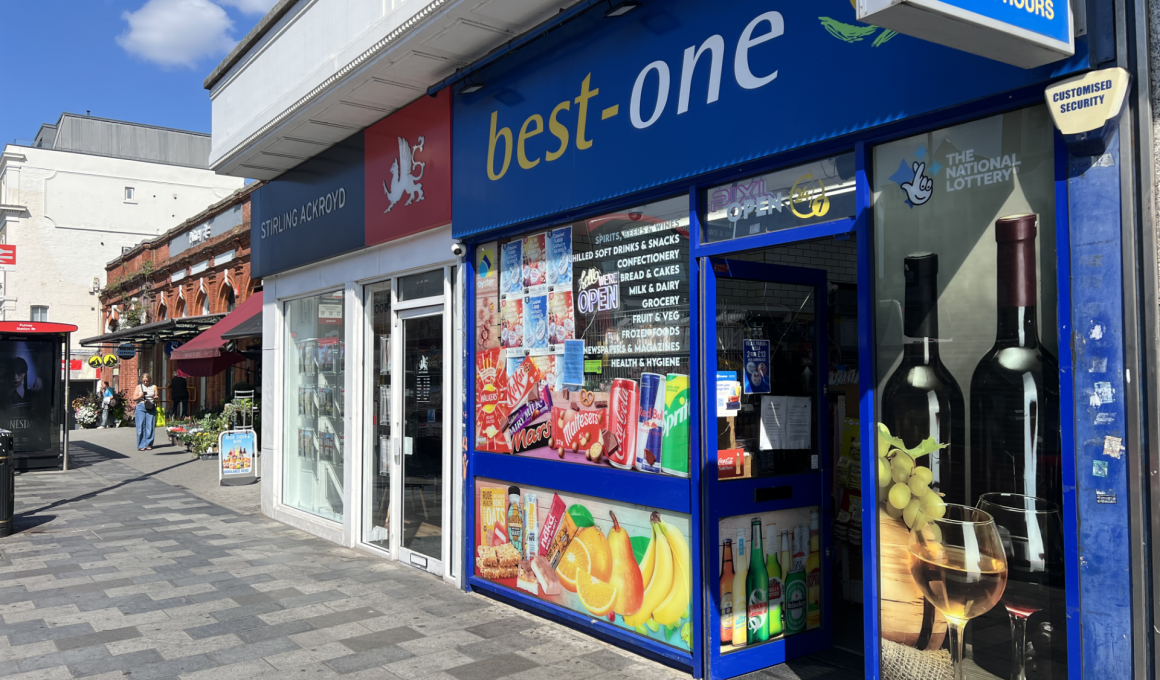
Best One convenience store has been granted permission to sell alcohol until 2am on Fridays and Saturdays but was denied the same hours for the rest of the week, in a licensing hearing that exposed widespread confusion over Wandsworth Council’s new Cumulative Impact Policy (CIP).
The decision [pdf] allows the Putney High Street shop near the station to restore weekend hours that were voluntarily cut in 2022 following a fight involving drunk customers. However, the hearing revealed that nobody – not councillors, licensing officers, or even the applicant’s legal representative – appeared to fully understand how the controversial new policy actually works.
The licensing sub-committee’s decision restores the hours the shop lost three years ago but an application to extend those hours across Sunday to Thursday was rejected, meaning the shop must continue closing alcohol sales at midnight on weeknights.
The committee cited concerns about the shop becoming “a destination for late-night alcohol purchases” and the presence of residents living directly above the premises. The 2022 incident, where police were called to a fight between drunk customers around midnight, was described as “decisive” in the committee’s reasoning for rejecting weekday extensions.
Policy confusion from the start
The new CIP [pdf] which was adopted last month based on agreement from just 20 people, was supposed to create clear restrictions on late-night venues. Instead, the hearing descended into confusion as it became clear no one understood how or where it applied.
The applicant’s licensing consultant, Graham Hopkins, initially argued that Best One “was not in an area identified in a Community Impact Assessment (CIA), so should not be limited in its hours” and was “not subject to a rebuttable presumption to refuse.”
But the council’s own licensing officer corrected him, stating that “the Cumulative Impact Assessment policy covered the entire borough.”
Then, moments later, the same officer contradicted herself, saying that “The Cumulative Impact Assessment does not apply to this premises where it is located. However, Guideline Hours in the Policy do still apply.”
Geography gets lost in translation
The confusion deepened over basic questions of where the policy actually applies. The CIP background shows it was designed specifically for Putney High Street and surrounding areas, with separate policies for Clapham Junction and Tooting Broadway i.e. not borough-wide coverage. But the actual documentation mixes all three areas and doesn’t break out specific CIPs for each area: one of several signs that the process was not well run or considered.
During the hearing, the licensing officer insisted the policy “covered the entire borough,” creating uncertainty about whether Best One at 169 Putney High Street – clearly on the High Street – was even subject to the CIP at all.
Environmental Services officer Golam Chowdhury, representing the council’s objection, used CIP arguments throughout his presentation, warning that the application “would place it beyond policy” and make the shop “an outlier in policy.” But even his understanding appeared muddled, with no clear explanation of how the geographic boundaries work.
What the policy was supposed to do
The CIP was intended to create a “presumption against” new or extended late-night operations after 11pm unless applicants could demonstrate they wouldn’t contribute to public nuisance. It was adopted following a consultation that drew just 27 responses about Putney, with only 20 people supporting the proposed restrictions.
The policy includes “guideline hours” for off-licenses:
- Sunday-Thursday: 07:00 to midnight
- Friday-Saturday: 07:00 to 02:00
But the hearing exposed fundamental confusion about whether these are binding limits, advisory guidelines, or something else entirely.
Faced with the policy chaos, the licensing sub-committee appears to have abandoned the CIP framework entirely and fallen back on standard licensing considerations. The decision document makes little reference to the CIP, instead focusing on traditional concerns about noise, antisocial behaviour, and residents’ welfare.
The committee essentially granted what the “guideline hours” allow (Friday/Saturday 2am) and rejected what goes beyond them (Sunday-Thursday 2am), but for reasons that had more to do with the 2022 incident and local concerns than any coherent application of the new policy.
A policy built on shaky foundations
The confusion reflects deeper problems with how the CIP was developed and implemented. Adopted based on minimal public consultation, the policy appears to have been rushed into effect without clear guidance on practical application.
The hearing transcript shows that even the applicant’s experienced licensing consultant, who claimed “20 years of being involved in licensing,” initially misunderstood basic elements of the policy. If professionals can’t navigate it, the policy’s effectiveness in practice appears questionable.
Best One’s case was supposed to be the first test of the new CIP, setting precedents for other businesses on Putney High Street. Instead, it has exposed a policy framework that appears poorly understood by those meant to implement it.
The decision document notes that the committee “considered the merits of the application and had regard to the Council’s Statement of Licensing Policy,” suggesting they treated it as a standard licensing matter rather than a CIP test case.
For other businesses considering applications, the message seems clear: the new policy may exist on paper, but in practice, licensing decisions are still being made on traditional grounds. It’s one more sign that Wandsworth Council is very far from a well-oiled machine.