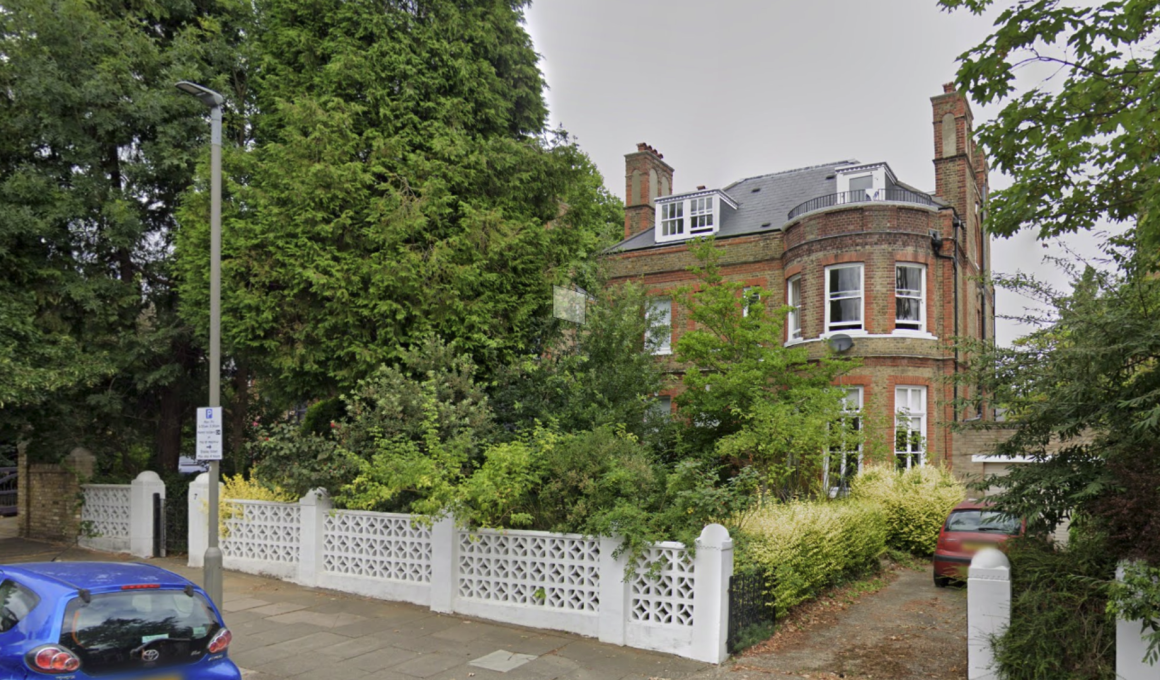
A listed house facing Wandsworth Common and described by the council’s heritage committee as having “great architectural merit” will be ruined within months, after Wandsworth Council approved a renovation that residents, experts and civic societies all opposed.
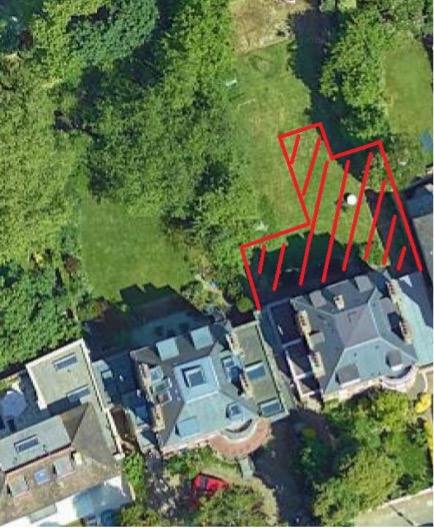
The property in question is at 7 Blenkarne Road, a Victorian villa designed by celebrated architect E. R. Robson and part of a historic pair of houses that are locally listed. The plans (2024/2563), approved this week with minimal discussion by councillors, will significantly alter the rear and side of the house, replacing original features with modern extensions and a raised terrace.
The council received strong objections from the Wandsworth Conservation and Heritage Advisory Committee (CHAC), the Battersea Society, the Clapham Society, and from direct neighbours at No. 9 Blenkarne Road, Henry and Charlotte Knapman.
CHAC described the house as the work of “important architect E.R. Robson”. It warned that “the treatment to the rear of the property was more akin to how low-quality Victorian terraces were redeveloped and extended, rather than buildings such as this which had great architectural merit.”
The Battersea Society objected to the “scale and massing” of the extensions and said the proposal would “destroy the symmetry” of the building. The Clapham Society called the design “jarringly modern” and said it would “date badly”. All three urged the council to reject the scheme, and some sent several letters objecting.
But to no end: while council officers acknowledged the existence of these objections they did not quote from them or respond to any specific concerns. Instead, the committee report concluded the design would “on balance preserve the appearance” of the locally listed building.
In a few short minutes of discussion at the Planning Committee, an architectural gem was lost.
A surreal discussion
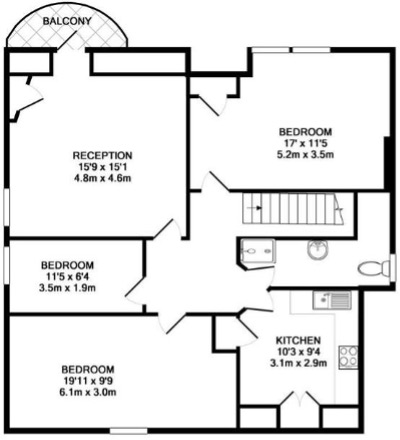
The situation was made that much worse when committee members, rather than dig into the lengthy concerns, discussed why they weren’t in a position to uphold a key procedural objection: the loss of a three-bedroom flat.
Under planning rules that are intended to protect the number of family homes, the development should have been assessed the LP25 policy and likely should have been rejected on those grounds.
But, council officers claimed that LP25 didn’t apply because it wasn’t a three-bedroom flat at all; it is a two-bedroom flat with an unusually large dressing room that happened to have its own door off the corridor.
For some reason, councillors were willing to accept this explanation despite the space having literally been advertised as a three-bedroom flat – with neighbours providing the evidence of that fact in a submission.
Council officers claim to have visited the house and confirmed the bedroom – which was pictured as having a bed in it – was in fact a dressing room.
Taking things one step further, the planning committee then decided it wasn’t in a position to decide whether something was a two or three-bed flat anyway – despite the existence of planning rules literally proving otherwise – because they couldn’t prevent someone from knocking through a wall. Although in this case, the wall was still in place so the argument was moot. Or, at least, it should have been.
Another bone of contention – the impact of the massive extension on the neighbours’ sunlight – was briefly raised in a meandering intervention, not responded to by officers, and then dropped.
It was, in short, a travesty and a damning indictment of how poorly Wandsworth Council’s planning applications process runs.
The officer report makes no reference to the historic floorplans or marketing evidence submitted by neighbours clearly indicating it had been used a three-bedroom flat.
Neighbours provided facts — officers ignored them
The Knapman neighbours submitted a highly detailed objection [pdf] setting out concerns about loss of light, overlooking, flawed daylight analysis, the impact on their garden and basement rooms, and what they described as a “monolithic” brick wall that would dominate their boundary. They pointed out multiple errors in the daylight study submitted by the applicant, including the omission of key windows and mislabelling of floors.
They also requested, on several occasions, that officers visit their home to see the site in context. There is no evidence that officers did so. Instead, the report stated the proposals complied with BRE daylight guidelines and advised councillors there was no issue.
On the three-bedroom flat issue, the officer report makes no reference to the historic floorplans or marketing evidence submitted by neighbours clearly indicating it had been used a three-bedroom flat.
Procedural concerns, including what neighbours said was a false answer on the application form regarding building height and a failure to assess harm to the building itself under the National Planning Policy Framework was glossed over.
The fact that the plans under discussion were just the latest of many, with previous plans withdrawn or rejected, was not raised.
From their submission:
“Please can we stop this process of speculative reapplications every 12 months as it consumes a lot of time and causes great stress! It would also be good to allow more response time for neighbours when a developer submits a huge application with hundreds of pages of consultants’ advice in the middle of August!
Finally, we would respectfully request again that the case officer to visit our home.”
A correction that should have stopped the meeting
If that wasn’t enough, just before the meeting, officers issued a correction to their own report. A sentence had described the proposal as “sympathetic”. This was an error, they noted. In fact, the the word should have been “unsympathetic” i.e. the complete opposite of what was included in the report.
The correction was not discussed by councillors. The mistake went unremarked, and no questions were asked.
Which raises the question: why, when neighbours’ concerns were deeply documented and appear to break housing policy, when the report itself gave a misleading impression of the impact of the development, and when changes to a listed building were opposed by every relevant society, did the council recommend approval?
According to planning paperwork, the scheme will generate around £244,000 in Community Infrastructure Levy (CIL) for the council if built. The sum was not mentioned at the meeting, and the funds are not ringfenced for the area but are added to a general council fund.
A silent rubber-stamp
The committee did not ask any questions about the objections, the design errors, or the policy interpretations. The item was passed unanimously, despite being the third application in under two years for the same property, and despite the unusually detailed opposition submitted by multiple parties.
Planning decisions often involve judgement. But in this case, the judgement appears to have been made in defiance of expert advice, without verifying claims, and without any meaningful consideration of what was being lost.
London needs new homes, and Wandsworth needs funds — particularly as the council has refused to raise council tax and is now spending down its reserves. But this was not a major housing scheme or public infrastructure. It was a private redevelopment of a protected building, pushed forward by officers who did not answer clear questions, and passed by councillors who contorted themselves at times to look past clear grounds for dismissal.
It seems clear that this is one of those decisions that residents, years from now, walking past the building may look up and ask: how did that ever get approved?