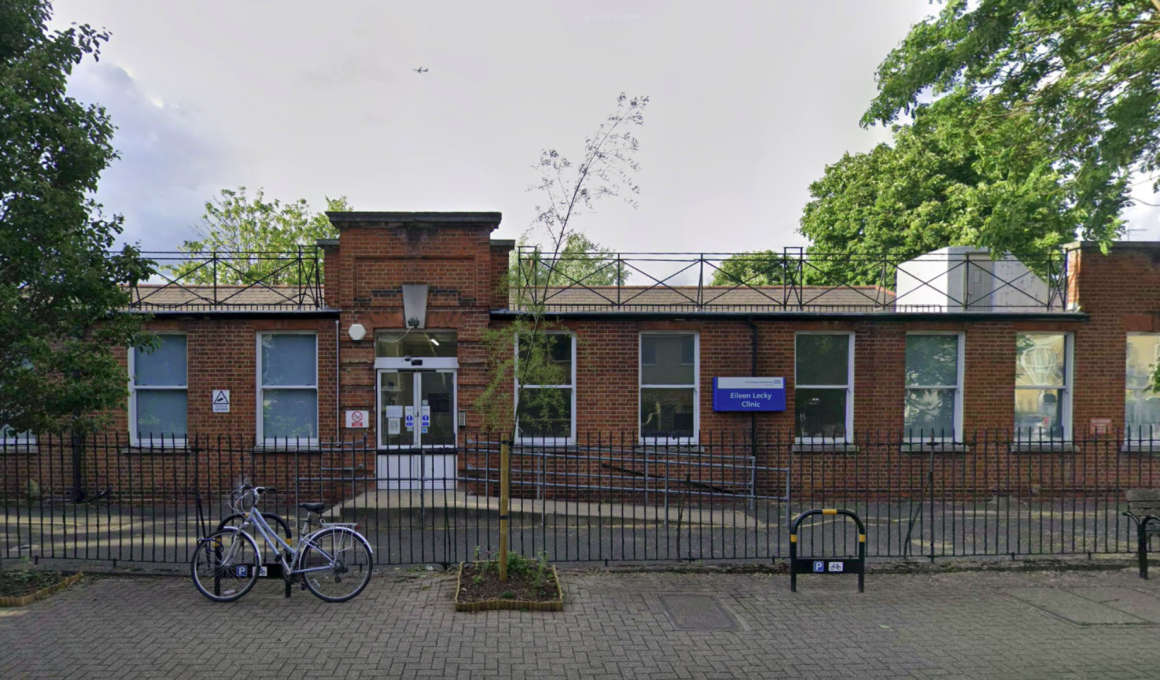
Two Clarendon Drive is a plain, low, NHS-beige sort of building on the corner with Charlwood Road, the kind of place you’d file away as “some clinic or other” and never give a second look. But behind that unremarkable frontage is a far stranger story than the name on the wall suggests, and a specialist neurologist is now racing to piece it back together before the last people who could remember it are gone.
The building is the Eileen Lecky Clinic, run by St George’s, offering midwifery and community paediatric services. But for around two decades in the middle of the last century, part of it operated as the Putney Migraine Clinic, one of Britain’s earliest specialist migraine services, and, on the evidence of Parliament’s own record, significant enough that MPs argued about it twice.
Two thousand cases, and no room in the NHS
A Harley Street specialist, Dr Leyton, ran a migraine clinic on the site, treating patients with hormone and allergy-based therapies that were unorthodox for the time. By 1959 it had seen roughly 2,000 cases across some 150,000 consultations, according to a Commons debate that year in which MPs discussed the clinic by name, calling it the Eileen Lecky Migraine Clinic in Putney.
A second debate followed in 1960. One MP, pressing the government on why nothing seemed to be happening, contrasted Leyton’s evident success at Putney with the health service’s total failure to bring him into it: migraine sufferers, he suggested, were being helped by private goodwill rather than public provision. Another MP argued the wider case for specialist treatment clinics to be established properly within the NHS. Neither debate appears to have changed anything. The clinic carried on privately, on Clarendon Drive, until it closed in the early 1970s.
What looks, from the pavement, like an unremarkable council-era clinic building is where a genuinely awkward question in British medicine played out twice on the floor of the House of Commons: a doctor getting results the health service could not explain away, and never finding an institutional home inside it.
Who was Eileen Lecky?
The building itself started life in 1916 as a branch of the Mothers’ Welcome, moved to Felsham Road as the Putney Infant Welfare Centre in 1922, and arrived on Clarendon Drive in 1931 as the Children’s Health Centre. Eileen Lecky was its secretary for fifty years, running child health services through two world wars, before the migraine clinic ever existed within its walls. She was awarded an MBE for her work with the borough’s poor, lived locally on Deodar Road, and the building was renamed in her honour in 1958, the year she retired. There’s still a plaque inside commemorating her.
The clinic renamed after Eileen Lecky and the migraine clinic Dr Leyton ran there are not, strictly, the same institution, even though they shared a building and, from 1958, a name. One was a children’s health service that ran for decades under a formidable local administrator; the other was a specialist unit that appears to have operated within it, or alongside it, for a shorter and more contested period. Untangling exactly how the two related is one of the open questions in the clinic’s history that still hasn’t been settled.
What the record still can’t settle
Dr Mark Weatherall is trying to pin the rest of the history down: a consultant neurologist at Buckinghamshire Healthcare NHS Trust, former chair of the British Association for the Study of Headache and president-elect of the World Headache Society. He is also a Fellow of the Royal Colleges of Physicians of both London and Edinburgh and a former trustee of The Migraine Trust. He trained as a historian of medicine before he trained as a clinician, and has published on the subject in peer-reviewed history journals. He is now researching the Putney clinic and appealing for anyone who was treated there, or who worked there, to come forward. Given the clinic is believed to have closed in the early 1970s, anyone with a direct memory of it would now be in their eighties.
Even Dr Weatherall’s own account doesn’t quite match Parliament’s, in the way these things often go when you’re reconstructing seventy-year-old history from scattered records. The 1959 Commons debate has the clinic opening in 1950; his own research points to 1952. There’s another loose end: some sources give the doctor’s first name as Nevil, others, paraphrasing a later Commons debate, as Neville.
A National Archives file, catalogued as FD 23/1474 and held at Kew, covers exactly this territory: papers, notes and correspondence from the Putney Migraine Clinic alongside something called the Wendy Leyton International Migraine Prevention Centre, on Harley Street, running from 1958 to 1965. Whether Wendy Leyton was a relative of the doctor, a successor practice, or something else entirely is not yet clear.
Putney’s own claim to a kind of primacy has gone largely unremarked. The clinic usually credited as Britain’s pioneering migraine service is the City of London Migraine Clinic, associated with the neurologist Marcia Wilkinson, whose own biography dates her earlier clinic to 1963 and the City clinic itself later still. That clinic’s claim to fame is a genuinely different one, treating patients while they were actually suffering an attack rather than by referral and consultation, so the comparison isn’t exact. But on plain chronology, under either of the two dates given for the Putney clinic, it was seeing patients first, by a decade or more, and nobody currently seems to be making that case on Putney’s behalf.
The next time you walk past 2 Clarendon Drive, remember: a doctor working behind that door got results the NHS never explained away and never adopted. The full story of what happened there is only now being pieced back together, before the last people who remember it are gone.
This is the third in an occasional series exploring the unexpected institutions hiding in plain sight around Putney. Read the first two: Brazil’s admirals have been quietly shopping for warships in Putney since 1971 and the Putney house at the centre of a sovereignty dispute with Rome.
Were you treated at the Putney Migraine Clinic, or did you work there? Get in touch with Putney.news and we will pass your account, with your permission, to Dr Weatherall, who is researching the clinic’s full history.