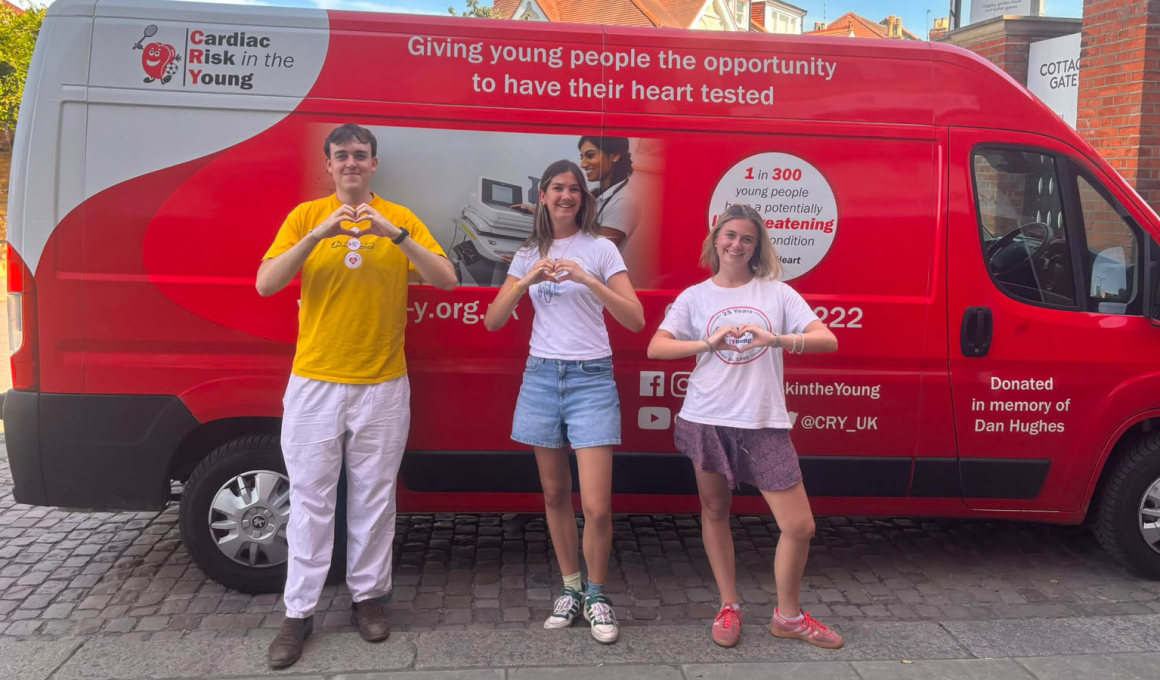
Free heart screenings are taking place at Fulham Football Club’s stadium next week with the aim of detecting undiagnosed heart conditions among young people aged 14–35.
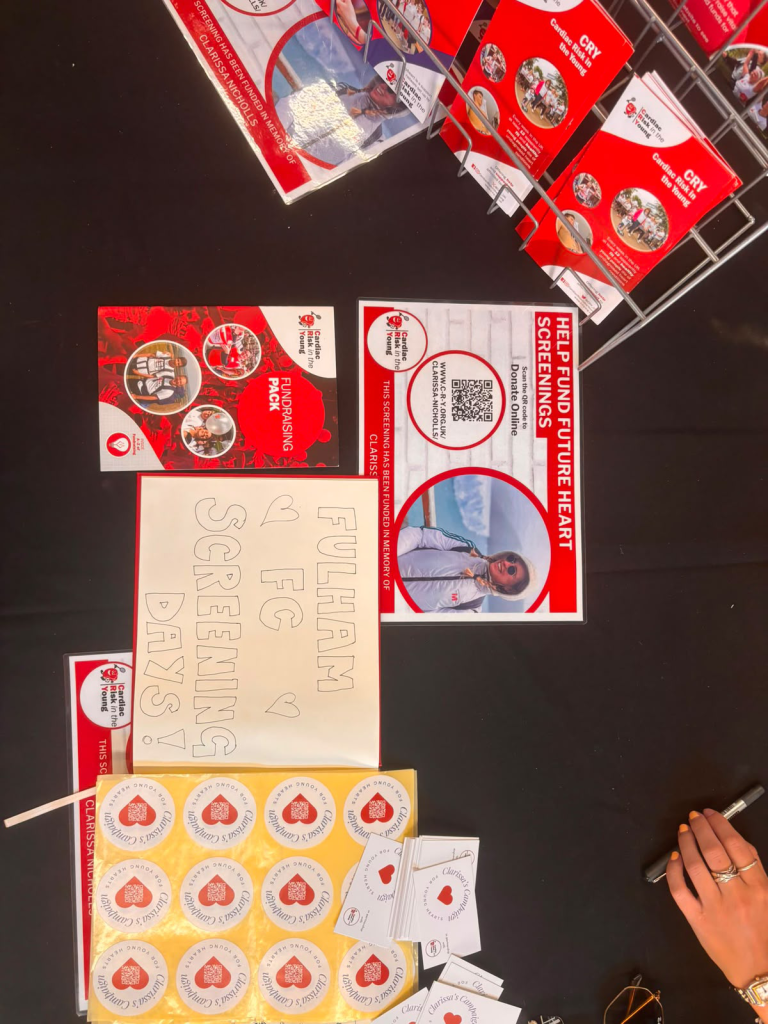
Taking place on the 11th and 12th of August at Craven Cottage, these screenings are in partnership with Cardiac Risk in the Young and Clarissa’s Campaign.
Clarissa’s Campaign was set up in memory of Clarissa Nicholls, a French and Italian undergraduate at Cambridge University who tragically passed away in May 2023 from an undiagnosed heart condition, arrhythmogenic cardiomyopathy (ACM), while hiking in France.
If her condition had been detected earlier, she would still be alive today. Clarissa was “athletic and very sporty” and had no underlying health problems or any symptoms. This tragedy highlights the enormous importance of early detection.
Having already screened 206 people at Craven Cottage over two days in July (8th and 9th) – in which 11 people were sent for further investigations – Clarissa’s Campaign aims to screen as many people as possible so any abnormalities can be detected quickly and early.

This allows doctors to come up with treatment and diet plans so lives can be saved and other families won’t have to experience the devastating heartbreak that Clarissa’s family and friends have been through.
By the end of 2026, Clarissa’s Campaign estimates that over 1,500 people will have been screened.
As well as heart screenings, Clarissa’s friends have raised thousands of pounds by running the Cambridge Half Marathon in 2026 and 2025, as well as through numerous other initiatives such as Clarissa’s Anniversary Games in June 2024.
Clarissa’s mother, Hilary Nicholls, was recognised in The Times Alternative Honours List 2025 for her tireless public campaigning in the face of such unimaginable heartbreak.
According to their website, Clarissa’s Campaign has so far “screened over 1,500 people, of which over 65 have been identified with the need for further investigation.”
Clarissa’s Story
Describing her friend Clarissa as a “very popular girl who was well loved and liked,” Matilda Jenkins, responsible for running the charity’s social media pages, relays to me how absolutely vital early detection is.
“1 in 250 people aged 14–35 have an undiagnosed life-threatening cardiac condition.”
“It’s not our intention to scare people, but it does scare you a bit. If it can happen to someone so normal and loved like her, it can happen to anyone. Even if there are no underlying health conditions and you’re fit and active.”
Unless you are invited to a screening by your GP, a private heart health check in the UK typically costs between £150 and £1,500. The exact price depends significantly on the depth of the assessment.
Matilda hopes that the fact that these heart screenings, taking place at the Stevenage Road end of the stadium, are free of charge will enable more people to come out and get tested.
“By removing that financial barrier to the screenings, people can access an expert perspective. Money can put people off. This gives people that equal opportunity.”
Simply put, early detection will save lives. The more people who undertake these screenings, the more lives that may be saved.
By offering these screenings to the community of Putney and South West London, the aim is to bring in as wide a range of people as possible. This includes local residents who live around Craven Cottage, those across the capital, and those who are sports fans, with the hope being that this will spread awareness about the dangers of undiagnosed heart conditions.
These screenings can offer clarity and reassurance but also allow cardiologists to act quickly and prevent any future tragedies. Describing them as “pain-free” and something that’s “not scary” and “doesn’t hurt,” Matilda explains how one of her close friends, Kate, found reassurance as a result of having a screening.
“She was a very close friend of Clarissa’s. Kate went to university with her. Kate and I got our screenings together. Kate was referred for further investigations. Fortunately, these tests came back all clear, and the outcome was that she felt much better, more confident.”
At the beginning of our conversation, Matilda mentions that Italy has a mandatory heart screening policy for its professional athletes. “These mandatory nationwide cardiovascular screenings were established in 1982. This reduced cardiovascular death by 90%,” she reveals.
As for the wider aims of Clarissa’s Campaign: “To get as many people screened as possible and use these screenings to their full potential. We have 10 days left of screenings across August, September and October. Our aim is a minimum of 100 people screened per day – 1,000 people in total.
Long term the hope is to make screenings mandatory in the UK, as in Italy.”
The Importance of Partnerships
Formed in 1995 by Alison Cox MBE, CRY promotes and develops heart screening programmes, funds world-leading medical research, and provides essential support to the families devastated by Young Sudden Cardiac Death (YSCD).
Having screened over 350,000 people since its formation 31 years ago, CRY has collaborated with numerous organisations to deliver free ECG and echocardiogram screening to the public. This is despite receiving no funding from central government or via NHS grants.
Joe Hudson, spokesperson for CRY, explains how important the partnership with Fulham is in facilitating and driving up screenings.
“Fulham Football Club are being brilliant because they’re offering their venue. Whether it’s clubs, sports clubs, church halls, schools, or lots of other venues that offer us their venues to hold the screenings, [it] means we can sort of keep costs down.”
“Somewhere like Fulham at Craven Cottage is a really high-profile venue; it really helps awareness because there’ll be lots of messaging on social media etc., and people perhaps resonate with it because it is somewhere as iconic as that.”
Beyond individual venues, Joe notes that this kind of partnership reflects a wider pattern across professional sport.
“We also do a lot of screening in sport with elite athletes as well. The FA actually does a lot of screening. So we’ve got a natural synergy with football and sports as well.”

The Clinical Side
While the ECGs are pain-free and quick, there is some detailed science behind it: cardiologists focus on wave patterns, intervals, and electrical rhythms printed or displayed by the machine to diagnose heart conditions, rhythm issues, and structural strain.
To break this down from a clinical perspective, Dr Mihnea Casian, a cardiology fellow in the Inherited Cardiac Conditions Clinic at St George’s University Hospital, London, clarifies step by step what attendees at Craven Cottage can expect.
“Cardiac screening is easy, non-invasive and pain-free. Individuals are usually asked to fill in a health questionnaire (which includes their symptoms, family history and previous medical history). They will have their ECG done by one of our skilled technicians, which involves having some stickers attached to their chest. This takes less than 10 minutes.
“Finally, they will be seen by the doctor, who will explain the ECG findings to them. Should there be no concerns, individuals will be given the all-clear. A minority of individuals (around 10%) may be asked to have a heart ultrasound (echocardiogram) on the day, which CRY also facilitates, or be referred via their GP for more investigations.”
When asked what he hopes people who attend these screenings will gain from the experience, beyond simply receiving their results, Dr Casian shares:
“In one word, awareness! Also, I am lucky enough to work alongside remarkable experts and human beings, such as Professor Sharma and Professor Papadakis (based at City St George’s, University of London, Wandsworth), who believe that our mission is to empower young people individuals by sharing our medical knowledge and experience with them – which is always changing! – in a way that allows them to make informed decisions.”
As well as the four days of screening at Craven Cottage this summer, Clarissa’s Campaign has more screening dates across the summer and into the autumn. They are in the following locations:
- 18 & 19 August 2026: Bedford Hill GP
- 25 August 2026: Bedford Hill GP
- 26 August 2026: Wandsworth Civic Suite
- 8 & 9 September 2026: Wandsworth Civic Suite
- 20 & 21 October 2026: Bedford Hill GP
Special Events
17th October: “Come and Sing Day” at St Martin’s Church in Dorking, hosted in collaboration with the Leith Hill Music Festival. The event will feature newly commissioned choral pieces by acclaimed composers reflecting on stages of Clarissa’s life, with participation options for singers and an evening audience performance.
To register for a screening at any of the locations above, or to support their brilliant work via donations, visit their website: https://clarissascampaign.com/