


Hammersmith Bridge has been closed to motor vehicles for seven years. Now Albert Bridge has closed too, with an almost identical structural failure, and a repair bill of £8.5 million. It may not reopen until early 2027. Between them, the two closures have pushed thousands of extra vehicles a day onto Putney Bridge.
Four years ago, the London Assembly identified exactly what needed to change. It published a detailed report, made five specific recommendations, and named the governance failures that would cause the next bridge to fail. Not one of those recommendations has been acted on. Albert Bridge is what happens next. Putney Bridge is built of stone rather than cast iron, and that matters. But it is 140 years old, it now carries 16% more traffic than it did in 2020, and no public record exists of when it was last structurally inspected.
What happened to Albert Bridge
Albert Bridge closed to motor vehicles on 7 February 2026. It is 153 years old, Grade II* listed, and was never designed to carry motor vehicles (it opened 13 years before the car was invented). The immediate cause of its closure was a seized axle in a cast-iron structural joint at the north-eastern toll booth. The joint is designed to rock slightly as temperature, wind and traffic loads change. When the axle seized, the rocking motion cracked the bearing plate. The Royal Borough of Kensington and Chelsea (RBKC), which owns the bridge, formally approved the full repair scope on 25 March 2026.
The bridge was last fully renovated between 2010 and 2011, at a total cost of £7.2 million, with £6.7 million of that recorded as public funding in Assembly data. Since it reopened in December 2011 it has had to close to traffic more than a dozen times for planned and unplanned repairs. In 2025 alone it closed twice for road surface panel replacements. The cause is straightforward: modern cars are substantially heavier than when the bridge was last refurbished. The average weight of a new car has risen from around 1,600 kilograms in 2016 to over 2,000 kilograms by 2024. RBKC’s own Key Decision report states: “An average new car crossing Albert Bridge is now causing almost four times the amount of damage than when the bridge was last refurbished.”
RBKC confirmed to Putney.news that the last six-yearly principal inspection, in October 2023, found no evidence of damage. A further check in February 2024, when the northern abutment chambers were cleaned of pigeon guano, also found nothing. The crack was found by a council inspector during a routine check, not a scheduled inspection. The most rigorous inspection in the schedule had given the bridge a clean bill of health 16 months before it closed.
The parallel with Hammersmith Bridge, four miles upriver, is not coincidence. Hammersmith closed in April 2019 after micro-fractures were found in its cast-iron pedestals; Albert closed in February 2026 after a seized axle cracked a cast-iron bearing plate. Both are Grade II* listed Victorian structures, owned by individual London boroughs, maintained without dedicated national funding, and engineers writing in the New Civil Engineer drew an explicit structural parallel between the two failures before Albert Bridge closed at all.
What happened to Hammersmith should be a warning. Its repair was initially estimated at £40 million. By 2024 that figure had risen to £250 million. The business case for full strengthening, submitted by Hammersmith and Fulham Council in December 2022, has still not been approved. The Department for Transport’s own spokeswoman described the situation in early 2025 as one “where decisions about its future have been ducked for many years.” Albert Bridge is now in the same queue.
The plan that was never used
In November 2021, the London Assembly Transport Committee published “London’s River Crossings: Bridging the Thames,” [pdf] written directly in response to the Hammersmith closure. Its chair was Caroline Pidgeon, now Baroness Pidgeon of Newington, the Liberal Democrat Lords spokesperson for transport. She wrote in the foreword that Hammersmith had been “an international embarrassment” and that London “simply can’t seem to get it right.”
The committee made five recommendations, none of which has been acted on in four years and four months.
London Assembly Transport Committee, November 2021: “London’s River Crossings: Bridging the Thames” — five recommendations. Status as of April 2026.
Formalise the Coordination Group
The Thames River Crossing Coordination Group should become a formal body with published papers and clear responsibilities — not an informal forum with no public record.
Not implemented — papers still unpublishedEstablish a collective maintenance fund
All relevant authorities — TfL, government, and boroughs — should contribute to a shared fund for maintaining Thames crossings, ending the situation where each borough bears the cost alone.
Not implemented — no fund existsDevolve vehicle excise duty to TfL
London’s share of car tax — then worth around £500 million a year — should be devolved to TfL, with national roads funding made available to London boroughs on the same terms as other English councils.
Not implemented — not devolvedReport traffic and maintenance costs together
Bridge maintenance costs should be reported alongside traffic loading data, with options set out for controlling heavy vehicle access to slow wear on ageing structures.
Not implemented — no report publishedAnnual condition report for all crossings
Every Thames crossing owner — including boroughs, not just TfL — must publish an annual structural condition report. Albert Bridge had no upcoming maintenance flagged in 2021. It closed in 2026.
Not implemented — Albert Bridge closedThe Coordination Group is still informal, its papers still unpublished. The collective fund does not exist. Vehicle excise duty has not been devolved. No maintenance and traffic report has been published. No annual condition report exists for any Thames crossing not owned by TfL.
That last failure is the one that matters most for Albert Bridge. RBKC is not TfL. Its bridges did not appear in any public reporting framework. The Assembly’s own 2021 appendices listed Albert Bridge under “none currently identified” for upcoming major maintenance. This was not negligence on the Assembly’s part. It was the direct consequence of Recommendation 5 not being implemented. Without that published record covering all asset owners, a borough-owned bridge could deteriorate invisibly. Albert Bridge did exactly that, and closed.
Diagnosed and ignored
In November 2023, Fleur Anderson was Putney’s MP and in opposition. She secured a dedicated House of Commons debate on Hammersmith Bridge and named the root cause precisely. “The arrangements for responsibility for London bridges,” she told Parliament, “were established by the Local Government Act 1985, when the Greater London Council was dissolved.” She described the result as “a disorganised and messy hotchpotch of responsibilities” and asked: “Would Brooklyn Bridge, or any other bridge in any other capital, be allowed to remain closed to all vehicles for years and years on end?”
That was November 2023. Between that debate and September 2025, Anderson did not raise Hammersmith Bridge once in Parliament: eight months in opposition, then 14 months as a minister. In the interim, Albert Bridge closed. She has raised the issue at oral questions since returning to the backbenches, but the political conditions have never looked more favourable for action: the government, TfL, the GLA, and both boroughs most directly affected by the Hammersmith closure are all now Labour-controlled. None of the Assembly’s five recommendations has moved.
The government announced a £1 billion Structures Fund in June 2025 as a potential route to bridge repair funding. Nine months on, no eligibility criteria have been published. The sum itself is less substantial than it appears: of the £1 billion, only £410 million is available for bridges, tunnels and other road structures across all of Britain over ten years, with the remaining £590 million understood to have been allocated to the Lower Thames Crossing.
RBKC has written to both DfT and TfL to register early interest. The borough also recently wrote to the Chair of the Assembly Transport Committee to ask what response the government gave to the 2021 recommendation to devolve London’s share of vehicle excise duty to TfL, the mechanism the Assembly proposed to fund exactly this kind of repair. The committee has not replied. Four years on, the council responsible for two Thames bridges does not know what became of the plan designed to prevent the situation it is now managing.
Putney.news put questions to TfL, the Department for Transport, Baroness Pidgeon and Fleur Anderson MP on 30 March. None had responded a week later. RBKC, by contrast, answered detailed questions about Albert Bridge’s inspection history and funding position within 24 hours.
Red = currently closed
under Direction de la
Voirie et des Déplacements
crossings, all under NYC
Dept of Transportation
London’s eight borough-owned road bridges have eight different owners. Paris and New York maintain their crossings under unified authority. Sources: London Assembly Transport Committee 2021; RBKC; NYC DOT Annual Condition Report 2020; OpenStreetMap/CartoDB contributors.
What a solution looks like
What a functioning system looks like is already visible elsewhere. In Paris, all 37 Seine bridges are the responsibility of a single city authority, the Direction de la Voirie et des Déplacements, with one budget, one inspection regime, and no question of which arrondissement owns which crossing.
New York City’s Department of Transportation publishes an annual condition report covering all its structures, including 21 major inter-borough river crossings, under a single authority. That is the direct model for Recommendation 5, never implemented here.
Milan faced the same problem London faces now: fragmented ownership, no shared maintenance calendar, authorities competing for the same funds. In 2018 it established a joint coordination committee covering 495 bridges, combining municipal and national funding with a shared inspection regime. London’s Assembly recommended something similar in 2021.
The City of London’s Bridge House Estates manages five Thames bridges under a dedicated endowment dating from the 11th century, with a 50-year forward maintenance plan. There is no bridge crisis at Tower Bridge. The endowment is the difference.
London’s bridge maintenance backlog was estimated at £241 million in 2021 and is likely higher now. Up to half of London’s borough councils may need Emergency Financial Support by 2028.
Putney Bridge
When Albert Bridge closed in February, RBKC moved quickly. Within six weeks it had published a formal Key Decision report setting out its inspection regime, the precise cause of the structural failure, the full range of repair options, and the cost. It described the governance settlement under which it bears sole responsibility for two Thames bridges with no dedicated national support as one of “profound inequality.” It has since started a review of whether its two-yearly and six-yearly inspection cycles are sufficient. The last six-yearly principal inspection found nothing wrong. The crack was found by a routine check, not a scheduled one.
Putney Bridge is owned by Wandsworth Council. It opened in 1886 and is now 140 years old. It carries 37,239 vehicles a day, 16% more than in 2020 according to DfT data cited by Wandsworth Council. In the eleven years between 2010 and 2021, it received £550,000 in public maintenance funding through TfL’s local implementation plan. In the same period, Hammersmith Bridge received £16.7 million. It remains closed.
No condition grade for Putney Bridge is publicly available. No inspection schedule has been published. No maintenance budget has been disclosed. Putney.news asked Wandsworth Council for the bridge’s current condition grade, most recent inspection date, and annual maintenance budget. The council had not responded within four days of being asked. So we have filed a Freedom of Information request for the same information. If something were wrong with Putney Bridge, its users would not know until it closed. That is what Recommendation 5 was designed to prevent. It has not been implemented.
Putney Bridge has no crisis. Not yet. But then, neither did Albert Bridge, until it did.
What you can do
Residents concerned about London’s bridge governance can take several steps.
Contact Fleur Anderson MP to ask what she is doing to press the government to publish Structures Fund criteria and act on the Assembly’s five recommendations: fleur.anderson.mp@parliament.uk.
Ask Wandsworth Council for Putney Bridge’s current condition grade, most recent structural inspection report, and annual maintenance budget under the Freedom of Information Act 2000: foi@wandsworth.gov.uk. The council is legally required to respond within 20 working days.
Contact the London Assembly Transport Committee to ask whether it intends to revisit its 2021 river crossings report in light of Albert Bridge’s closure. Leonie Cooper is Wandsworth’s representative: leonie.cooper@london.gov.uk
Contact Baroness Pidgeon, the Liberal Democrat Lords transport spokesperson who chaired the 2021 Assembly report: pidgeonc@parliament.uk


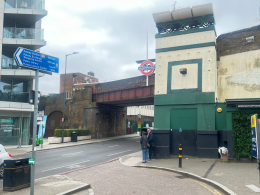

What of the tube/water bridge?…..tfl owned? Just as important for connecting south of the Thames residents Z
“Between them, the two closures have pushed thousands of extra vehicles a day onto Putney Bridge.” Sorry, but this is *completely wrong*. For whatever reasons, and the issue is complex, the number of vehicles is significantly fewer now: “Putney traffic volumes crossing Putney Bridge in 2024 were actually lower than in 2018, before Hammersmith Bridge closed. Some 37,313 vehicles crossed daily in 2024 compared to 42,498 in 2018, a reduction of over 5,000 vehicles per day” as revealed in, er, Putney News in February (https://putney.news/2026/02/10/council-buries-the-truth-even-with-fixes-traffic-is-twice-as-bad-with-new-junction)
Furthermore, the evidence cited supposedly claiming that “16% more than in 2020 according to DfT data cited by Wandsworth Council” is completely meaningless, since the 2020 figure was hugely depressed by the restrictions imposed by Covid. This claim from the Council was one of the most egregious pieces of data presentation that I’ve seen in an entire career devoted to data analysis and presentation.
They also used it to claim, again falsely, that crossings had been boosted by the closure of Hammersmith Bridge which, of course, occurred before 2016!