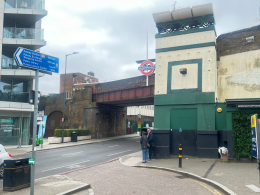
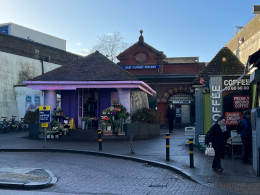
The District Line lost service again last week. A signal failure at Southfields suspended trains between Parsons Green and Wimbledon, leaving commuters at East Putney and Putney Bridge relying on buses and South Western Railway connections. It was, by any measure, a routine week on London’s least reliable major Underground line.
Then something unusual happened. Paul Kohler, the MP for Wimbledon, wrote to his constituents with what appeared to be a breakthrough. Network Rail had confirmed, he said, that it now had funding to modernise the signalling system on the Wimbledon and Richmond branches. Work would begin within months. The target completion date was early summer 2026.
We put Network Rail’s claimed commitment to them directly. Their response described a signalling system operating “safely and reliably”, with no full renewal scheduled.
Both statements cannot be true.
What the MP told his constituents
Kohler’s email, sent to constituents on 3 March 2026, described what he called meaningful progress after six years of what he termed “obfuscation” from Network Rail. He wrote that Network Rail had confirmed it now had funding to modernise the “outdated local signalling system,” with work “due to take place over the next few months” and improvements “should hopefully be in place by early summer.”
Kohler was careful to add caveats. He called himself “cautiously optimistic” and said he was “finally beginning to get somewhere,” but acknowledged the need to “keep pressing central government.” He noted that automatic train management (the system that allows trains to run more frequently and reliably) would still be absent after the work was complete, and that a full overhaul had been “dropped during Covid because of very high cost (running into hundreds of millions of pounds) and technical complications.”
The email nonetheless represented the most concrete claim of Network Rail commitment that any elected official had publicly made on this issue in years.
What the two organisations said
Putney.news approached both Network Rail and TfL with questions about the signalling work, its scope, and the timeline Kohler had described.
Network Rail’s spokesperson responded: “Over the last few years we have kept the signalling system on the Richmond and Wimbledon branches of the North London Line operating safely and reliably. While these assets are not scheduled for full renewal, we continue to monitor performance and repair or replace equipment if their condition or reliability changes.”
The statement does not mention funding for modernisation. It does not mention a timeline. It describes the signalling as operating reliably on a line that has delivered good service only 69% of the time over the past year, and which was part-suspended the same week for a signal failure at Southfields.
TfL’s press office replied that signalling questions on the District Line’s western branches were “best answered” by Network Rail, noting that the area is managed by Network Rail as it is shared with the national rail network. It is the same answer TfL has been giving since 2020.
The line that was left behind
To understand what is at stake, it helps to see where the District Line sits on the network.
London Underground’s bottom three, ranked by 12-month reliability to March 2026:
| Rank | Line | Reliability (12 months) | Upgrade status |
|---|---|---|---|
| 17th of 19 | District | 69.0% | No upgrade programme. No funded plan. No committed date. |
| 18th of 19 | Central | 64.7% | Refurbishment underway. New trains in long-term queue. |
| 19th of 19 | Piccadilly | 62.4% | New trains ordered from Siemens. Delayed but funded and contracted. |
Source: TfL status data via tubenotifications.co.uk, drawing from the TfL Unified API. Figures represent percentage of operational time with “Good Service” reported, March 2025 to March 2026.
The Piccadilly is getting brand new trains (a £3.4bn programme, contracted with Siemens, delivering its first trains in 2027). The Central Line is mid-refurbishment. The Bakerloo, though not in the bottom three, is running on 54-year-old rolling stock and has an option to order new trains from the same Siemens contract; a funding decision is expected this year. When each of those upgrades is delivered, those lines will improve. The District will not. It will be left alone at the bottom, not by accident, but because of a decision made six years ago that nobody has reversed.
The 2020 decision
The Four Lines Modernisation programme was designed to fix exactly this kind of problem. The £760m scheme brought new automatic signalling (known as CBTC) to the Circle, District, Hammersmith and City, and Metropolitan lines. Better signalling means fewer failures, fewer delays, and more frequent services.
But in 2020, TfL quietly removed the District Line’s Richmond and Wimbledon branches from scope. The reason: those sections run on infrastructure managed by Network Rail, not TfL. TfL operates the trains but does not control the signals. When signals fail, two organisations must coordinate repairs, a slow, complicated, and expensive process.
TfL’s Major Projects Director at the time, Stuart Harvey, said in December 2020 that it was “sensible to wait for Network Rail to resignal those shared sections of line.”
A TfL Board Paper from June 2024 confirmed what six years of waiting had produced: the Richmond and Wimbledon branches “will remain under the existing signalling.” Not temporarily. Not until Network Rail acts. They will remain.
Putney.news documented the consequences in September 2025: Signal W361 at East Putney is the single most problematic signal on SW London’s transport infrastructure. The District Line accounts for 25% of all London Underground signal failures despite being one line. Between 2015 and 2018 alone, 1,192 signal failures were recorded, with the worst cluster in the East Putney area. Last week’s Southfields failure was the latest in a sequence that shows no sign of ending.
What happens next
As the Piccadilly receives its new trains, its reliability will improve and it will rise up the table. As the Central’s refurbishment accelerates (currently badly behind schedule, with only four of 71 trains refitted by the start of this year) it too will improve. If the Bakerloo funding is confirmed, it will improve as well.
The District will not. It has no programme. No funding. No contract. No committed date from Network Rail for the resignalling that TfL has been waiting for since 2020.
The Mayor’s office wrote to Network Rail in July 2025, describing frustration at recent disruption. There is no evidence of a response that committed to anything. Now Network Rail’s own press statement describes the signalling as operating “safely and reliably” on the same infrastructure that produced last week’s suspension and 25% of all Underground signal failures.
What would have to change
Two things could alter this trajectory.
The first is a commitment from Network Rail to a specific date and a funded plan for resignalling the Richmond and Wimbledon branch sections. Kohler’s email suggests he believes that commitment exists. Network Rail’s press statement, issued this week, does not support that reading.
The second is a political decision to force the issue, from the Mayor, from government, or from both. That would require the kind of sustained pressure that has so far produced letters but no results.
Putney has 6.2 million passengers through East Putney station every year. Wimbledon and Richmond branches carry many more. The people who depend on this line are being told, in effect, to wait while every other failing service gets fixed around them.
This is the start of a campaign
Putney.news is treating this as the beginning of sustained coverage, not a one-off story.
We have submitted Freedom of Information requests to both TfL and Network Rail, asking for all written communications between the two organisations about signalling on the Richmond and Wimbledon branches since 2020, any internal assessments of the District Line’s reliability trajectory, and the written basis for any commitments Network Rail may have given to local representatives. We are also asking for branch-by-branch reliability data, since the Richmond and Wimbledon branches may be performing significantly worse than the District Line’s overall figures suggest.
We will ask our local MPs what they intend to do. A campaign group in Wimbledon is already organising on this issue and we will connect with them.
If you use the District Line and want to share your experience, get in touch. We want to hear from commuters in Putney, East Putney, Richmond, and Wimbledon. Your experiences will inform our ongoing coverage. Contact us at news@putney.news.
The only question now is whether Network Rail’s statement this week represents the full picture, or whether the commitment Wimbledon’s MP described to his constituents exists somewhere in writing. Our FOI requests are designed to find out.