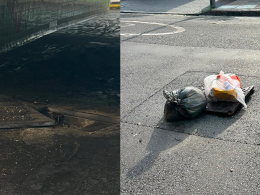
Putney Embankment’s riverside park has been closed behind wire fencing for at least three weeks with no public explanation, raising questions about whether the £4.5 billion Thames Tideway super sewer is experiencing operational problems just months after becoming operational.
The closure of the 500-square-metre public space comes as Thames Water battles a fatberg epidemic in London’s Victorian sewer network, with two 100-tonne blockages discovered in October and December requiring weeks of clearance work.
Maintenance crews have been observed regularly descending 36 metres down the vertical access shaft that connects the old Putney Bridge sewer overflow to the new super sewer tunnel below. A sanitation engineer on site described the work as “routine maintenance” but could not provide any timeline for when the area would reopen.
The extended closure stands in stark contrast to Tideway’s public celebrations this month, which have included a “year to remember” announcement highlighting the system’s achievements, whilst the company’s website continues to incorrectly list Putney Embankment as “now open”.

The closure and what’s known
The entire park area has been cordoned off since early December, with wire fencing preventing access to what was previously a public riverside space featuring granite paving, seating areas and bronze artworks commemorating the University Boat Race.
During a site visit two weeks ago, a maintenance crew was conducting work that required winching personnel vertically down the person-sized access shaft. When asked about the timeline, the sanitation engineer said the work would take “certainly not one day” and possibly “several days”, but could not be more specific.
The engineer confirmed that conditions in the sewer system “can get pretty grim” but noted that the new infrastructure is “much less worse than the old sewers”, adding that the Hammersmith site is “far worse” by comparison.
A few days later, the closure was expanded to encompass the entire park rather than just the immediate area around the access shaft, suggesting more extensive work than initially indicated.
The closure has displaced at least one homeless resident who had been living in a tent on the park area and has now set up on the adjacent pavement.

Context: the super sewer and fatberg crisis
The Thames Tideway Tunnel became operational in January 2025 after nearly a decade of construction. The 25-kilometre tunnel runs beneath the Thames, designed to intercept sewage overflows from the Victorian sewer network that would otherwise spill into the river during heavy rain.
At Putney, a 36-metre-deep shaft connects the Putney Bridge Combined Sewer Overflow to the main tunnel beneath the Thames. This connection point, which previously discharged an average of 68,000 tonnes of untreated sewage into the river annually, now diverts flows into the super sewer for treatment at Beckton.
The new system connects directly to the old Victorian sewers, which Thames Water acknowledges are struggling with serious blockage problems. The company clears 75,000 blockages annually at a cost of up to £40 million per year, with fats, oils and grease causing 28 percent of all blockages.
In October, Thames Water removed a 100-tonne fatberg from Feltham, describing it as 125 metres long and taking more than a month to clear. In December, another 100-tonne fatberg was discovered in Whitechapel, which the company said would take “weeks to complete” removal.
Thames Water launched a prevention campaign in November, revealing that blockages cause internal flooding in homes and contribute to river pollution. The company removes 3.8 billion wet wipes from its network annually, at a cost of £18 million per year.
Questions about timing and transparency
The Putney Embankment closure raises several unanswered questions about the intersection between the old Victorian sewer network and the new super sewer infrastructure.
If blockages in the old sewers feeding into the new tunnel are as severe as Thames Water indicates, could this affect connection points like Putney? Is the extended closure related to accessing or clearing blockages in the old system through the new shaft? Or is there a problem with the brand new infrastructure itself?
The lack of transparency from Tideway is particularly striking given the company’s communication pattern throughout 2025. When opening new public spaces, Tideway has issued press releases, hosted ribbon-cutting ceremonies with VIPs including members of the Royal Family, and celebrated milestones including opening the London Stock Exchange after issuing the UK’s first corporate blue bonds.
On December 24, Tideway published a “2025 – a year to remember” announcement highlighting achievements including the system capturing 13 million tonnes of sewage and the opening of multiple new public spaces. The announcement made no mention of the Putney Embankment closure.
The company’s website continues to list Putney Embankment Foreshore under its “Open Spaces” section with the status “Now open”, despite the site being inaccessible to the public for at least three weeks.

System acceptance and handover
The Tideway project is currently in what the company calls a “system acceptance period” running until 2027, during which the infrastructure undergoes testing before full handover to Thames Water for long-term operation.
It remains unclear whether the extended Putney closure is related to acceptance testing, operational issues identified during the acceptance period, problems with the mechanical and electrical equipment installed to make the system run smoothly, or maintenance requirements for the old Victorian sewers that connect to the new infrastructure.
The Tideway website acknowledges that closures may be necessary, stating “there may be times where we need to work outside of these hours if our work is affected by the tide times” and noting they “may also need the occasional period when we need to close part or all the area while we undertake testing work for the sewer.”
However, the site provides no information about how frequently such closures will occur, how long they typically last, or how the public will be notified.
What residents are paying for
Thames Water customers are funding the £4.5 billion super sewer through bill increases of up to £25 per year. The system is designed to last at least 120 years and serve a population expected to double by 2160.
Putney Embankment was the first of seven new riverside public spaces created as part of the project, opening in September 2023 with significant publicity. The park was built above the infrastructure using Cornish granite from the same quarry used to construct Putney Bridge nearly 140 years ago.
The space features three artworks by Glasgow-based artist Claire Barclay, including bronze oars forming handrails and a bronze marker for the University Boat Race start line. It was designed to reconnect Londoners with the Thames and provide new vista points along the riverside.
Residents who helped fund this infrastructure through their water bills have received no explanation for why the public space sits inaccessible during the Christmas period, with no indication of when it will reopen.
Putney.news contacted Tideway’s press office, Thames Water, and Wandsworth Council on December 25 and 26 requesting information about the closure. We will update this story if responses are provided.