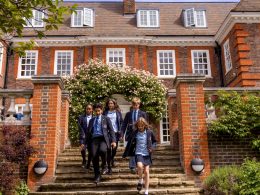
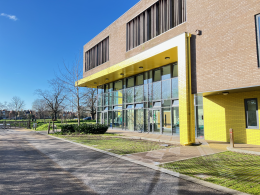
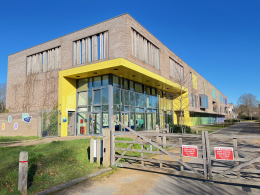
Oasis Putney has confirmed it will close this summer – click for more.
Putney will need to lose up to 90 primary school places in the next four years as Wandsworth’s school funding crisis spreads across the borough, according to papers published for today’s Schools Forum.
The documents [pdf] reveal that four primary schools have now closed since 2023 – Broadwater, Christchurch, St Anne’s and Goldfinch – and that at least one school has shrunk so far it now combines year groups in single classrooms.
For the first time, officers have spelled out exactly where the cuts must fall. And Putney is in the firing line.
The new papers are explicit: Putney and the Thamesfield area must lose two to three forms of entry by the end of the decade.
In plain terms: 60 to 90 fewer Reception places each September. Oasis Putney has already been capped. The council is “in discussions” with another school about reducing its intake.
Council projections show Reception numbers falling across all three Putney-area planning zones:
| Area | 2024/25 (actual) | 2033/34 (projected) | Change |
|---|---|---|---|
| Putney/Thamesfield | 174 | 164 | -10 (-6%) |
| Roehampton/West Putney | 185 | 170 | -15 (-8%) |
| Southfields/West Hill/East Putney | 329 | 307 | -22 (-7%) |
The cuts required are larger than the population decline because schools need viable class sizes – at least 26 pupils per class to function properly – not just fewer empty seats.
In Roehampton, Granard Primary’s Reception intake has been cut from 90 to just 30 – a two-thirds reduction. Heathmere is consulting on shrinking from 45 to 30. Officers warn further cuts “may be required.”
Even Southfields and West Hill, where applications actually rose slightly, face losing one to two classes of places.
The children who need the most
One exchange from October’s meeting captures a reality the statistics obscure.
When a child has special educational needs severe enough to require an Education, Health and Care Plan (EHCP), the council must find them a suitable school place. Officers told the forum that placements now sometimes require “10 or more attempts to place a child in the borough” before giving up and paying for expensive independent provision.
Wandsworth has 27 percent more children with these plans than comparable London boroughs. Whether that reflects better identification or greater need, the result is the same: a system stretched beyond capacity, with families caught in the middle.
The budget to support these children is £13.9 million in deficit and growing.
Why it’s happening
The dynamic we identified in October continues. Families who can afford to leave – for private schools, for other boroughs, for outside London – are leaving. Families who cannot afford to leave, plus newly-arrived refugees, remain.
Total pupil numbers fall. But the proportion needing Free School Meals climbs. Schools lose funding as pupils depart, but cannot cut costs at the same rate because most of their budget is staff salaries. As we reported in October, a school that loses 30 pupils loses £136,000 in funding but can only save £45,000 by cutting one teacher.
The December data offers one small glimmer: the rate of decline in primary schools has slowed slightly, from 2.3 percent to 2.1 percent. Officers describe this as the decline “slowing following years of decline” – a long way from recovery, but perhaps no longer accelerating.
Secondary schools are a different story. They are now losing pupils faster than primaries – and the January meeting will reveal whether that trend has worsened.
What comes next
The Schools Forum meets Monday to discuss how to divide a shrinking pot of money. In January, they will see the final census figures showing exactly how many children remain in Wandsworth schools.
Those numbers will determine which schools stay viable and which face further cuts. Officers have been clear that closure remains “a last resort” – but four schools have already closed, and the papers warn more reductions are coming.
For parents in Putney choosing a Reception school for September 2026, the question is no longer abstract. The local school that seemed a safe choice may not look the same in five years. It may not be there at all.