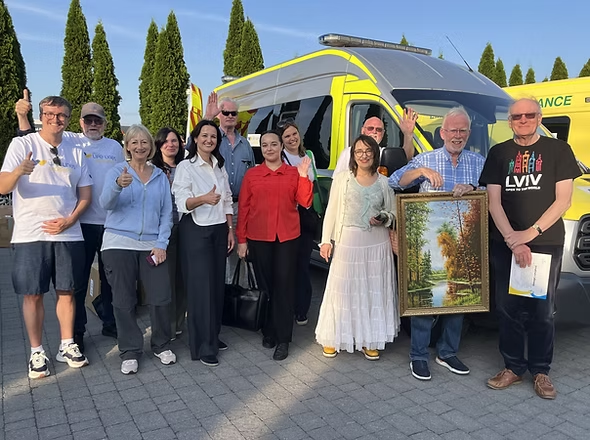
Jonathan Callaway sits across the table at Harvey’s Bakehouse, still processing a profound experience. Just four days after returning from his second humanitarian mission to Ukraine, the local volunteer says delivering ambulances directly to front-line hospitals was unlike anything he’s ever done – and the stories he heard there will stay a long time.
“It feels like there’s something tangible you can actually do,” Jonathan explains, reflecting on why he chose to drive an ambulance 1,250 miles across Europe rather than simply donate money. “You can give £50 to Ukraine, but there’s something real about meeting the people who’ll use it and hearing what they plan to do with it.”
Thanks to community support, Jonathan raised over £12,000 for Medical Life Lines Ukraine, with more than 100 individual donors backing his mission. But this time was markedly different from his first convoy two years ago. Where he previously settled back into Putney life fairly easily, Jonathan says he’s still unwinding from what proved to be a much more emotional and powerful experience.
The difference, he explains, lies in the deeper connections formed and the more harrowing stories heard from recipients who shared intimate details of their daily reality treating casualties and recovering the injured from bombed buildings.
Front-line reality
The convoy of five volunteer drivers – each driving ambulances packed floor-to-ceiling with medical supplies, defibrillators, and emergency equipment – traveled smoothly along motorways through Belgium and Germany. The journey became more complex only when reaching the Ukrainian border, where paperwork, security checks, and the sobering reality of entering an active war zone becomes unmistakably clear.
“They make no bones about telling you that any insurance you think you have doesn’t exist in a war zone,” Jonathan admits, but emphasizes that the actual driving remains manageable for anyone comfortable with motorway travel and larger vehicles.
Four ambulances were successfully delivered to Ukrainians, many of who had traveled from active combat zones to collect them. In addition to receiving life-saving equipment, many of them also got a few much-needed days of rest and relaxation before returning. One search and rescue team, newly equipped with hydraulic cutting tools for extracting people from bombed buildings, drove their new 4WD vehicle straight back to the front line after briefly sharing their daily reality with the volunteers.
Harrowing testimonies
The most profound moment came during the formal handover dinner in Lviv. Jonathan’s ambulance went to a rehabilitation centre for wounded veterans. The centre plans to either use it to transport patients who have lost limbs, taking advantage of the plush seating for their comfort (it had formerly been used for transporting NHS VIPs).
Jonathan found himself listening to testimony from the centre’s director – a former prisoner of war who spent two years in Russian captivity.
“How he was treated was appalling and degrading. Almost literally inhuman,” Jonathan recalls of the ex-POW’s testimony, the impact still evident. The centre is just one facility trying to cope with Ukraine’s overwhelming casualties – another recipient hospital specialises solely in treating limb loss injuries and has already helped over 18,000 victims.
Among the specialised medical equipment Jonathan delivered were several skin grafting devices – remarkable pieces of technology that can cut precise squares of healthy skin for grafting onto wounded areas of the same patient. The recipients explained its crucial importance in treating burns and traumatic injuries that have become tragically common in the conflict.
Between the formal proceedings, the volunteers managed a brief tour of Lviv’s historic center, including a visit to the local “Church of Tears” where hundreds of fallen soldiers and civilians are commemorated. “There’s a Church of Tears in every town and village,” Jonathan notes quietly. “Seeing the pictures of children who’d lost their fathers, and the messages they left for them, was especially heartbreaking.”
Despite the ongoing conflict, life in Lviv continues with surreal normalcy – children playing in fountains, people eating ice cream, busy cafés and bars. The most visible signs of war protection are the boarded-up church windows, covered specifically to protect ancient stained glass from potential blast damage. Otherwise, subtle changes reveal the conflict’s presence: drone jammers are now mounted on many vehicles, noticeably fewer young men are on the streets. Air raid sirens, Jonathan observed, are often simply ignored by residents carrying on with their daily routines.
“You wouldn’t really know that the war was going on there,” Jonathan reflects, describing the cognitive dissonance of normal life continuing mere hours from active combat zones.
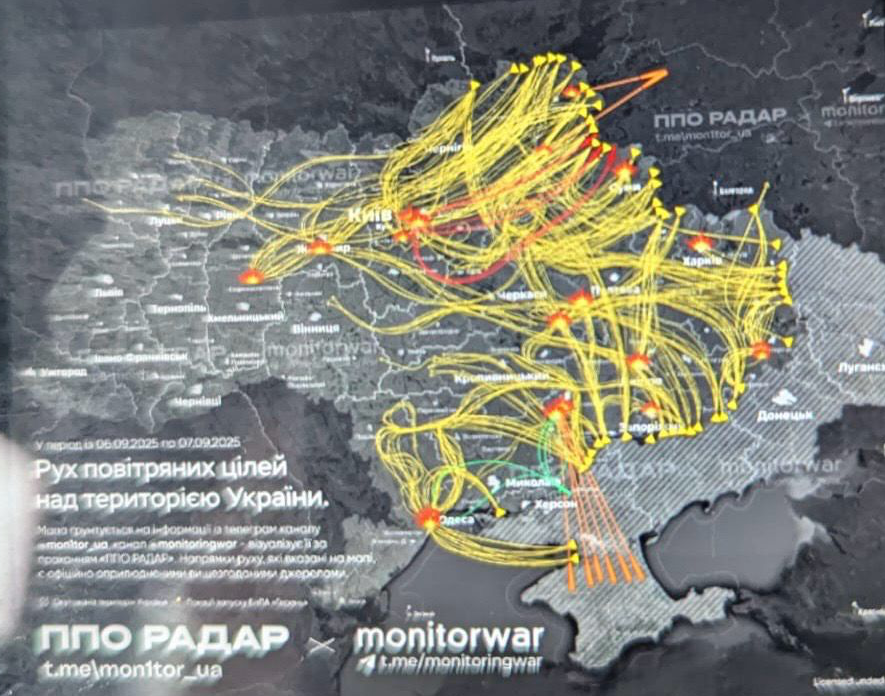
Some things were not normal though: he shows screengrabs of widely used mobile phone apps in Ukraine: one sends out alerts whenever the airspace is invaded by Russian drones or missiles (“it was constantly going off”); another shows a map of those attacks across the country in which most of the east of the Ukraine is subsumed by yellow arrows.
Community connection
Jonathan’s path to this life-changing experience began in the most Putney way possible – through a neighbour’s note on the Luttrell Avenue WhatsApp group explaining why there was no cause for alarm despite the appearance of several ambulances on the quiet West Putney street.
The charity was founded by a Wimbledon woman whose Ukrainian doctor husband was conducting research in the UK when the war broke out. Within weeks of the invasion, they had organised funding, sourced their first ambulance, and established the logistics for what would become regular convoys.
The organization has since grown into a sophisticated operation, with established relationships with Ukrainian hospitals, standardized ambulance specifications, and a network of volunteer drivers who’ve completed multiple missions. Each convoy typically comprises 4-6 vehicles, with drivers paired for safety and companionship during the long European journey.
The practical requirements are significant but achievable. Each driver must raise at least £7,000 to cover purchasing and equipping a second-hand ambulance that’s then fitted with medical equipment, oxygen systems, and emergency supplies. Jonathan secured backing from neighbours, colleagues, local businesses, and even strangers who heard about his mission.
Many of the ambulances are standard-sized vehicles similar to Ford Transits, which he describes as “incredibly easy to drive” and requiring only a standard UK driving license. A C1 license – which allows operation of vehicles up to 7.5 tonnes – is needed for the largest vehicles like mobile operating theatres, and the organisation is looking for drivers that have it. The C1 involves straightforward health and vision tests but requires no additional driving instruction, making it accessible for most potential volunteers.
One of the vehicles broke down in Belgium and is currently still stranded there, highlighting both the logistical challenges and ongoing funding needs. This particular vehicle – a large, 20-year-old former medical station used at outdoor events with only 20,000 miles on the clock – had been specially converted into a mobile operating theatre.
The loss is particularly poignant as surgeons in Lviv are waiting for their new mobile surgical unit to arrive so they can put it into immediate use treating wounded soldiers and civilians. The charity is working urgently to secure the £2,000 needed for repairs and arrange transport to get this crucial operating theatre to the medical professionals who desperately need it.
Lasting bonds
What emerges most powerfully from Jonathan’s account is how the experience forged profound connections – both with fellow volunteer drivers and Ukrainian recipients. The shared purpose and emotional intensity have left him still processing the experience.
“It was a physically tiring but emotionally powerful experience,” he reflects, describing how the shared intensity of the mission created unexpected bonds between drivers who were strangers at the start. They are already planning meet-ups and submitting applications for the November convoy. The ripple effect extends beyond his immediate circle – word is spreading through Putney’s networks of community-minded residents.
Getting involved
Medical Life Lines Ukraine needs more drivers. It has briefing sessions scheduled throughout October for anyone interested in learning more. The organisation provides comprehensive preparation including route planning, border procedures, and preparation for war’s realities.
Jonathan’s experience demonstrates that this mission is achievable for ordinary Putney residents willing to step outside their comfort zone.
The Ukrainian recipients were especially moved that each driver had found over 100 individual supporters, transforming what could have been anonymous charity into personal community connections spanning countries. “Just knowing we had such support behind us was a lift to their morale,” Jonathan explains.
For anyone wondering whether they could make such a journey, Jonathan offers both honesty about the challenges and unwavering conviction about the rewards: “It’s worthwhile. I would do it again.”
Medical Life Lines Ukraine is actively recruiting drivers. The organisation provides full briefings about requirements, risks, and logistics. The charity also needs £2,000 to repair the ambulance that broke down in Belgium. More information and donation links available at https://www.medicallifelines.org.uk/