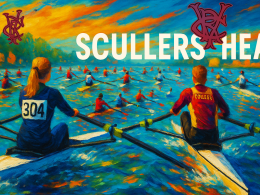
Thames scullers will soon be able to race their way from the world’s oldest sporting competition to the “Championship of the Thames” following a new agreement between three of London’s most prestigious rowing events.
Vesta Rowing Club has announced that winners and top performers at their Scullers’ Head will now have direct entry routes to both Doggett’s Coat & Badge and the Wingfield Sculls, creating the first formal competitive pathway between these historic races.
The collaboration marks a significant shift for Thames sculling, where these three events have operated independently despite sharing the same stretch of river for decades – a river that will showcase the breadth of rowing competition when nearly 300 crews tackle Europe’s biggest river race just days later.
Breaking down barriers
Under the new arrangement, the winner of this week’s Doggett’s Coat & Badge race, Coran Cherry, will earn automatic entry to Vesta Scullers’ Head. The race is the 311th running of the competition dating back to 1715.
The partnership works both ways. Top male and female scullers at VSH who meet eligibility requirements will receive invitations to October’s Wingfield Sculls, which has crowned Thames champions since 1830.
This creates an unusual dynamic where a 21st-century head race now serves as both destination and stepping stone for competitions that predate it by centuries.
A river in motion
The alliance announcement comes at a particularly vibrant time for Thames rowing. Next Saturday 20 September, the Great River Race will see nearly 300 crews tackle 21.6 miles from London Bridge to Ham, passing under 28 bridges including Putney, Hammersmith and Barnes.
The event, which launched in 1988 with just 61 boats, now attracts competitors from across the UK, USA, Australia, and Europe in fixed-seat boats with passengers and cox – a stark contrast to the solo sculling events now formally linked through the new alliance.
The alliance brings together events with vastly different characters. Doggett’s remains the preserve of Thames watermen competing in traditional racing boats, while the Wingfield Sculls attracts elite international rowers in modern racing shells. VSH, founded in 1954, bridges both worlds as a mass-participation event that draws hundreds of scullers each year.
The collaboration appears designed to strengthen all three events at a time when traditional rowing faces increasing competition for participants and public attention, even as events like the Great River Race demonstrate the enduring appeal of Thames-based competition.
Reviving lost traditions
The challenges facing Thames rowing are perhaps nowhere more evident than with the Putney Town Regatta, a historic local event that organizers are desperately trying to revive for 2026 after years of absence from the river.
Committee members recently saw their latest revival scheme fall through, leaving them scrambling for new approaches to resurrect what was once a cornerstone of Putney’s rowing calendar. The regatta’s struggle to return highlights the broader difficulties facing grassroots rowing events, where volunteer shortages and organizational challenges threaten to permanently erase decades of tradition.
While the alliance between the three historic sculling competitions offers hope for elite-level rowing, the fate of community events like Putney Town Regatta underscores the urgent need for local support to preserve Thames rowing heritage at every level.
Historical precedent
Vesta has form when it comes to Wingfield success. Club member HT Blackstaffe dominated the event in the early 1900s, winning five times between 1897 and 1908 before claiming Olympic gold in single sculls. His achievement remains one of the standout individual performances in Thames sculling history.
The partnership could revive interest in sculling on the Thames, where the sport has ancient roots but faces modern challenges. By creating clear pathways between events, organizers hope to attract new competitors while preserving the distinct traditions that make each race unique – contributing to a Thames rowing calendar that spans from historic watermen’s competitions to Europe’s largest river race.