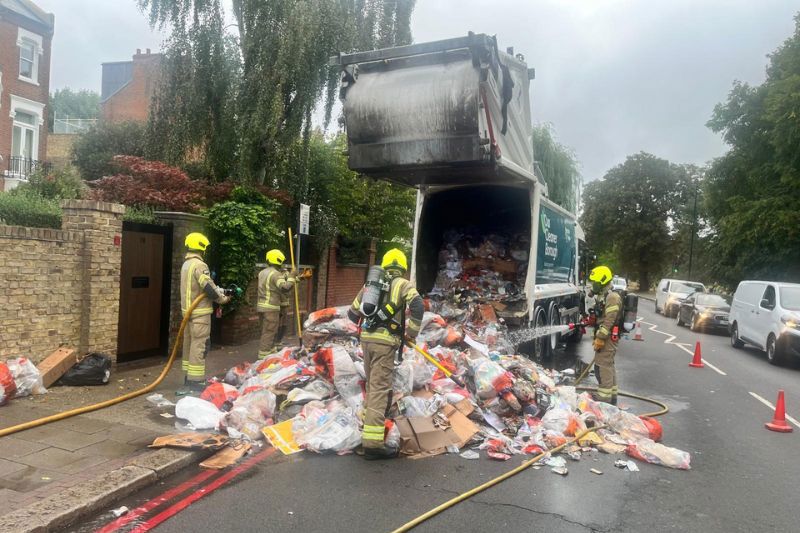
A small lithium-ion battery put out in recycling caused a fire in a Wandsworth Council waste truck yesterday, highlighting the growing danger the ubiquitous power sources pose to waste workers and the public.
Crews spotted the smoke just after 7am and called the fire brigade who arrived and put out the blaze. The council says although no one was injured, the truck was significantly damaged.
The incident required firefighters to dump the burning contents of the truck onto the street to stop the fire from spreading to the entire vehicle. The dramatic scene underscores a nationwide issue that waste management experts say is becoming increasingly dangerous.
A growing threat to public safety
The number of waste truck fires that were either caused or likely caused by discarded lithium-ion batteries increased from just 1 in 2017 to 28 in 2023. It’s a global phenomenon that gets worse among local communities who use modern consumer electronics the most: so far this year, there have been 23 such fires in New York City alone, while last year, 65% of waste facilities fires in California began with lithium-ion batteries.
How does it happen? The physical damage of compaction of a lithium-ion battery causes a rapid, uncontrolled increase in temperature known as thermal runaway. In this case, it resulted in a fire that quickly spread to the rest of the truck’s contents. Battery fires can reach temperatures of nearly 1,000 degrees Celsius – hot enough to melt some metals – and that intense heat can ignite everything else, including more batteries if they are in close proximity.
The fires pose serious risks to waste collection crews. “The intensity of the heat is like nothing else you’ve seen before,” Adam Mitchell of waste management company Boro-Wide explained in an interview last year when a similar incident shocked New Yorkers.
Hidden in plain sight: the lithium battery revolution
The danger stems from the explosion in everyday items powered by lithium-ion batteries. They are used in everything from electronics and toys, to wireless headphones, handheld power tools, small and large appliances, electric vehicles and electrical energy storage systems.
Common household items containing these batteries include:
- Mobile phones and tablets – The most ubiquitous devices in nearly every household
- Laptops and digital cameras – Essential for work and entertainment
- Power tools and garden equipment – From drills to electric lawnmowers
- Personal care devices – Electric toothbrushes, hair clippers, and fitness trackers
- Smart home devices – Security cameras, doorbells, and smart speakers
- Children’s toys – Remote control cars, electronic games, and educational tablets
- Kitchen appliances – Handheld vacuum cleaners and coffee grinders
- Transportation – E-bikes, e-scooters, and hoverboards
With their unmatched combination of energy density, lightweight design, and rechargeability, they’ve become indispensable. However, any swelling indicates damage to the battery and is a potential fire hazard when improperly handled or disposed of.
Safe disposal: where Wandsworth residents can recycle
All retailers must provide free recycling collection points for used batteries if they sell over 32kg of batteries each year (roughly equivalent to one pack of 4 AA batteries per day).
Local battery recycling points for Wandsworth residents include:
- All Wandsworth libraries
- Wandsworth leisure centres
- The council’s Customer Centre on Wandsworth High Street
- Battersea Park office and Wandsworth Common office
- Wilditch Community Centre office
- Smugglers Way Household Waste and Recycling Centre (HWRC), with a separate container for Batteries in Recycling Bay A
Major retailers including supermarkets, electronics stores like Currys and Best Buy, and home improvement stores such as B&Q and Homebase are legally required to accept battery returns.
Prevention and safety guidelines
To prevent similar incidents, the EPA and fire safety experts recommend that you:
- Never dispose of lithium-ion batteries in regular household rubbish or recycling bins
- Tape battery terminals with electrical tape to prevent short circuits
- Remove batteries from devices when possible before recycling
- Look for warning signs: swelling, leaking, overheating, or unusual odours indicate a damaged battery requiring immediate safe disposal
- Store safely in cool, dry places away from flammable materials
If you think you have an imminent risk of fire, you may need to call 911.
The Wandsworth incident serves as a stark reminder that in our increasingly electronic world, proper battery disposal isn’t just an environmental concern – it’s a public safety imperative that could save lives and prevent property damage.
For more information on battery recycling in Wandsworth, visit the council’s recycling A-Z guide or call the Customer Centre on 020 8871 6000.