Wandsworth Council has issued a new statement promising “more improvements” to the controversial road layout at the junction of Putney High Street, Putney Bridge Road and Lower Richmond Road — but the message offers little of substance and fails to address the fundamental design flaws that are making daily life in Putney increasingly difficult.
The update repeats previous assurances that it is “listening” and working with Transport for London (TfL) to improve traffic flows. But it contains no new action and deflects attention away from the root cause of the problem: a flawed and overcrowded road layout that has made Putney’s streets less safe, less accessible and more polluted.
The statement follows a packed public meeting of the Putney Action Group (PAG) the previous week, where residents from across the area spoke of the growing impact of congestion on their health, mobility, and sense of community — and demanded that the council stop blaming traffic lights and start reviewing the road design itself.
Familiar promises, delayed timelines
The council outlines a series of updates it says have already been delivered, including installing TfL traffic sensors, adjusting light timings, extending bus lane hours and amending road markings. It also claims enforcement against illegal loading has been stepped up.
In terms of future action, the statement sets out four areas of work, all with vague or delayed timelines:
- TfL is said to be working on improving light synchronisation to allow vehicles to clear the junction more efficiently. This is due in autumn 2025.
- The council is also working with TfL to give vehicles turning left from Lower Richmond Road more time to pass through on green lights. Also due autumn 2025.
- Further junction changes are being “explored” using updated traffic data, but no commitments are made and implementation is pegged to winter 2025 “if proven to help.”
- A review of bus stop locations and driver changeover points is described as “work in progress,” with no set timeframe.
Many of these measures had already been discussed in the spring or earlier. The traffic light adjustments, in particular, have been the subject of multiple trials over the past year, with locals reporting minimal impact.
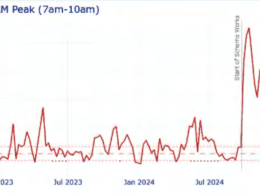
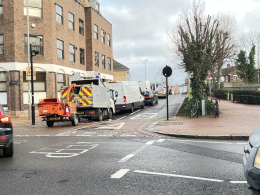
For many, the issue is not the sequencing of the lights but the design itself — which has reduced the number of lanes and created a huge junction space in a confined area that cars are not allowed to sit in, creating congestion and gridlock, often at unpredictable hours.
Frustration over timing and messaging
Many residents expressed frustration that the council continues to avoid acknowledging the layout as a problem, instead pointing to external factors such as roadworks elsewhere in the borough or historic air pollution levels.
The announcement reiterates that the junction design was approved by TfL following traffic modelling, and suggests that traffic may improve over the summer holidays as roads quieten and nearby construction is completed. Residents see this as an evasion of responsibility.
There was also strong criticism of the council’s timeline. Despite promising a review in October, the update refers only to measures due in autumn or winter — raising fears that meaningful change will again be pushed back while residents are living with the effects of the scheme every day.
The fact that the council failed to attend the public meeting, where around 50 residents voiced concerns and over 800 survey responses were cited, has been seen as deeply disappointing.
One notable shift
The only apparent area of movement in the council’s update is an acknowledgement that bus stop locations and driver changeover points may be worsening congestion.
This is a point that residents have raised repeatedly, particularly in relation to the bus stop outside the Odeon cinema and the driver changeover point next to Kenilworth Court. Both locations are known to cause tailbacks as buses wait or change crews in already congested lanes.
Residents have long argued that these operational practices are compounding the design problem, and will welcome the fact that the council now appears to be engaging with TfL to consider changes.
The fact that this was not publicly recognised sooner — including at a recent council meeting where Putney’s traffic and the junction design was a main topic of conversation — and why it was buried near the bottom of a lengthy and defensive statement is only reinforcing a sense that the council is not taking local concerns sufficiently seriously.
Air quality claims dismissed
The council also used the update to highlight improvements in air quality, stating that pollution in Putney High Street is now within legal limits thanks to cleaner buses and vehicles. However, residents say this fails to capture the lived experience of congestion-induced emissions in recent months.
Several people at the PAG meeting described the current level of traffic as “unbearable” and said the air “smells and feels polluted,” especially during rush hour.
Calls have been made for more detailed, junction-specific air quality data and a clearer explanation of how the council monitors changes since the road scheme was introduced.
The Putney Society, which has campaigned on the issue of air pollution for over a decade, during which it has pressured the council and TfL to act, noted at the recent public meeting that both arguments can be true: pollution falling on the High Street (thanks to the removal of diesel buses) while at the same time rising on side streets because of increased congestion.
Residents want a proper review — now
Putney residents continues to call for a full and independent review of the scheme, based on real-world impacts, not just traffic models. The Putney Action Group’s community survey remains open until the end of July, and a report summarising resident concerns and proposed solutions is expected in August.
The group has said it will escalate pressure if no meaningful response is received — including the possibility of legal action.
For now, residents say the council’s latest update does little to restore trust or provide relief. At the heart of things, the issue is clear: it’s about a road system that simply doesn’t work, and a community that feels ignored.