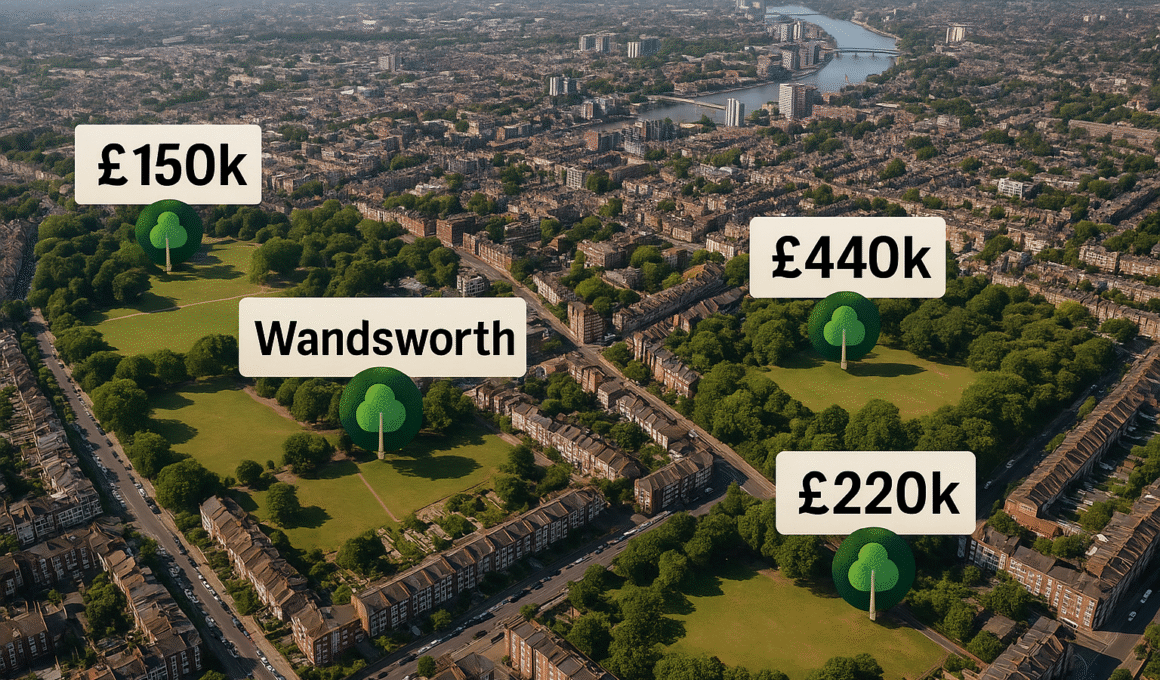
Wandsworth Council could bring in an estimated £1 million a year from its new policy to open up local parks for commercial events – but that windfall may come with serious costs: noise, damage to green spaces, and limited access for residents.
The figure includes projected income from both mid-sized local parks and the borough’s flagship Battersea Park, which is expected to generate a large share of the revenue if it’s brought into the new framework.
While other London councils have been transparent about their reasons for hiring out parks – namely, the need to plug budget shortfalls – Wandsworth has been far less forthcoming. That’s prompted criticism that the borough is chasing income under the radar, despite facing major financial pressures and a looming deficit.
How do we get to £1 million?
The new events policy divides park bookings into three categories based on attendance:
- Category A: Up to 2,499 people (e.g. fitness classes, small markets)
- Category B: 2,500–4,999 people (mid-sized ticketed events)
- Category C: 5,000–10,000 people (full-scale commercial festivals)
The policy allows most parks to host up to six Category B event days and four Category C event days every six months. Smaller Category A events are unlimited. One major exception is Wandsworth Common, which has been restricted to small-scale events only due to community feedback.
Based on fees charged by other boroughs for similar events, Putney.news estimates the following:
| Category | Estimated Fee per Event | Max Annual Event Days | Total Estimated Annual Income |
| A | £1,000 (average) | 30 events assumed | £30,000 |
| B | £10,000 | 24 events (4 parks — 6) | £240,000 |
| C | £25,000 | 16 events (4 parks — 4) | £400,000 |
That brings the total for Wandsworth’s smaller parks to around £670,000 per year.
Enter Battersea Park – the big earner
What pushes the estimate closer to £1 million is Battersea Park – the borough’s most prominent and profitable green space.
Crucially, Battersea has been excluded from the current events policy, with the council promising a bespoke policy later this year. The omission is no accident. Battersea Park has a complicated legacy: it hosted the controversial Formula E racing series in 2015–16, which reportedly earned the council £1 million per weekend but triggered a public outcry over noise, damage, and park closures. The races were eventually cancelled.
Still, Battersea Park remains a highly attractive venue for promoters. Even two or three large commercial events a year – such as festivals, funfairs, or brand-sponsored pop-ups – could bring in £200,000–£400,000, with other hires adding further income. If the council goes ahead with a more flexible commercial events policy there, the park could easily match or exceed the earnings from all other parks combined.
Combined with revenue from the rest of the borough, this pushes Wandsworth’s realistic annual income from park events to £1 million or more.
What other boroughs make
Other London councils have been open about the financial motivation behind commercialising their parks:
- Lambeth made nearly £1 million from events in 2019, with Clapham Common alone bringing in over £500,000. Lambeth says this income helps fund parks and frontline services.
- Haringey earns around £1.2 million a year from major events in Finsbury Park, including concerts like Wireless Festival. That revenue is ringfenced for park improvements.
- Tower Hamlets recently extended its deal with the organisers of All Points East in Victoria Park, increasing the number of permitted events. While exact figures aren’t disclosed, the borough has admitted it needed to “squeeze as much as we can” from its assets to cover budget gaps. Income is believed to be in the range of £750,000–£1.2 million annually.
These councils have faced their share of backlash – particularly over noise, litter, anti-social behaviour, and public access – but they’ve been honest about the trade-off: commercial events help plug holes in their budgets after years of cuts.
And what about Merton?
Wandsworth isn’t the only borough that’s been tight-lipped.
Merton Council has allowed large-scale festivals in Morden Park, sparking hundreds of noise complaints from residents. Despite this, it recently pushed through a permanent licence that removes the need for case-by-case consultation.
But unlike Lambeth or Haringey, Merton has not revealed how much money it’s making. No FOI disclosures, budget line items or clear public statement about how the income is used.
Why Wandsworth won’t say the quiet part out loud
Wandsworth Council has insisted the new events policy is about “managing demand” and “bringing vibrancy” to public spaces. But officials acknowledge that event income flows back into the council’s budget — and that more events mean more revenue.
So why not say so publicly?
One likely reason is political: Labour took over the council in 2022 after more than four decades of Conservative control. Campaigning as a party of transparency and community engagement, Labour now finds itself quietly commercialising public parks, just as other councils have done under pressure. But admitting it’s about money could look like an admission of financial mismanagement – or worse, broken promises.
The trade-offs are real
Whether it’s Clapham Common, Morden Park, or Finsbury Park, the pattern is the same: events mean income, but also resident backlash, environmental damage, and temporary loss of access to public space.
Wandsworth itself previously objected to Lambeth’s expansion of Clapham Common events after a 600% increase in noise complaints from its own residents. Yet it now seems poised to copy the same model – with Battersea Park looming as the most controversial prize of all.
The big question is whether £1 million a year is worth it if the cost is parks that feel more like private venues, residents who feel shut out, and a council that may still be chasing money elsewhere to cover overspending.
Because one thing is clear: £1 million won’t solve Wandsworth’s budget crisis. But it might just buy a few more months of breathing room – at the expense of some of the borough’s most valued public spaces.