

Thames Water has launched a public consultation on a controversial plan to pump treated sewage into the River Thames at Teddington—raising questions about what it could mean for communities downstream, including Putney.
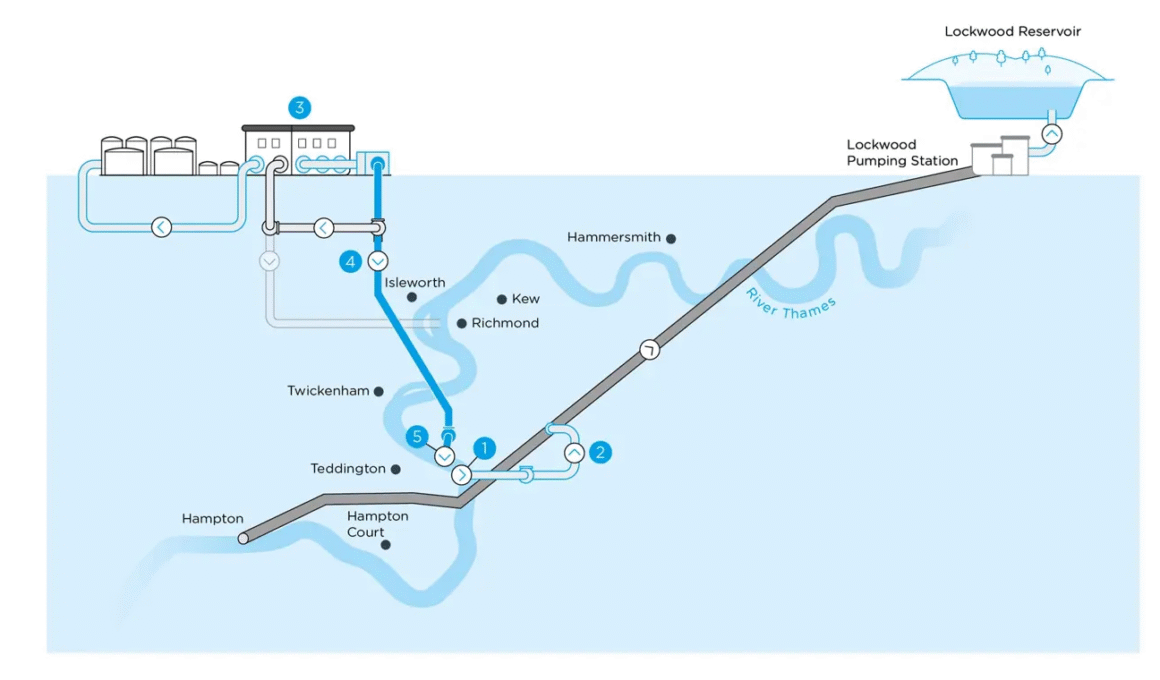
The proposal, known as the Teddington Direct River Abstraction (TDRA) project, is being promoted as a vital step to secure London’s water supply during future droughts. It involves diverting up to 75 million litres per day of highly treated wastewater from the Mogden Sewage Treatment Works in Isleworth and piping it into the Thames just upstream of Teddington Lock.
According to Thames Water, the recycled water would only be introduced during prolonged dry spells, typically in late summer and early autumn, and would be used to maintain river levels when additional freshwater is abstracted for treatment and supply. The system would otherwise be kept operational year-round using low-level “sweetening” flows to prevent degradation.
Although the company says the process is safe and environmentally controlled, the implications for Putney are likely to be of concern to many local residents. While the discharge point is some distance upstream, the Thames becomes tidal at Teddington, meaning water flows can travel both upstream and downstream with the tides. This raises the possibility that the treated effluent could reach the heavily used waters around Putney, particularly between Putney Bridge and Hammersmith, which are popular with rowers, paddleboarders and riverside walkers.
Poor track record
Environmental campaigners have already voiced concern about the project, pointing to the poor track record of Mogden Sewage Works, which has been repeatedly fined for illegal sewage discharges in recent years. The prospect of that same facility playing a central role in this new scheme has prompted questions about whether Thames Water can be trusted to manage such a sensitive operation.
In Putney, where rowing clubs, schools, and leisure users rely heavily on the river, any reduction in water quality—real or perceived—could discourage participation and harm the area’s strong connection to the Thames. Past sewage overflows have already led to warnings and temporary restrictions on river use during storms. This project, although limited to drought periods, adds a new layer of complexity and potential risk.
The project is still at the proposal stage and will require a Development Consent Order (DCO), a type of planning permission reserved for major infrastructure projects deemed nationally significant. The Secretary of State confirmed in 2023 that the Teddington scheme qualifies for this process. Thames Water will be required to formally apply for the DCO after carrying out a full public consultation and considering the feedback it receives.
Thames Water is currently wading in its own sewage. Earlier this month, private equity giant KKR pulled out of a deal to rescue the troubled sewage company. This week, creditors tabled a £17bn pound rescue plan that would write off several billion pounds worth of debt – for which they have asked regulator Ofwat to relax its approach to performance targets, and warned that pollution and customer service levels could worsen.
Consultation details
The statutory consultation runs from 17 June to 26 August 2025, with eight in-person events planned across the region and two online webinars. Full details of the plans, background documents, and event dates will be made available on a dedicated webpage.
The scheme would involve major engineering work, including the construction of new tunnels, shafts, and outfall structures at Mogden, Ham Playing Fields, and near Teddington Weir. If approved, construction would begin in the coming years, and the system could be operational by the early 2030s.
Putney residents now have the opportunity to participate in the consultation and make their views heard on how the project might affect the local stretch of the Thames, river ecology, public trust in Thames Water, and the future of London’s water infrastructure.




1 comment