

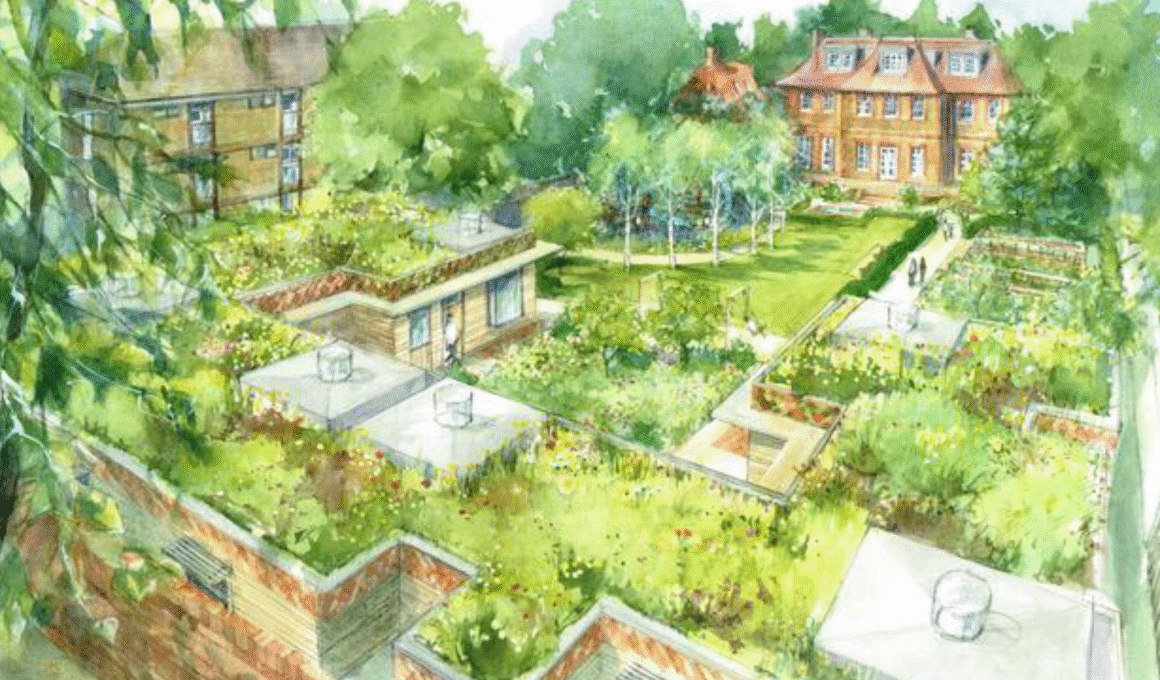
How many bicycle spaces does a care home for six elderly residents need? According to planning documents for 5 North Drive: 18.
The new development (2024/2059) — a low-rise, six-unit sheltered housing scheme for over-55s in Streatham Park Conservation Area — is being fitted with a gated, purpose-built bike store for 16 cycles, plus a separate stand for two visitor bikes, bringing the total to 18 spaces. All of this will sit tucked behind the house in a leafy garden — green roof, hardwood cladding and all.
The planning committee couldn’t quite believe it either.
“None of them will be riding bikes… nobody will use those bicycle stands,” said Councillor Govindia at the 20 May meeting. “We’ll have ticked our policy box… but frankly, it makes us look a bit silly.”
Chair Tony Felmson deadpanned: “Presumably this is because lots of grandchildren are going to cycle in and visit,” eliciting laughter. But he agreed with the bike shed’s pointlessness: “Cycle sheds themselves are not usually the most beautiful objects in the world and disused ones certainly wouldn’t be.”
Council officials defended its construction arguing that it will be “pretty low key and in a very discreet location” but agreed it was only there because “it meets a standard, and that is the London Plan standard.”
Beyond silly: when bad policy means worse outcomes
It’s tempting to dismiss this as harmless bureaucracy — a well-intended green transport rule gone rogue. But policies like this can have real consequences elsewhere.
Take Toland Square, a post-war council estate in Roehampton where garages were demolished to build new flats. Residents, already short on space, pleaded for replacement outdoor storage. Instead, the council used the freed-up land to install bike sheds — in some cases directly on the spaces residents had hoped to use for storing possessions.
The result: people living in cramped flats were left without secure storage having been told the land was needed for bicycle parking that nobody had asked for. “We don’t need or want them,” one resident told councillors face-to-face at a meeting earlier this year.
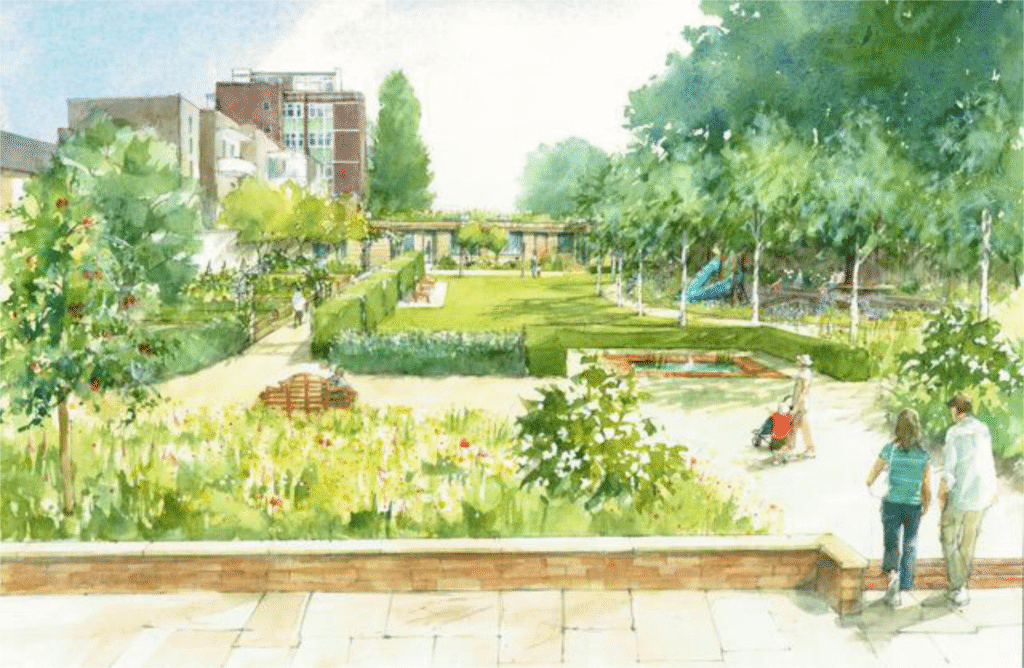
The back garden care home — or is it?
At 5 North Drive, the six new flats will be run by a charity for elderly residents. The design includes step-free access, low sill heights for garden views, and the ability for carers to stay overnight. When it comes to transport, the charity isn’t expecting its infirm residents to hop on a bicycle: it will have a minibus service to take residents to the shops and on outings.
According to planning officers at the meeting, the development is being treated as Class C2 — a planning use category for care homes and institutions. Under the London Plan, C2 sites require far less cycling infrastructure — typically just two spaces (one for staff, one for visitors).
But the paperwork tells a different story.
The C3 classification trap
The application documents repeatedly define the development as Class C3 — standard residential dwellings — because the units are self-contained and don’t include shared kitchens or lounges. This triggers a different set of planning rules, including:
- 1–1.5 bike spaces per flat (7 minimum for the new build)
- Additional provision for 8 existing flats on site
As a result, the developer proposed:
- 16 long-stay spaces in a gated enclosure
- 2 short-stay visitor spaces
- Total: 18 cycle parking spaces

“A cycle store with 8 Sheffield stands will allow parking for up to 16 cycles… The additional cycle storage [will] offer an improved facility for residents of the existing building.”
— Transport Statement
Meanwhile, the same documents note that residents will be chauffeured by minibus:
“A minibus would be utilised by the charity… to undertake excursions and meet the general day-to-day needs of the residents.”
A legal fix that adds to the absurdity
At the planning committee meeting, officers insisted the development was effectively a care home and therefore justified in principle. But because it was filed as a C3 residential scheme, planners were unable to apply the flexibility allowed under C2 use — where officers could have waived most of the cycling provision entirely.
To keep the development under control, the council is instead relying on a Section 106 agreement — a binding legal contract that will:
- Prevent the new flats from being sold individually
- Require all residents to be 55 or older
- Mandate that support services be available
- Keep the development operating as a single unit
In other words, a legal instrument is being used to force the development to behave like C2, while planning policy requires it to conform to C3 standards.
A bike shed you’ll never see — but you’ll definitely pay for
The 16-space cycle shed (plus two for visitors) will be located discreetly behind the house, inside a tree root protection zone. Along with the green roof, hardwood cladding and gates, it will have low-impact foundations to protect nearby trees
“It’s pretty low key,” said the planning officer. “Not a big financial drain.”
But that’s little consolation when the shed’s very existence speaks to a planning process that values compliance over common sense.
The punchline writes itself
At 5 North Drive, there will be:
- 6 elderly residents
- 1 minibus
- 18 bicycle spaces
Boxes ticked over needs met.
Planning, in this case, delivered the letter of the London Plan — but not the spirit.


