Plans to completely overhaul Roehampton’s Alton Estate will be put to a public vote this September—if Wandsworth’s Cabinet gives the green light at a meeting on Monday.
The Labour administration is expected to approve a recommendation that would allow the regeneration proposals, developed over the past nine months by architects HTA Design, to proceed to a formal resident ballot between 22 September and 16 October 2025.
The outcome of the vote will determine the future of one of London’s most prominent post-war housing estates—and whether Wandsworth can unlock tens of millions of pounds in funding from the Greater London Authority (GLA).
Alton Estate Regeneration: What’s Being Proposed?
Under the plans, around 167 existing homes would be demolished and replaced with 600–650 newly built units across several key sites on the estate. This includes:
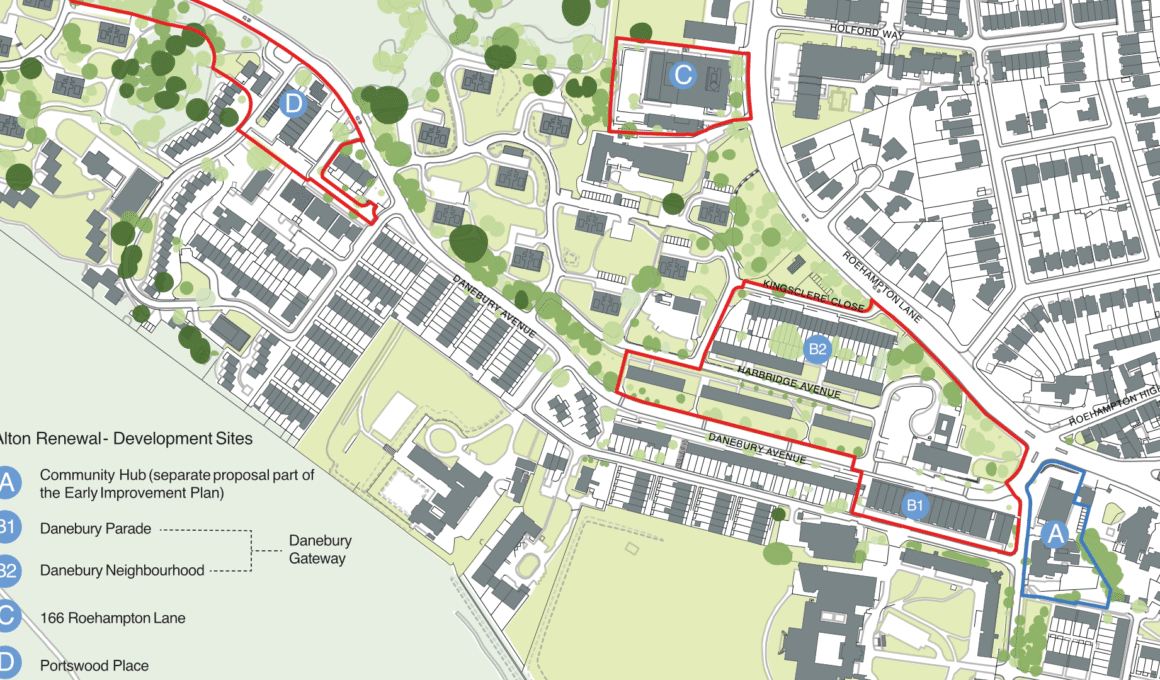
- Danebury Neighbourhood: By the current library. Mid-to-high-rise blocks replacing buildings on Harbridge Avenue and Kingsclere Close, focused around a new village green and community square.
- Danebury Parade: The shops as you enter the estate. A new mixed-use retail parade with flats above, replacing the current shops on Danebury Avenue. It includes a larger supermarket and improved access to the adjacent leisure centre.
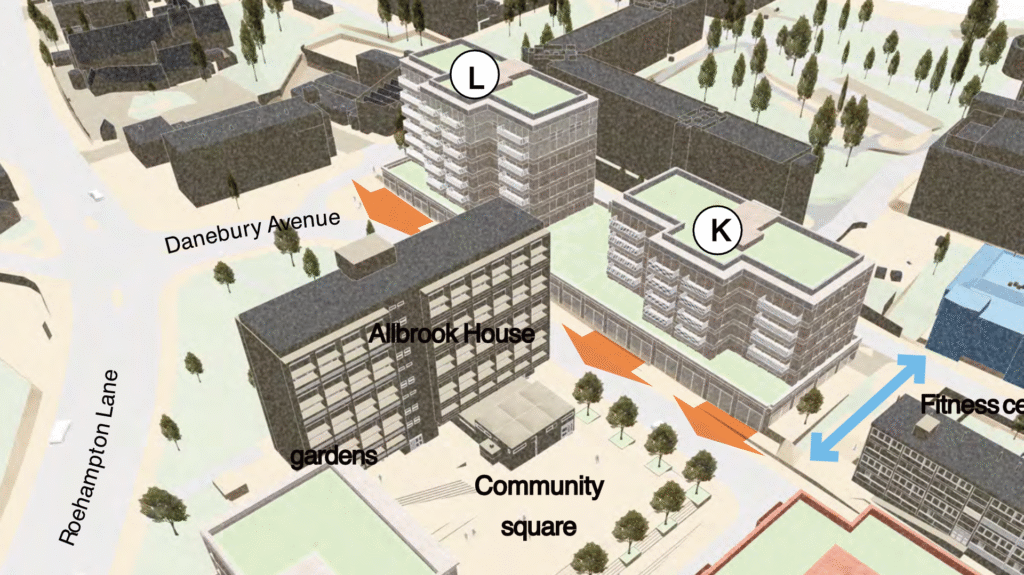
- Danebury Square: Next to the library. A new block adjacent to Allbrook House, with commercial space and housing.
- 166/168 Roehampton Lane: Up the hill by the schools. Three blocks and a row of terraced family homes near Downshire Fields.
- Portswood Place: The block of shops opposite the bus stop at the end of the line. A new family hub with a nursery, GP surgery and community facilities, away from the main roads.
The proposals aim to increase the overall housing stock by 425–475 units, with 57% of new homes designated as affordable, including council-rent properties.
Designs have been shaped through community consultation and a resident panel, and are said to improve walkability, accessibility, and the quality of community infrastructure.
A planning application could be submitted in June 2026, with construction phased over several years.
Why a Public Vote—and Who Gets to Decide?
A resident ballot is required under GLA rules in order for the council to access funding from the Affordable Homes Programme. Without a majority ‘yes’ vote, the GLA will not release grant money (estimated at £16m) needed to help deliver new council housing.
The rules of the ballot are clear:
- Eligible voters: Secure council tenants, long-term temporary accommodation residents, and leaseholders/freeholders who have lived in the estate for over a year.
- Ballot format: Simple Yes/No vote on the formal “Landlord Offer” – a detailed document outlining the plans, housing guarantees, and community benefits.
- Threshold: A simple majority of those voting must support the plans. There is no minimum turnout requirement, but low participation could affect legitimacy.
Ballot packs will be delivered in early September, with voting options including online, phone and post.
The council has appointed Civica to independently administer the vote.
What’s the Cost?
The full scheme is projected to cost more than £100 million.
Breakdown includes:
- £84 million already earmarked from the council’s Housing Revenue Account
- GLA grant funding (only accessible with a successful ballot)
- Private housing sales and land receipts to cross-subsidise affordable elements
- New capital bids to fund community buildings:
- £14m for the Roehampton Community Hub (library, council offices, youth centre)
- £11m for Portswood Place (nursery, GP, services)
A more detailed financial plan, including phasing and delivery models, will return to Cabinet this autumn.
Pros and Cons – and What’s Next
Supporters say the plan offers a once-in-a-generation opportunity to improve housing conditions, expand social rent homes, and rebuild much-needed local infrastructure. New green spaces, accessible paths, and safer public areas are also cited as key gains.
The estate has suffered from over 20 years of failed plans to reinvest and overhaul the area; in the meantime, buildings have been left to decay.
Critics have raised concerns about disruption, demolition of existing homes, and the risk that regeneration may eventually lead to gentrification or unmet promises. Much will depend on how securely affordability and tenant protections are written, if the plans will lead to a genuine revitalisation of the area or just pile in more bodies into an already overwhelmed estate, and whether residents feel confident enough in the offer to vote ‘yes’.
Putney.news will publish a detailed explainer on the pros, cons, community voices, and political stakes of the Alton ballot in the coming weeks.
The Cabinet meets at 7.30pm on Monday 16 June at Wandsworth Town Hall. The meeting will be webcast live.