


The charity that runs Wimbledon Common and Putney Heath will tonight set out plans to overhaul the Victorian constitution that governs it, arguing that an Act of Parliament written in 1871 is outdated and no longer fits the 1,140 acres of common land in its care.
At the heart of the overhaul is money. The Wimbledon and Putney Commons Conservators (WPCC) want three things they cannot currently do: to charge drivers to park on the Commons, to push the levy they add to local council tax bills above the legal ceiling that has capped it since 1990, and, in time, to widen the net so that more households pay. A Band-D home in the levy area pays £41.38 a year now. The Conservators have proposed lifting that by about a quarter in a single step, on top of the usual annual rise.
Because the Commons are run not by the council but by a body created by its own Act of Parliament, the charity cannot simply rewrite its own rules or raise its own charge. To do almost any of it, it has to go back to Parliament.
For years now, the WPCC has warned that it cannot afford the upkeep. Its own audited accounts, published for tonight’s meeting, reveal an organisation that is not at risk, but which is obliged to operate leanly. At the end of March the charity held free reserves, the money it can spend that is not already tied up, of £1.455m, around £335,000 more than the £1.12m it calculates it needs. Its cash in the bank rose by £123,000 over the year, to £402,000. Its share of the staff pension scheme showed a surplus of just over £2m, though accounting rules keep that figure off its balance sheet. On the year, the chairman reports what he calls a small operating loss of about £12,000.
Running the Commons is not cheap. The charity spends around £2.5m a year, the bulk of it on people: a staff of 26, from keepers and rangers to groundsmen and maintenance crews, costs close to £1.5m in wages. The rest goes on looking after the Commons themselves, the playing fields and its many buildings.
The Commons charity says it is short of money
Its own audited accounts, for the year to 31 March 2026, tell a more comfortable story. Tap between the two views.
Where the money comes from
Total income £2.57m
Where it goes
Total spending £2.44m
About £1.5m of that spending, roughly 60p in every pound, goes on staff wages, across a team of 26.
Free reserves versus what it says it needs
At 31 March 2026. “Free reserves” is money the charity can spend that is not tied up in land, buildings or equipment.
£335,000 above its own target — and that target already sets aside £300,000 for its ageing buildings.
- Cash in the bank rose by £123,000 over the year, to £402,000.
- Its staff pension scheme is in surplus by just over £2m, kept off the balance sheet under accounting rules.
Sources: WPCC Report and Audited Financial Statements, year ended 31 March 2026; Wandsworth and Merton council tax 2026/27.
What it wants to change
The vehicle for the bigger changes is a section 73 scheme, a route in charity law that lets an organisation alter its own founding Act of Parliament without passing a new one. The charity has sent a draft to the Charity Commission and the culture department and is waiting for a meeting. It gives several reasons. The governing rules, it says, have not been materially updated since 1871. It wants to regularise its land and buildings so it can repair, improve and safeguard them. Its own audit committee has pointed to one practical case: uncertainty over the legal powers to carry out a full rebuild of the pavilion at the Richardson Evans Memorial Playing Fields, the charity's main sports ground near Roehampton, which it hopes the scheme will resolve.
The charity is firm that the protections matter. There is, it says, "neither a desire nor intention of diluting or diminishing the very high level of protection" the 1871 Act gives the Commons, and it promises a public consultation before any change. That Act requires the Conservators to keep the land open, unenclosed and unbuilt on, and forbids them from selling, leasing or otherwise disposing of any part of it.
Parking is folded into the same scheme. The charity says the 1871 Act gives it no power to charge for parking, and that it wants one to deter commuters and long-stay parkers rather than to penalise residents or genuine visitors. Its reasoning, though, is about money as much as traffic. The Commons are majority funded by the levy, it notes, "while non-levy payers contribute nothing directly to upkeep yet benefit from visiting."
A bigger bill, and perhaps a wider one
The levy is the charity's main income, worth £1.67m last year and around two-thirds of everything it raises. It already rises each year in line with inflation, and Putney.news has reported how the levy keeps climbing. The one-off increase the charity wants now goes further. Because it would break a cap first set in regulations in 1990 and 1993, the government has to pass a separate piece of legislation before it can take effect. A minister, Baroness Hayman of Ullock, approved the rise in principle in January, the bigger jump residents were warned was coming, but the legislation has not yet reached Parliament.
There may be more later. On its own website, the charity says it "may wish to explore whether the levy area could be expanded to encompass more properties" in the longer term, bringing more households into paying. It accepts that step would need its own, lengthy Act of Parliament.
Behind all of it is a charity that keeps describing its income as too small for the job. Its chief executive says financial pressures "remain acute" and that completing the levy increase is "critical." Its annual report warns that income is "insufficient to support the long-term preventative maintenance" of the Commons and their buildings. The charity's answer to its healthy reserves is that many of its buildings are more than a century old, and that it holds money back against the unexpected. The sum that sits above its own target, though, already includes £300,000 set aside for those buildings.
In the past year, the WPCC has relied on additional fundraising from locals to fix its muddy pathways and rebuild its famous windmill when it was struck by lightning. No doubt it would prefer not to have to rely on individual charity for upkeep.
Have your say on Monday
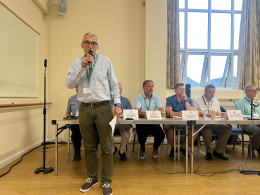
The annual open meeting is the one occasion each year when levy-payers and members of the public can hear from the Conservators directly and put questions to them. It takes place on Monday 22 June at St John the Baptist Church Hall, Robin Hood Lane, Kingston Vale, SW15 3PY, from 7.30pm for an 8pm start. The annual report and accounts are on the charity's website and can be inspected at the Ranger's Office.
The charity has promised a full public consultation, and a vote of levy-payers, before any change to the 1871 Act. Monday is the first chance to ask what exactly is being proposed, and why a charity with money in the bank needs the power to charge for more.

I received the email for this meeting yesterday, 21 June. Not enough notice for me to change my commitments. It would be interesting to know what their constitution states regarding the notice requirement for an AGM date to be published. Also, with the amount of new houses/flats within the Putney/Wimbledon catchment areas, is yet another rise in the levy needed or should upkeep of both commons be the responsibility of Wandsworth council (for Putney Common and Putney Heath) and Merton council (for Wimbledon Common). Disband WPCC and that way everyone in both boroughs pays for the upkeep of both commons, not just the few that live in the catchment area
Dear Pat, the date of the Annual Open Meeting was notified to Levy-payers in accordance with our statutory obligations: It was advertised in local press (on Thursday 4 June 2026) and details sent to local libraries and churches a clear 14 days before the date of the meeting. Details were also included in the Annual Newsletter that went to all levy-paying households around the end of May and there have been posters around the Commons, information on social media and on our website – published around 12 June 2026.. The e-mail sent at the weekend was simply a reminder.
To clarify, the Levy is not initially calculated on a “per property” basis. The Conservators agree the total Levy for the year and then that is split proportionately to each of the boroughs in which the Commons sit. The Council then divides that amongst the number of Levy-paying households. So in practice, the more properties in the levy-paying area, the less each will pay, but it doesn’t increase the overall Levy.